
An Essay by Eric Picard
My mother was a formidable Irish woman with a sharp tongue and a fearless nature. Her fierce intelligence and strong will were defining traits.


She married my father on her 21st birthday, and I came along when she was 23. As the oldest of seven siblings, she had plenty of experience raising children, which she applied to my upbringing.
I loved her, but we didn’t have a very warm relationship.
Growing up with my mother was like being raised by the Drill Sergeant from “Full Metal Jacket,” who was played by actor R. Lee Ermey. Any interaction could lead to a lost hour of being screamed at in stiff formation.
“You stand right there, and you look at me,” she’d say, followed by relentless interrogation and furious yelling. It was never clear what answer she was looking for, and the wrong answer tended to extend the interrogation. I thought of these events as “corrections.”
My mother was consistent in her approach, even if it was unclear what might provoke a correction. Her criteria for deciding one of her kids deserved a correction was managed by some indecipherable algorithm that seemed to change all the time and had no internal logic. The one dependable and clear infraction that would always lead to a significant correction, was lying. This was to be avoided at all costs.
Understanding this background is key to understanding our relationship. My mother was unpredictable, and you never knew if you’d encounter Nice Mom or R. Lee. This uncertainty made interacting with her risky. Back in the 70s, I spent many days playing outside in the woods until the streetlights came on, frequently I’d skip lunch to avoid the riskiness of coming inside.
One day, I was out playing in the woods with Pat Grzybinski and Victor Kovacs. The dynamic between us was fraught: Pat was my best friend, while Pat was Victor’s only friend. Victor and I were not friends.
Victor was a big kid, towering six inches above the rest of us despite being the same age. His family hailed from Hungary. His father was an engineer, and his mom stayed home, much like mine. He had a sister named Ana. Victor and I were constant rivals for Pat’s friendship.
Around noon, Pat mentioned that he needed to go home for lunch. Victor immediately turned to Pat and invited him over for lunch. He looked over at me when he invited him, and it was clear that I was NOT invited. Pat said he had to go home, and we all split up. I often skipped lunch, since entering my house was unpredictable. I never knew if I’d end up being ‘corrected’ for saying the wrong thing. But I was hungry, and frankly, my feelings were hurt. Not that I wanted to go to Victor’s house for lunch, but being excluded wasn’t a great feeling, and I was sad and hurting.
So I took the risk and went in for lunch. My mother seemed in good spirits and offered to make me a sandwich. As she gathered the peanut butter, jelly, and fluff, she asked about my morning. I casually mentioned playing with Pat and Victor and how Victor had invited us both over for lunch, but Pat had to go home, and I didn’t want to go because I didn’t like Victor. I was clearly hurting and replaying the scenario how I wished it had gone down.
What happened next caught me off guard. My mom spun around from the counter and exclaimed, “You were invited to the Kovacs’ for lunch, and you said no?! That would be a wonderful experience, seeing how a Hungarian family has lunch.” I was instantly terrified. There was no way I could admit I’d lied. So I doubled down, insisting, “I don’t like Victor, and I don’t want to have lunch with him and his little sister.”
“No. You’re going to their house for lunch.” She grabbed my arm, dragged me from the table to the front door, and onto the sidewalk. I was so scared. I hadn’t been invited. But I was way more willing to live through the embarrassment of showing up uninvited than telling my mother I’d lied about it. There was a part of me hoping that she’d only walk me halfway to their house, so I could pretend to go for lunch but instead slip into the woods.
No such luck. She marched me to the Kovacs’ walkway and told me to ring the bell and be polite. Sheepishly, I approached the door and rang the bell. Mrs. Kovacs answered, looking puzzled. “Hi, I’m here for lunch,” I said.
She appeared confused but chose to be polite, saying, “How wonderful!” and ushered me in. She was a very sweet woman, and she was very kind to absorb an unexpected guest like that. I don’t recall the meal — I’ve blocked out the embarrassment — but I remember Mrs. Kovacs telling Victor and Ana to take me to play in their rooms afterward.
In Ana’s room, she was thrilled to show me her toys. She was a few years younger, and Victor stood silently by the door, fuming. After a while, I made as polite an exit as an uninvited guest could and ran into the woods, staying there until the streetlights came on.
When I returned home for dinner, my mother smugly asked, “How was lunch at the Kovacs’? Was I right that it was a good educational experience?”
“Yes, I learned a lot,” I said.
Victor and I were constantly in conflict, but he never brought that awkward lunch up again, even though he is one of the few people in my life that I’ve had fist fights with. In one fight we had, where I picked up a stick and hit him in the thigh, Victor ran home in tears. Hitting him with a stick is one of those memories that my brain jumps to with deep regret when I contemplate mistakes I’ve made in life.
Moments later, Victor’s father stormed out of his house and strode down the street towards me. I ran into the backyard, then into the back door. My mother was on the deck sunning herself. She sat up startled as I ran past. I went up to the second floor bathroom that looked out over the deck and watched as Victor’s father strode onto the deck and walked to the back door, throwing open the screen door. He’d completely ignored my mother and walked right past her. That was his first big mistake.
I imagine he was going to provide me with some kind of Hungarian justice reserved for deserving children. I had once witnessed him punching a teenager in the neighborhood who had back-talked him, leading to that boy’s father standing on his stoop later with a baseball bat.
My mother yelled as she slid around in front of him, blocking his entrance to the house. She was a small woman, and he was muscular and formidably built. She backed him down with an ease I envy to this day. He said a few sentences I couldn’t quite hear, but they were heavily accented and angry. She started poking him in the chest, and unleashed a series of invictives that startled him, and he backed up each time she poked him, until he was backed up to the deck stairs and simply turned around and walked away.
I had known better than to lie to my mother about being invited to lunch that day, I’d certainly had my share of lessons in the past. One incident in particular should have rendered me incapable of lying.
My mother had a particular fondness for a store in Quincy, MA, called The Bargain Center. It was an early version of the various Big Lots, Job Lots, and Dollar Generals of today, having acquired remnant inventory across the country at various auctions. The Bargain Center was housed in an old multi-story department store built around the turn of the century. Later they’d built a parking garage next to it, which was attached to the roof of the building. To enter the store from the parking lot, you had to walk down a short stairwell that was never designed as a regular entrance. I despised this store with a passion, mainly because you had to pass through a stairwell choked with cigarette smoke from employees smoking there. I recall holding my breath every time we entered, squeezing past the cadre of older women sitting on the stairs smoking during their breaks.
Inside was filled with huge wooden tables piled with a bizarre assortment of items. This was the 1970s, and those tables might hold everything from upscale wool sweaters to knock-off sneakers. I remember the day in junior high when my mother bought me my first pair of Nikes, which was a highly desired brand. I was so proud of them until I went to school the next day and was contemptuously shown that the swoosh was upside down.
I was two years old on this particular trip to The Bargain Center. She bought more than she could carry to the car in one trip. She carried me and the first set of bags to the car, placed us in the back seat, and returned to the store for the rest. While she was gone, nature called. Being two, and no longer in diapers, I simply relieved myself right there in the car. When she returned, the back seat floor was unmistakably soaked. Furious, she demanded to know why I had peed in the car.
Terrified and looking to pass the blame elsewhere, I blurted out that “a man made me pee in the car,” assuming that I wouldn’t be in trouble if someone else made me do it. Her anger transformed into terror and fury. It was like she began to vibrate and levitate off the surface of the parking lot. I imagine she also felt guilty for having left me in the car; and of course she was only 26. She yelled to an employee by the door to call the police.
I interpreted this as her calling the police to punish me, since the police punished bad guys. I broke down, sobbing, “I’m sorry I peed in the car, I’m sorry that I peed!” Eventually, the truth unraveled — that there was no mysterious man with a strange pee-watching fetish. My mother ended up having to explain to the police officer that I had fibbed. She was both angry and embarrassed. This story was trotted out every few years throughout my life to remind me of that time I lied and embarrassed her. Frankly, I think it was told so often by her siblings, at least a little bit, because it embarrassed her, their older sister who’d corrected them as harshly during their childhood as she’d done to me.
My mother dressed me funny as a kid. Mostly she was buying clothes at The Bargain Center, which frankly had some nice things at low prices, if you were willing to hunt. But my mother, having grown up an Irish Catholic of South Boston heritage, had an oddly formal expectation of what kids were supposed to wear, especially to anything she considered formal. As with most Irish Catholic boys of that era, I had the requisite blazer and clip on tie and dress pants to wear to church. However, she also felt that school was one of those places where kids should be dressed up, and this being the 70s, I was expected to wear wide legged plaid dress pants, with wide collared polyester dress shirts, and cheap shoes.
Not that anyone else was dressed that way, they all wore jeans and tee shirts and less formal clothes. But my mother was insistent, and wouldn’t hear any argument. I think the problem was that she grew up in a working class family, and she and all her siblings and cousins went to Catholic school where uniforms were the norm. She just had expectations that were out of the normal range, and she loved a bargain, so my clothes were mostly cheap knockoffs of nice things. So I was the weird kid over-dressed for school, and with an overbearing and challenging mother, I tended to be somewhat shy and introverted. I also was always at the top of the class for English and Social Studies, but at the bottom for Math due to undiagnosed learning disabilities. Not a great combination.
When it came time for report cards, my mother would move into R. Lee mode, correcting with interrogations and yelling and threats of punishments if my grades didn’t improve. But when it came to actually helping me with my homework, or with my studies, she was genuinely unable. The dynamic of being a kid who wasn’t allowed to “talk back”, but whose mother didn’t understand the assignment, was intractable. There was a constant battle between us over school, everything from what I wore to trying to be successful with my grades. No amount of time studying or doing homework was going to lead to my math grades going up. School became another one of those areas where my mother’s ferocity just rendered the dynamic untenable.
Although my mother’s corrections were not generally physical, I do have one vivid memory that stands out as an exception. I was about 15, making a peanut butter and jelly sandwich one evening. The bread was one of those airy loaves with large air holes in it — probably Pepperidge Farm — where jelly tends to seep out. As I prepared my sandwich, I noticed that jelly was leaking out of a hole in the top piece of bread, when my mom walked into the kitchen. I offered to make her a sandwich, and she accepted with a surprised, “Yes, that would be nice.”
I fetched a plate and pulled out two slices of bread. Then it struck me: I should give her my sandwich and make another for myself. I passed her my plate and started unscrewing the peanut butter jar. Suddenly, a slap landed on my face, more shocking than painful. But it was pretty hard, as my face bore a raised handprint. In shock, I dropped the peanut butter, staring at her in disbelief.
She yelled, “How dare you give me the lousy sandwich while you make a better one for yourself.” Confused, I broke a cardinal rule by talking back, saying, “But I gave you the sandwich I made for myself. I was going to use this piece of bread for mine,” holding up a slice with an even bigger hole than the one I’d used for the first one.
Her anger flashed at my defiance, but then came a dawning realization — she’d slapped me, crossed a line, and done so for no reason. For the first time in my life, my mother apologized to me.
Like I said, she was a complex person. And don’t get me wrong, I do have happy memories of my mother. There were times when her stern demeanor thawed.
My fondest childhood memories revolve around our winter ski trips. My father owned a roofing company and most of his time off was in the winter. My parents would rent a home every winter in New London, New Hampshire, where we would ski at a now-defunct resort called King Ridge. It was a wonderful place to grow up skiing. Being from the South Shore of Boston, we called our ski house “The Chalet,” pronounced SHALL-AAY with a thick accent.
Weekends and school vacations at the “Chalet” brought out a softer side in my mother, as if the rules of engagement could be relaxed under special circumstances. I learned to ski alongside her; we’d explore the mountain while my brother was in ski school and my dad tackled the tougher slopes. These moments are etched in my memory — soft and happy.
When I was about 8, which would make her around 30, we had an adventure that really sticks with me. One weekend when my father was working, she decided to drive us up to the Chalet herself— me, my brother, and her 18 year old brother, my Uncle Chris — in her gold 1974 Plymouth Duster.
The weather was terrible. Heavy snow turned into heavy rain. All the storm drains were blocked by snow, and the on-ramp to the highway was submerged in two feet of slushy water. Traffic was backed up for miles. When it was our turn to go through the intersection and onto the on-ramp, my mother made the bold decision to drive through the slush. Water gushed in, filling the floor with several inches, but we pressed on, reaching the clearer highway and heading toward New Hampshire.
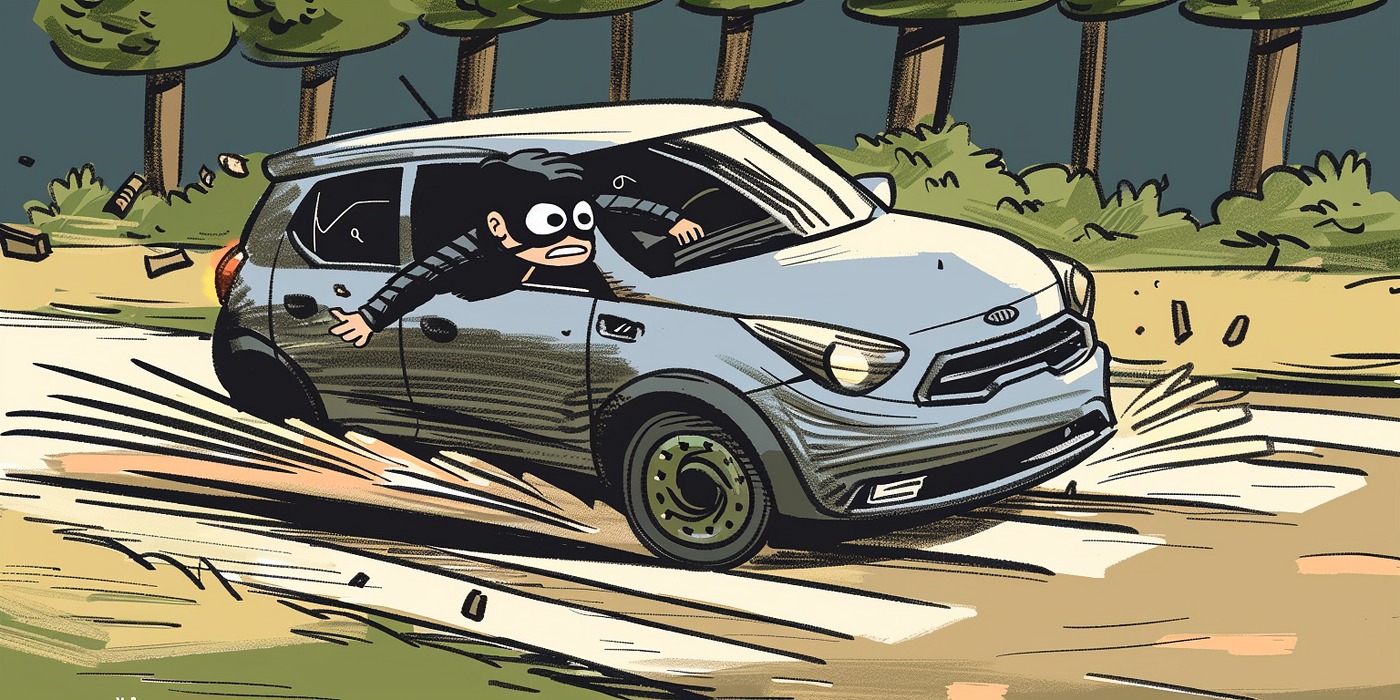
Anyone who grew up in New England can probably guess what happened next. We journeyed north into New Hampshire and the rain transformed back into a heavy snowfall. The V8 Plymouth Duster with rear wheel drive didn’t handle too well in the snow, even with snow tires. We followed a tractor trailer, drafting in its tracks. Suddenly, the car lurched to the right, sliding into the guardrail — the only barrier between us and a 100-foot drop. Fortunately, a passerby with a CB Radio called for a tow, and another good Samaritan drove us to the Chalet.
I remember my mother staying incredibly calm throughout this entire trip, even amidst the chaos. That spirit of being ‘game’ to try things and to move through challenges, especially being fearless about driving in the snow, has influenced how I live my life. Growing up skiing and also driving boats has translated into a lack of fear when coming to driving in slippery conditions, but my mother set the example that there was nothing to fear.
When my mother got older, she changed. As she went through menopause, she softened. She became much more affectionate, and especially with her grandchildren, she was much more of a traditional grandmotherly type of woman. And in her sixties she struggled with early onset Alzheimer’s Disease and in her seventies, dementia.
Growing up with a mother who was fierce and difficult has led me to a lot of work on myself over the years. It had an impact on who I am, on my personality and approach to difficult situations, and how I approach relationships. Not all of those impacts were healthy or positive, and as I’ve done the work over the years, I’ve gone through various stages of reconciliation with my mother’s memory. It would have been nice if I’d been able to reconcile with her when she was the person I describe in these stories. By the time I would have had those conversations, she was already into the early throes of Alzheimer’s. So I’ve had to let go of my resentment and anger, and find the positive.
I realize that my mother’s unpredictable nature, fierce intelligence, and complex spirit taught me resilience, adaptability, and the importance of embracing the unpredictable. I’m fairly unflappable by people who are angry and who yell at me. This has led to some interesting moments in both my personal and professional life.
My mother was utterly human. She had me quite young. And she was figuring her way through life in her own way. So, as I reflect on her life and her impact, I choose to remember the ski trips and the laughter, the love that was often hidden beneath her stern exterior.
For the last five years, she didn’t remember who I was when I saw her. By then she was in memory care, and bedridden after a fall broke her pelvis. The last time I sat with her, she could barely speak. So I sat quietly and held her hand for an hour, and she looked at me intently. It was the longest memory in my life of physical contact with her. She wasn’t one to hug or give physical comfort. And I don’t have any memories of holding her hand, except vaguely when crossing the street as a child. She was trying so hard to connect with me, you could see the struggle in her expression as she tried to piece together who I was.
As we were getting ready to leave, her care worker came into the room and said, “Mary, you have a visitor. Who is this?” And she said, “My son.” And the care worker said, “What’s his name?” And she said, “Eric.”
I’ll be forever grateful for that gift from her care worker. She died a month later.
*names have been changed to preserve anonymity.
 Eric Picard