Benjamin Hazard pressed his forehead against the window frame. His breath melted a hole in the frost, showing the sergeant’s red coat that stood out against the gray morning at the corner of Thames Street and Bannister’s Wharf. Same position as yesterday. Same as the day before.
This morning the sergeant held a notebook.
Benjamin pulled back from the window. His feet found the cold floorboards. He reached for his stockings and pulled them on. His mother had knitted them by candlelight after the store closed. The yarn was rough but warm.
Downstairs, his father, William, sat at the desk beside the counter. Lines had carved themselves deep around his eyes these past two years. When he looked up, his smile didn’t reach those eyes.
“Fourteen years old today,” he said quietly. “Hard to believe.”
“That sergeant’s watching again.” Benjamin kept his voice low. “Same spot. He’s taking notes this time.”
The pen stilled against the page. “You’re certain?”
“He’s not hiding it anymore.”
The back door opened. Cold air came in with his mother. She set down her armload of wood. Her face was tight, as if she were waiting for bad news. She saw Benjamin and her face changed. She crossed the room and pulled him against her. He was much taller than her now, and he bent down to embrace her. He could smell soap and wool and something else that meant safety in an unsafe world.
“Happy birthday.”
“I smell molasses.”
She pulled back while holding onto him with her hands. Her eyes held a gleam that seemed to say that she’d already won an argument that hadn’t happened yet.
“Do you now? What makes you sure that this has anything to do with you?”
“Hope.”
“Hope springs eternal,” she said, smiling at him warmly.
“Thank you, Mother,” he said, giving her one final squeeze.
“If someone’s making birthday cornbread while British soldiers count our windows,” his older sister, Bridget, called from upstairs, “I’m coming down.”
His father looked up at the ceiling. “Your sister can smell trouble and molasses from equal distances.”
“Both useful skills,” Bridget said. They could hear her feet hitting the floor.
***
His mother went to the hearth and returned with cornbread. She cut it with the careful precision she’d learned as an indentured servant—the same precision that had carried her from bondage to merchant’s wife. His father took his piece and looked at it.
“The good molasses.”
“Yes.”
“We could have sold it for actual coin.”
“We could have.” His mother sat down. “But if we’re arrested today, and we might be, given that sergeant’s attention, I want our son to remember we chose to celebrate him even when we knew danger was coming. That’s the memory that will sustain him through whatever follows.”
His father smiled despite himself. “Your mother has a gift for making principle sound like strategy.”
“That’s because it is.” She broke her own piece of cornbread. “It’s the same reason you bought out my indenture contract when you barely had money for your own store; the same reason we don’t sell to the British commissary even though they pay premium prices; the same reason Thomas stopped speaking to us after we publicly became abolitionists, when his wealth depends on the slave trade. Principle isn’t complicated; it’s just expensive.”
Bridget came down the stairs and took a piece of cornbread. “If we’re going to be poor and principled, at least we’re well-fed today.”
Benjamin watched his parents look at each other—wordless communication that came from years of facing the world together. His father’s hands shook slightly as he broke his cornbread. His mother’s accent was getting thicker. It always did when she was afraid.
“Three days of watching,” his father said quietly. “And now he’s taking notes. That’s not casual patrol.”
His mother’s fingers stopped moving. “Do we need to—”
“What? Run? We’re merchants. We sell provisions. We haven’t done anything wrong.”
“Thomas stopped by last week,” Bridget said. She had a thoughtful look on her face. “Asking about our suppliers and our delivery schedules. I thought he was just making conversation.”
The temperature in the room dropped.
“Why didn’t you mention this before?” his father asked.
“Because I thought I was being paranoid. But now …” She gestured toward the window where the sergeant stood watching. “Now I’m not so sure.”
***
As they cleaned up from breakfast, the front door opened, and its bell chimed. Too early for customers. Too early for anything good.
Duchess Quamino came in with her basket of pastries. She was a slave of the Channing family, but was allowed to run a small catering business in which she would share the profits with her master. She was also a good friend to the Hazards. The smell of cinnamon and nutmeg filled the store. Her presence brought warmth that pushed back against January’s bite and something else: a grinding fear.
“Benjamin Hazard.” Her voice carried strength that belied her circumstances. “Fourteen years today. That deserves proper recognition, even in times like these.”
She produced a cake wrapped in clean linen. Frosted plum cake that had made her famous among Newport’s elite. At a time when sugar had become more valuable than silver, this represented extraordinary sacrifice—ingredients she could have sold for desperately needed coin, choosing instead to celebrate a boy’s passage toward manhood.
“Duchess, you shouldn’t have—” his mother began.
“Birthdays matter.” But something brittle lived underneath the warmth now, something that hadn’t been there six months ago. “Besides, Mistress Channing ordered extras for a gathering that was postponed. Better to share joy than waste good ingredients.”
She arranged her remaining pastries on the counter with practiced efficiency, but her hands trembled. When his mother moved closer with the instinct of one woman recognizing another’s distress, Duchess’s composure wavered.
“Had word from John three days ago,” she said quietly, glancing toward the door to ensure no customers were approaching. “He’s well, praise God. His captain treats his crew fairly, pays them proper shares. But every day he’s at sea is another day I wake wondering if this is the day I get different news.”
“John’s smart and capable,” his mother said. “He’ll come home.”
“Will he?” Duchess’s hands stilled on the pastries. “Every prize he takes at sea is blood money, Mary. Money to buy what shouldn’t need buying. Our freedom.” Her voice dropped even lower. “Charles asked me last night when Papa’s coming home. He’s six years old. How do I explain that his father is risking his life privateering to earn money to purchase his own family? That we might lose him trying to win our liberty?”
She pressed her fingers against the counter, and Benjamin saw the cost of maintaining her dignity every day: serving people who saw her children as property, smiling through the fear that gnawed at her every waking moment. Her husband, John Quamino, had won enough money in a lottery several years ago that he was able to purchase his own freedom. But he worked in one of the only positions that a free African man had where he had the opportunity to make enough money to buy the freedom of his family.
“If he doesn’t come back …” She couldn’t finish the thought. “I’ll have to find another way. Years more of bondage while I scrape together coins from frosting cakes for men who think I should be grateful for the opportunity.”
His mother reached out and squeezed her hand. For a moment, two women who had both known bondage—one through indenture, one through slavery—stood together in silent understanding of costs that free people could never fully comprehend.
Duchess straightened, forcing brightness back into her voice. She focused on Benjamin again. “Use this year wisely, young man. These are times that forge character. What we become in darkness reveals who we truly are.”
After she left, Benjamin stood holding the precious cake, understanding he’d received more than a birthday treat. Her courage was something he was only beginning to comprehend.
“She’s remarkable,” he said quietly.
“She is,” his mother agreed. “And John Quamino is braver than most who call themselves soldiers. Fighting for your family’s freedom when the law says they’re not even yours to fight for—that takes a kind of courage I can barely imagine.”
***
Benjamin went to the backyard to split wood. January air bit at his exposed skin. He positioned a log on the chopping block and raised the axe, but movement through the gap between buildings caught his eye.
A figure in a heavy woolen cloak stood against the brick wall of the warehouse on Bannister’s Wharf, two blocks distant. Not watching the way the sergeant had watched; this was different. The man’s posture suggested alertness, readiness. As if he were standing guard rather than gathering intelligence.
Benjamin brought the axe down. The crack echoed between buildings.
When he looked up, the figure had shifted position but remained visible; deliberate, as if he wanted to be seen but not identified. The cloak’s hood shadowed his face, but something about his bearing suggested strength, competence, protection.
Benjamin split another log. The figure still watched.
He stacked the wood carefully, his mind racing. Two different kinds of watchers: the sergeant’s obvious surveillance, building a case against them, and this other presence that felt like a guardian angel hiding in shadows.
He didn’t know which frightened him more.
***
When he came back inside, stamping snow from his boots, the bell chimed again.
Newport Gardner entered, moving with the careful dignity of a man who understood exactly how much space he was permitted to occupy in the world. His fingers tapped complex rhythms against his leg as he approached the counter, unconscious, like a musician hearing melodies no one else could detect.
“Mr. William, Mrs. Hazard.” His voice carried the musical cadences of the Gold Coast, vowels that rose and fell musically. “Young Benjamin. Fourteen years today.”
He paused. Those restless fingers still tapping. “The same age I was when I was taken into Master Gardner’s household.”
His father was already gathering supplies: flour and salt for Newport’s master, the familiar rhythm of their unspoken arrangement. “What brings you out so early?”
“Master Gardner is planning a reception. British officers want everything proper for an important visitor arriving next week.”
Newport’s voice remained carefully neutral, but his eyes flicked toward the windows, checking for observers. “They discuss such things freely while I tune the harpsichord. A musician becomes invisible while visible.”
He moved closer to the counter. His voice dropped to barely above a whisper. “But mostly I came to share word. Mrs. Tillinghast stopped me on Thames Street this morning. She’d heard a newly arrived sergeant has been asking questions about specific families. Yours among them. Detailed questions: delivery schedules, customer lists, and family connections. She thought you should know before the day’s business begins.”
“Any idea what prompted this interest?” his father asked, equally quiet, his hands continuing their work—the performance of normalcy that had become survival in occupied Newport.
Newport accepted the package his mother offered. He paused. “Major Ashworth told Master Gardner that the new provost sergeant has a particular talent for identifying ‘merchant families who hide their sympathies behind commercial neutrality.’ Those were his exact words. And then he mentioned your name, Mr. William, along with two others. The Overings and the Robinsons. Both have already been visited by soldiers this week.”
His father’s hands stilled on the package he was tying off. “I see.”
Newport lifted the smaller bundle his mother had prepared—cornmeal for Johnnycakes, one of her “extras” that had become legendary among Newport’s struggling households, distributed without regard to the color of the recipient’s skin. A dangerous kindness in a city where such things were noticed and remembered.
“Much obliged, Mrs. Hazard. My master will appreciate the quality of your goods as always. I will appreciate the johnnycakes.” He paused at the door, glancing back to ensure no one was within earshot on the street. When he spoke again, his voice carried something more personal, more raw. “Be careful today. All of you. When provost sergeants take notice of you, they already know what they’re looking for. They’re just building the case to make the arrest look proper.”
After he left, silence hung heavy in the store.
“The Overings and the Robinsons,” his mother said quietly. “Both had soldiers search their premises this week. Both were questioned about their suppliers and associations.”
“And both were released without charges,” his father said, but his voice carried no relief. “Which means either they satisfied the British or—”
“Or they’re building toward something bigger,” Bridget finished from her position near the stairs. “Using the smaller fish to catch the larger ones.”
Benjamin stared at the door Newport had just exited. “Why did he risk coming here? If they’re watching us, if they’re building a case—”
His mother was wrapping the extra cornmeal with trembling hands, her movements precise despite the fear. “Because some gifts are dangerous to give, love. Especially for those who have so little freedom to give anything at all. What he just did—coming here, warning us when he could be seen—that’s trust. The kind that could cost him everything.”
She looked at Benjamin. “Remember that. Remember who risks what, and for whom. That’s the measure of a person—what they’re willing to sacrifice for others when they have so little to spare.”
***
The morning brought a trickle of customers. Each one carried fragments of disturbing news woven into ordinary transactions.
The door opened again. Joseph Wanton entered. His boots clicked against the floorboards with the precision of a man who expected the world to accommodate his presence.
The former governor’s son carried himself with rigid authority. He was a fierce loyalist, although many felt only because his shipping business relied on the British Navy’s protections. His pale eyes scanned the inventory with the assessment of someone cataloging assets.
“William. I require candles. Good ones, not the tallow drippings most establishments are reduced to selling.”
Benjamin’s father gathered beeswax candles. Wanton examined them with expert fingers that had once managed one of Newport’s most successful merchant houses.
“These are actually quite fine. Better than Robinson’s been offering the garrison.” The admission seemed to irritate him. “Thomas speaks often of how family names once commanded universal respect in Rhode Island. Such a pity when certain branches choose questionable associations.”
Benjamin caught the emphasis on ‘Thomas.’ His father’s cousin. Who had always treated their family with barely concealed contempt. Who had stopped by last week asking about their suppliers, their schedules.
“How many will you need?” his father asked, voice carefully neutral.
“A dozen. Major Ashworth appreciates proper illumination during his correspondence. General Pigot has given him considerable latitude in security matters, and he writes extensively about Newport’s remaining challenges.” Wanton’s gaze swept across the family, lingering on each face as if memorizing them. “Thomas has provided Major Ashworth with considerable insight into Newport’s social dynamics. The Major values such civic cooperation.”
He counted out coins with deliberate slowness, each clink against the counter like a small verdict. “The Hazard name still carries weight, William. I trust you’ll remember that when difficult decisions must be made about family loyalty.”
He paused at the door. “Those candles truly are exceptional quality. Whatever else I think of your choices, you’ve never compromised on merchandise. I do hope you’ll remember that reputation matters, even in difficult times.”
After the door closed, the store felt poisoned.
“He knows,” Bridget whispered.
“Knows what?” his father asked, though his face had gone pale.
“Whatever’s about to happen. That wasn’t a threat. It was a farewell. He was saying goodbye to the store, to the merchandise, to …” She gestured helplessly. “To the way things used to be.”
They didn’t have long to wait.
***
The front door crashed open. It bounced against the wall hard enough that dust scattered from the impact and a small crack appeared in the plaster.
A tall blond lieutenant strode in with two privates flanking him. He stopped in the center of the room with military precision, boots planted, shoulders back; every inch of him radiating the authority of His Majesty’s armed forces.
“Lieutenant Reginald Fairfax, by order of Major Ashworth. This establishment is subject to immediate search for seditious materials.”
His Virginia drawl was sharp. Everything about his bearing spoke of gentry who saw the Revolution as mob rule, who believed order required hierarchy and hierarchy required force.
Behind him came the sergeant Benjamin had been watching for three mornings. He moved with predatory grace, carrying the rough authority of a man who had earned his rank through twenty years of service rather than purchase or family connection. His pale green eyes swept the store, cataloging details he’d clearly studied during his surveillance.
“Sergeant MacReady,” Fairfax said. “Search the premises. Thoroughly.”
“Of course, Lieutenant.” Highland accent, rough as granite. MacReady’s gaze settled on Benjamin for a moment, assessing, calculating, then moved on.
“How may we assist?” William stepped forward. His hands were visible and non-threatening, the posture of a man who understood that cooperation was survival.
“Through silence and cooperation.” Fairfax’s gaze found Benjamin’s mother. Lingered with calculated insult. “Mrs. Hazard. Irish-born, I understand? Catholic? Known abolitionist sympathies? I trust you understand the importance of demonstrating proper loyalty to legitimate government, particularly given your … background.”
“We serve Newport’s residents according to our conscience.” His mother’s voice stayed level, but her Irish accent was thickening.
“Conscience doesn’t supersede lawful authority, Mrs. Hazard. These are dangerous times for philosophical luxuries.” Fairfax gestured to his men with sharp precision. “Sergeant MacReady, search everything.”
MacReady gestured to his men with crisp efficiency. “Grimsby, Morrison, search the premises.”
The two privates moved through the store like locusts, overturning crates and barrels that represented the family’s survival, scattering merchandise across floorboards with aggressive enthusiasm.
Private Morrison—thick-set with scarred hands and the build of a man who’d spent his life doing hard labor—worked his way toward the back with focused attention. He wasn’t searching randomly. He moved with purpose, ignoring some areas entirely while focusing on others with careful attention.
Bridget caught it before anyone else. She’d been watching from the stairs, her sharp eyes tracking Morrison’s progress. “He knows where he’s going,” she whispered to Benjamin. “He’s not searching. He’s retrieving.”
Benjamin watched Morrison’s progress with growing dread. The private moved past crates of salt pork, barrels of flour, shelves of candles and soap. All the places you’d hide something if you were actually hiding something.
He went straight to the wooden crate marked “CORNMEAL – BOSTON” in black stenciled letters.
Didn’t hesitate.
Grabbed the crate.
Hurled it against the wall with deliberate force.
The impact jarred the lid loose, a sharp crack that echoed through the store like a gunshot.
White cornmeal spilled across the floor in a cascade of pale grain.
And something else.
Papers scattered like fallen leaves, covered with columns of numbers and letters arranged in careful patterns that clearly represented some form of code.
Benjamin stared at the documents. The crate had arrived yesterday; he’d helped unload it himself, but something had been wrong. The weight when he’d lifted it. The way it had settled unevenly when they’d set it down. At the time he’d thought the cornmeal had shifted during transport.
Now he understood. Someone had opened it. Added those papers. Resealed it so carefully he hadn’t noticed.
It was someone who knew their routines intimately, someone who had access to their suppliers, their delivery schedules, and their inventory management.
MacReady was beside the spilled crate in two quick strides. He lifted the sheaf of papers from the pile of cornmeal on the floor with careful attention, holding it up to the lamplight.
“Coded communications, hidden in routine supplies with systematic care. This suggests regular intelligence operations, not isolated incidents.”
“I’ve never seen those papers before.” Benjamin’s father’s voice cracked with genuine bewilderment. “I don’t know what they are or how they got there.”
“Without your knowledge?” MacReady’s eyebrows rose with practiced skepticism. “In your own store? In a crate that arrived under your supervision yesterday?”
“Yes. I don’t know how they—”
“Perhaps you’re simply more clever than most traitors, Mr. Hazard. Or perhaps you’re telling the truth and someone has been very helpful in ensuring these documents found their way to your establishment.” MacReady examined the papers more closely, his rough fingers tracing the coded text. “Either way, the evidence speaks more clearly than protestations. These aren’t amateur scribblings. This is professional intelligence work.”
MacReady flipped through the pages. The top few were formatted like a ledger, in carefully drawn block letters. But the contents of the ledger were not words, they seemed encoded by some cipher. Then he found one that wasn’t enciphered; he studied it carefully.
Benjamin caught sight of the handwriting. Not printed, not anonymous, but careful script that he’d seen on invoices, correspondence, documents that had passed through their store regularly over the years.
His hands went numb.
The room tilted slightly.
He tried to speak but his throat had closed.
The handwriting was Thomas’s, his father’s cousin, who had always treated their family with barely concealed contempt, who had stopped by last week asking about their suppliers, their delivery schedules, and who moved in Joseph Wanton’s circles and had access to their store, their routines, their vulnerabilities.
Benjamin looked at his father. His father hadn’t seen it yet. Didn’t know what Benjamin knew, still thought this might be some terrible mistake that could be explained, corrected, survived.
Morrison produced iron shackles with casual efficiency. The metal gleamed dully in the lamplight, catching and reflecting the morning sun that streamed through the windows.
“William Hazard, Mary Hazard, you are under arrest for sedition and conspiracy against His Majesty’s government.”
Benjamin watched the shackles close around his father’s wrists. The sound they made: metal clicking into place, the slight rattle of chain. The iron was cold enough that his father’s wrists jerked back involuntarily, but Morrison’s grip was stronger.
Iron closed around his mother’s wrists next. Mary Sullivan Hazard, who had arrived in Newport as an indentured servant and built herself into a respected merchant’s wife through intelligence and determination, who had convinced his father to avoid the slave trade even when it meant they lived one step closer to poverty, and who had organized women for boycotts and operated as a message center because she could read when many couldn’t.
“Please.” Benjamin heard his own voice though he hadn’t planned to speak. “They’ve done nothing wrong. We’re just merchants trying to survive.”
“Just merchants don’t hide coded intelligence in their inventory.” MacReady studied the papers with professional interest. “Evidence speaks clearer than protestations, boy. Your parents have been running intelligence operations for months, perhaps years. These documents prove systematic coordination with rebel forces.”
Fairfax smiled with cold satisfaction. “The children will be detained as material witnesses. Their interrogation regarding their parents’ activities will be comprehensive and thorough. Major Ashworth has particular interest in understanding how long this operation has been functioning.”
The word ‘interrogation’ hung in the air, carrying implications that made Benjamin’s blood turn to ice.
MacReady examined the coded papers once more, then made his decision. “Lieutenant Fairfax, I recommend we arrest the children as well. Material witnesses to their parents’ activities. Children often remember details their parents think they’ve hidden. Their testimony will be valuable during examination.”
Benjamin’s mother had remained controlled through the search, the destruction, even her own arrest. But when she realized her children were about to disappear into British custody, something broke.
She didn’t scream.
She went cold.
When she spoke, her voice carried sounds Benjamin had never heard from her before: words that weren’t English, weren’t anything he recognized.
“Ná bain dóibh, le do thoil. Tá siad óg. Níl a fhios acu faic.”
Then English, but the accent so thick it was almost another language, the accent of her childhood before she’d learned to control it for Newport society: “They’re only children. Whatever you think we’ve done—whatever someone has told you we’ve done—they had no part in it. They know nothing. Please. Le do thoil. Please. They’re too young for this. Benjamin is only fourteen.”
Morrison’s hands hesitated on the shackles. Private Grimsby glanced at Fairfax as if seeking permission to feel human.
But Morrison continued his advance methodically. The shackles gleamed in the lamplight as he moved toward Benjamin and Bridget.
Benjamin stared at those papers in MacReady’s hands. Thomas’s handwriting: his cousin’s careful script on documents that would destroy them all. His father still hadn’t seen it. Still didn’t understand who had betrayed them. Still thought this might be some terrible mistake.
This wasn’t random. This wasn’t accident. This was family deciding that the broader Hazard name mattered more than this branch’s survival. Thomas choosing his social position over their lives.
The shackles gleamed as Morrison reached for Benjamin. Bridget stepped forward instinctively, placing herself between her younger brother and the soldier: a protective gesture that earned her a warning look from MacReady.
Through the window, Benjamin caught a glimpse of that cloaked figure from the alley. Still watching. Still waiting.
But for what?
The story continues in Episode 2. “The Magnificent Rescue”
I stayed up for several nights working on the cover design. Once a designer, always a designer, I guess. I’m disproportionately pleased with the way it came out.
I lost days of sleep over the last few months working on the manuscript with my editor, Andy. He kept finding places where I hadn’t invested ahead of time in the payoff. The backstory was clear in my head, but hadn’t made it onto the page.
Many times writing this novel, I felt chills. A few times I teared up. But going back to write a few of these earlier scenes after the fact, I broke down sobbing. That’s when I knew the characters had become real for me.
I started writing this book—actually writing words—in 2020 when I found myself unemployed during COVID. The two job offers I’d been verbally given the same week, March of 2020, evaporated as the world suddenly realized how screwy things were going to become.
I started working on this book way back around the turn of the century. I’d awoken from a dream. I’d been hiking in the woods and come across a village from the turn of the previous century, abandoned but perfectly preserved.
As I wandered the village, looking into abandoned and dusty storefronts filled with unsold goods, I wondered what had happened. A man hailed me from the distance. He was elderly. He was the caretaker of the village and welcomed me. He said he’d inherited it from his father, who’d inherited it from his father before him. That it was a boom town during a gold rush, but that when the gold played out, the people left.
I woke up confused. And intrigued. It was one of those dreams that really stuck with me, fishing hooks firmly embedded in my brain. I started thinking about how a perfectly preserved village like that could be turned into a theme park of some kind. I called my friend, Gary, who was working at Disney, and we talked about the idea for several hours. I was enthusiastic and excited but felt weird, like Gary must have thought I was nuts. He played along, at the very least.
I kept thinking about this idea over the years. I’d written most of a novella in graduate school—80 pages or so falling out of me like water from a hose. But I felt like it was too derivative and abandoned it for 30 years. That novella became Frost, which I published last year after dusting it off and rewriting it.
I knew I was capable of writing a novel. I’d written several short stories, plus the unfinished Frost. But if I was going to take time off from a busy career and family to write a novel, I was going to really put in the work. I just never felt like I had the time or extra energy I knew it would take to turn this idea into a novel.
Years went by.
In 2016 I was driving across the country with my wife. We were on the highway in Montana, and a small sign caught my attention. It read “Garnet Ghost Town” with an arrow pointing to a dirt road off the four-lane undivided highway.
I pointed it out to Erynn, and she said, “Let’s do it.” I almost flipped the Honda Pilot, turning onto the dirt road at highway speed. We drove into the woods for way too long. Every time we got to the point of giving up, we’d come to a crossroad that had another sign. After almost an hour, thinking we were driving into a trap set by meth-heads, we came upon Garnet. It’s amazing. The best-preserved ghost town in the U.S., according to their sign.
We spent a few hours wandering Garnet. It’s truly incredible. And right then, the novel went beyond fishing hooks and was metaphorically more like a bone graft.
Years went by.
I was introduced to Hugh Howey by a mutual friend. I’d read his book Wool and was a huge fan. Hugh hosted a meetup in Seattle, where I lived at the time, for writers. I went, even though I hadn’t written anything besides a few hundred trade articles and some essays in previous decades. Hugh was very gracious, despite my fanboy intrusion amongst the working writers.
We connected—at least I connected—over a shared background working in our 20s as boat captains. He’s a bit younger than me, but our timeframes overlapped, and we knew a few people in common.
When he asked what I was working on, I gave him my job description. He laughed. He said, “No, what are you writing?” I was a bit embarrassed. I explained that while I was writing hundreds of pages of content a month, most of it was strategy or vision papers and product specifications. And the rest was trade articles. I was writing two monthly columns at the time.
He looked a bit uncomfortable, and I said, “Well, I have a mostly finished novella that I started in grad school. And I’ve got this crazy story that’s had its hooks in me for years, and eventually I’ll write it.”
He looked both relieved and interested. “What’s it about?”
So I told him about it. He said something polite and, of course, encouraged me to write it. He was in high demand, and I’d taken up more time than I should have, and he was whisked off by another writer.
So a few years later, when I suddenly had some time, I realized there were no excuses. It was time to write the novel I’d been putting off for 20 years.
I quickly learned that my history degree was both a blessing and a curse when writing a historical novel. Frost fell out of me with very little effort—it was like breathing. Writing the historical sections of Legacy was a slog. I probably spent five to ten hours researching for every hour I wrote. It wasn’t unpleasant—I love researching history. It was, however, a lot of effort. Months were going by, and I was uncovering more historical mysteries and opportunities for every one that I incorporated into the story.
It felt like serendipity—and panic. I saw that the four months that I’d allocated to getting this book done were not going to be nearly enough. It makes me laugh to read that sentence right now, because I had so hilariously misunderstood how long this was going to take. The modern storyline was easy; I wrote each of those chapters in a day or two, but the historical sections were becoming interminable. I was a bit panicky because I needed to find a job. But COVID giveth and COVID taketh away, and I soldiered on.
Ultimately I was nowhere near done, stuck on the chapter where the executives from Yomohiro Corporation visited Idaho, when I did ultimately get a job. And things slowed way down. Each time I picked up the book, I had to reread what I’d already written to get back into the pace, and it was a self-reinforcing loop; as I wrote more, it took longer to pick the threads back up each time.
Finally, after more than two years, I had another break from work. I took that three months and made huge progress, but then got another job. Another two years, and I left that role and began consulting full time. This has turned out to be perfect, as I’m working about 50% of my time, and the rest has been used for writing and then editing.
This novel is a bit of a beast. It is a multi-generational saga that is nonlinear, meaning the modern story is interleaved with the historical story. I have a lot of literary friends, and a lot who are avid readers, so I got really valuable feedback from both groups. Some feedback that I got was that there were too many characters to keep straight. This was mostly because each of the stories had a full cast of characters, and the historical story stretched from 1867 to 1910 and involved founding and growing an entire village.
About eight months ago, I decided to disentangle the two stories and publish them as two linear books. So I dove into the historical story and treated it like an exercise in fleshing out a novel. There was a lot that it needed to stand on its own, and it was all valuable content that furthered the story.
I pulled in several new readers who had never touched the original interleaved story, and the feedback was universal that it was well written and a good story—but that it seemed like it was missing something important. And it was.
I’d never written the historical sections as a standalone—they were designed such that there was a slow build in the historical sections toward things that were revealed in the modern sections. Together, they were whole, but separately, they were incomplete.
I finally realized that there weren’t too many characters—at least not in service of the story I was writing. They just needed more room to breathe and to be complete beings. So in the exercise of writing each book to be standalone, I fleshed those characters out to the point where they were three-dimensional. And after a good friend—who had been an original reader, and then a reader on the standalone historical novel—told me he thought it needed to be welded back together…
By this point, the combined stories landed around 130,000 words. Which already is a lot. After a lot of thinking and discussions with other readers, I realized he was correct. And I welded the two stories back together.
I finally was at the point where I felt like the book was “done,” or at least whole. I reached out to a very close friend who is also a professional editor, Andrea Lorenzo Molinari. He had the time available to help, and he came on board as my official editor.
Andy is awesome. He was coming to this story—that I felt was complete—with fresh eyes. He started asking me some hard questions about various characters and scenes, and as we completed the first rounds of edits, I had a whole list of new scenes that needed to be added. Thanks be to Andy, because he was so right! The book really needed those additional scenes to be complete.
So that’s the whole story about the story—the saga of the creation of Crystal Village and the characters that inhabit the place. I hope you enjoy the book.
Today is July 4th, 2025 and the book went live on the 3rd as an eBook. The print release is waiting on me getting proofs back. If you want to read on paper, please keep checking back – and sign up for the newsletter, so you can get updates on availability. You’ll also get some free exclusive content for subscribers, and opportunities to weigh in on future books.
Below is a preview of my upcoming Novel, Legacy of the Bitterroots – A Crystal Village Tale. Please take a read, and I hope you’ll consider buying it when it is released.
Chapter 1: Stakes
Northern Idaho, May 1867
The horse screamed. Artillery fire had torn open her belly. Her cry was not a whinny or a battle cry — it was like a woman’s shriek of agony. Through smoke-choked air, horses thrashed in blood-soaked mud, broken legs jutting at impossible angles, heads twisting as they writhed. One stood trembling, entrails hanging to the ground, steaming in the cold morning air. A dozen horses screamed across the battlefield, their combined agony drowning out the clash of bayonets and the shouting of men.
Hank jolted awake, his shirt soaked with sweat despite the mountain chill. He drew in the clean mountain air. It was crisp and fresh in his lungs, clearing the lingering stench of death. The screaming of horses was the worst sound he’d ever heard. Nobody spoke of it. Nobody could bear to. It was the true sound of war.
He shifted on the damp ground, heart still hammering in his chest, and tried to fall back asleep.
Hank wiggled his shoulder to find a spot without roots or rocks. He adjusted his blanket against the cold. Their hand-drawn map showed a few more days of walking to reach the claim. His brother Barney slept on the other side of the fire. They’d traveled five days out of Missoula Mills in Montana. The trip had been hard but beautiful.
They’d come west seeking gold at the invitation of childhood friend Joe Welch, who had served with them in the war. Joe’s package contained gold dust and a garnet the size of a man’s thumb, valued at ten dollars by their neighborhood jeweler. This wasn’t a gold rush or a stampede—Joe had found a secluded claim far from prying eyes. The claim sat a week’s hike beyond Missoula Mills, the last trace of civilization for a hundred miles. Joe had invited them and a few others to stake nearby claims. He sought companionship and safety. Though always jovial, he had wandered west after the war to quiet his demons. His letter arrived with an admonition of secrecy, and Hank agreed.
When the package from Joe arrived, Barney’s wife Madeleine pulled Hank into the pantry and clutched his arm.
“Hank, you know how he is. I dearly love the man, but he lacks the resolve to see such ventures through. I cannot bear the thought of him setting out without you by his side. He’ll charge ahead until he meets the first obstacle, and then return here, penniless and bereft of prospects,” Madeleine said, her eyes full of panic.
Hank sighed. “Maddy, I kept watch over him during the war, true enough. But he’s my elder brother, and I’ve not yet set my own affairs in order. I’ve no wish to embark on an escapade with Barney and Joe, only to find ourselves back here by autumn with nothing to show for it.”
Madeleine met his gaze with a fixed stare. “Hank. You are in disarray. You scarcely rest, barely eat, and you’ve grown gaunt. Chicago won’t mend what ails you. You need this more than Barney does. With you to guide him, I’m confident he’ll find his way back to me unharmed and with enough savings that we may cease relying on my father’s support. You may be a year his junior, but you are the steady hand we rely on. I beg you — go with him.”
Hank rolled onto his back and stared up through the pine boughs. The sky blazed with more stars than he’d ever seen in Chicago. The Milky Way flowed overhead like a river of light. He’d seen more shooting stars on this trip than in all his life. He and Barney had prepared well, pooling their resources to buy two mules and supplies in Missoula Mills. One mule pulled their two-wheeled pack cart; the other was heavily laden.
They’d served in the cavalry together — Hank as a Lieutenant, Barney as corporal. Hank had led his men to victory after victory, earning praise from command. But the war still gripped his mind — his days filled with a constant barrage of sounds, smells, and intrusive thoughts. Barney chattered endlessly about the war, as if only good memories had been created during their service. Hank had agreed to this journey hoping that distance might quiet his haunted sleep.
He rolled over, trying to sleep again. The next thing he knew, low morning light was in his eyes. Barney snored on the far side of the fire. A red squirrel sat on a branch, staring at him with bright eyes as it demolished a pinecone. Hank stood and stretched, groaning as pain shot up from a rock that had dug into his spine. The squirrel chittered and flung the rest of the pinecone at his head.
Hank reached for the pot of coffee they’d left to brew overnight on a flat rock in the fire. He poured a cup and took a sip, it was acrid but warm. He crossed to the other side of the fire and held the cup under Barney’s mustache. After a moment, Barney snorted, shuffled in his sleep, and his eyes popped open. He sat up as Hank walked back to the other side of the fire, set his tin coffee cup down, and packed his bedroll. Barney crab-walked to the fire and poured himself a cup. He was balding, with a large handlebar mustache, his face darkened by days of beard growth.
After a quick breakfast, they loaded the mules and returned to the trail. Barney led Bertha, while Hank guided Jim with the cart. The cart held enough supplies to last a winter — Hank’s insistence over Barney’s protests of extravagance. But Hank had always led, and Barney had always followed, and that was true long before the war.
They walked the Mullan Military Road, cut by Mullan and his crew less than a decade earlier. Though thousands crowded this route at times, it was quiet this year. Near noon, both mules snorted and grew restless. A horse approached from ahead to the west. Without speaking, the brothers moved to the trail’s edge and steadied the animals. The Mullan Road was safer than most — unlike the Bannock Road, where more than a hundred murders had taken place last year — but desperate men wandered the West since the war’s end. Caution ruled every encounter.
Hank and Barney passed a few travelers in either direction and made sure even the hard men gave them space. They’d seen plenty of action in the war and weren’t easily intimidated. Both carried well-used Colt Army revolvers, worn openly and well maintained. Their dress marked them as former soldiers, though they didn’t display Union colors as some did. In the wilderness, a former Confederate who hadn’t let go of 1865 might be easily provoked. Still, their Army revolvers were a clear signal that they had once served the Union. More often than not, ex-Confederates carried Navy revolvers.
Hank pulled his new Winchester Model 1866 rifle from the rifle scabbard mounted to the front of Jim’s cart. Barney drew his scattergun from its place on Bertha. They kept both barrels aimed at the ground. A few minutes later, a man rode up, slowed his horse, and stood off twenty feet up the trail. Seeing that Hank and Barney were well-armed and ready, he slowly took his hand off his sidearm and politely showed his hands.
“Howdy, friends,” he said. “Road clear ahead?”
Hank met his eyes and gave a single nod. “Been a good stretch from Missoula Mills. Not much mud. No trouble.”
The rider nodded back. “Quiet here, too. Bit of mud in the lowlands. I passed some Nez Perce horse traders near Lake Coeur d’Alene — they were peaceable. Spent the night at the Cataldo Mission. Padre was friendly, he gave me a free warm meal and a clean bed.”
“Much obliged,” Hank said. “You get down that way, stop in on Frank Worden in Missoula Mills. Fair trader. Keeps good stock.”
The man tipped his hat and edged past them. “Good luck to you.”
The Mullan Military Road had been a godsend. After crossing Lookout Pass yesterday, they knew this morning they’d leave it behind for two days of hard hiking into the mountains. They’d counted miles from the pass, watching for a campsite marked with a hidden cart-wide trail heading north. Near mid morning they found it, a tree marked above head height with an underlined double X and an arrow pointing the way. Barney checked their father’s pocket watch, it was just before ten o’clock. With no one in sight and the morning having been uneventful, they watered the mules and left the road.
The trail barely took the cart. Sometimes they pushed from behind; other times Bertha helped Jim pull over tangled roots, rocks, or through patches of mud. Tall trees closed in as they followed Nine Mile Creek deeper into the mountains. By late afternoon they reached a fork, where past travelers had left a fire pit and a flat spot for camping. They settled in for the night.
Hank woke Barney in his usual way — waving coffee under his nose. The air was cold but clear, and the dew wasn’t too bad on their blankets or gear. They’d staked the mules in a grassy patch the night before. The animals had grazed contentedly, and the creek ran close enough for the animals to drink their fill. After gathering up their gear, the brothers ate cold beans from the night before and started uphill.
By noon, they had crossed two mountain passes, still dotted with snow, and continued following creek beds and gulches toward their destination. That evening, they camped on the banks of the Coeur d’Alene River.
The river churned with snowmelt. The cold struck like a knife when they crossed, stealing breath and burning skin. Even the mules shuddered, steam rising from their flanks as they climbed out. They tracked east along the bank, boots squelching, until the trail demanded another crossing.
A few miles later, they found the small tributary marked on their map and left the Coeur d’Alene. After another mile, they took a hard left, climbing again into the mountains along another branching creek. Despite the freezing crossings and the sweat that followed, they made good time. The trail rose steadily, and the ground turned dry and sandy.
After a few miles of hiking they found a small tributary creek Joe had marked on their map and turned left into the mountains. The ground grew drier and sandy. They entered a ghost forest where fire had swept through. The lower trunks of the pines were scorched black, and the underbrush had burned away. Passage was decidedly easier here, though the air still held the memory of flame, and their boot soles soon blackened with ash. New growth pushed through the charred soil — like tiny, green fingers reaching for light.
In the mid-afternoon, the forest changed. Ancient cedars rose around them, their massive trunks like church columns. Shafts of sunlight pierced the canopy far above, casting golden pools on the cathedral floor. The air was still, heavy with the scent of cedar bark. Their voices dropped to respectful whispers, as if they’d entered a sacred space.
They continued to spot the underlined XX marks with arrows and knew they were still on track. One mark read: XX 3 Mi. They forged ahead, and soon the trail leveled out, opening onto an acre of cleared, flat pasture. A rough pen stood to one side, holding several donkeys and a mule. Beyond it stretched a flat meadow, about a mile long and curving out about a mile wide, before the mountain rose again.
The trail ended abruptly at a graveled outcrop. Hank’s breath caught as the land fell away before them — revealing a ravine that plunged easily 100 feet to a ribbon of silver water. To their left, the mountain face rose sheer and towering, a fortress wall of stone sparsely dotted with firs clinging to the near vertical cliffside.
Across the chasm lay something extraordinary: a hidden valley cupped in the mountain’s palm. Spring-fed streams laced across the meadowland, catching the afternoon light before cascading into the ravine in delicate falls. The cove of land stretched two miles wide and deep, a perfect amphitheater of green bounded by granite peaks.
The isolation was complete. No trail led here except the one they’d followed. No eyes had seen this place save those Joe had trusted with his secret. Hank felt something shift in his chest — not peace, exactly, but possibility.
Two cabins stood down in the valley beside separate creeks, set back about a half mile from the ravine’s edge. Near one, a man bent over a sluice, working his claim. Barney put his fingers to his mouth and whistled, sharp and loud. The man straightened, shading his eyes, then waved. He rang a small bell, its sound carrying faintly across the open air as he signaled the other cabin.
While they waited, they dropped their packs and unloaded the mules, releasing them into the pen with the others. The new animals and old exchanged brays and snorts. Hank now understood why Joe had asked for some of the items on their list — especially the pulley system and baskets, clearly meant for shuttling gear across the ravine.
A few minutes later, Joe appeared on the far side and hailed them with a shout. They called back, grinning, and watched him scramble across the rope bridge — though Hank felt “bridge” was too generous a word for the contraption.
Joe hugged them both in his bear-like grip. He was a big man: barrel-chested, thick-bearded, with shaggy brows and arms like stovepipes and hands like shovels. He’d grown up with them in the same neighborhood, fought beside them in the war, and now stood beaming at them. He was almost as excited to see the new pulley system they’d brought.
“I reckon you fellas’ll take to this place right quick,” he said. “One of the prettiest spots I ever laid eyes on. Weather’s holding nice! But this basket rig — hell, this is going to change everything.” He slapped Hank on the shoulder. “You should’ve seen me the first time I crossed this ravine. Throwing a rope and a hook like a damn fool, praying to snag a tree on the other side!”
After a few minutes of catching up, they agreed to stack supplies from Bertha and leave the cart loaded while they crossed over to scout for a claim and a place to build their cabin.
That evening, they met Tom and Rick, the miners from the other claim, and all five of them shared a dinner of venison steaks and potatoes baked in the fire. Joe had been here a full year now, and had invited Tom, Rick, Hank, Barney, and two others who hadn’t yet arrived. So far, they had found plenty of garnet, a few small gold nuggets, several pounds of gold dust, and even some silver.
But as they spoke, Hank noticed the tightness around Tom and Rick’s eyes when discussing the yield. Joe and Barney were cut from the same cloth — optimistic, always chasing the next adventure. Tom and Rick were more reserved, their smiles thinner when they spoke of what they’d pulled from the ground.
After dinner, Joe, Tom, and Rick retired to their cabins, and Hank and Barney settled in by the large group campfire. Joe had spent the evening pointing out good spots for them to set up camp, and Hank did his best to temper Barney’s enthusiasm without dampening it. They had plans to reinforce the rope bridge and set up the new pulley system for supplies.
As Hank crawled into his blankets, he felt a spark of real, contented excitement — the first he’d known since the journey began.
I I I I
Tom looked at Hank incredulously. “How in tarnation did you manage that?”
They’d just finished building a much sturdier bridge, lashing rope and wood into place, and incorporated the new pulley and basket system Hank and Barney had brought. All morning they had fought to get the tension on the lines correct, struggling to get the rig stable, all the men bickering and arguing, until Hank finally lost his temper. He told them to take a walk and leave him to it. Tom and Rick had started to argue, but Joe and Barney gave them a funny, quelling look and suggested they give him room. When they returned an hour later, Hank had figured out how to tighten the tensioner and gotten the pulley running smoothly. He only smiled at Tom’s question.
“Well, gentlemen,” Rick said, “I reckon we’ve earned ourselves a soak in a hot bath.”
Barney laughed loud and sarcastically. The three veterans of the plateau traded a glance. Joe grinned. “Oh, you lads are in for a treat.”
The five men walked about a mile inland, toward where the mountain rose steeply and the ground turned rocky. Tall grasses blanketed the flats, broken by thickets of wild rose and scattered juniper in a few varieties. They followed a faint path, climbing flat rocks that formed a rough staircase, and turned past a clump of bushes.
A steaming pool emerged from the shadows. It was fed on the far side by a spring that spilled from a cleft in the rock face, vapor rising all around in wisps and plumes. Sunlight pierced the mist, casting rainbows against the stone. The air carried a pleasant metallic or mineral smell.
“You’re joshing,” Barney said, staring. “That’s a hot spring?”
“As sure as the sky’s blue,” Joe said, grinning.
Without hesitation, Joe, Tom, and Rick peeled off their boots and clothes and plunged into the water, whooping and carrying on. Barney followed with a laugh, jumping right in. Hank, slower and smiling, waded carefully into the steaming pool. Barney let out a deep sigh as he submerged, and Hank groaned in appreciation as the warmth soaked into his bones. The water was hot, but not scalding — just right.
The five men laughed and drifted into an easy silence, letting the spring work its magic.
“It’s a wonder this doesn’t reek of rotten eggs,” Hank said. “Most hot springs I’ve been to reek of sulfur — this one doesn’t smell foul at all. Kind of brisk. Like iodine.”
“Splendid, ain’t it?” Joe grinned. “Got me through the winter out here. I built a little shed over yonder for a winter bedroom. Took it apart once the snow melted to add onto the main cabin.”
“Stayed warm enough to dip in all winter?” Barney asked.
“Yes, sir, it did — just as warm as it is now,” said Joe. “You’d be amazed how many critters it draws. This region’s thick with birds year-round. Rabbits, foxes, even mink. One morning I woke up to a herd of bighorn sheep drinking on the far side. Come winter, they all gather here for the warmth. It’s quite a sight.”
The men sat in the warm water for a while, and Hank looked up at the mountain towering above them. About a thousand feet up, he spotted what looked like the entrance to a cave. For a moment, he thought he saw a person standing there — but when he blinked, it was gone.
He asked, “What’s that opening up there, Joe? Any idea?”
Joe looked up. “I’ve noticed it too,” he said, “but I’m at a loss.”
Hank leaned back in the water, eyes still on the spot, wondering what wonders this place had yet to reveal.
The next morning, he and Barney ferried their supplies across the ravine and laid out the location for their cabin — close to the bridge and not far from fresh water. They marked the site for their outhouse, carefully placed downstream and downwind. Joe had made several trips to Missoula Mills before their arrival, hauling enough lumber for two additional cabins. With that on hand, all they needed was a foundation of loose stones, gathered from nearby.
A week later, their one-room cabin stood finished — two bed frames inside and the small stove they’d hauled in the cart for cooking and heat. The privy took another day. After that, they were ready to begin mining.
I I I I
Hank and Barney stood ankle-deep in the icy creek behind their cabin, panning for gold. The sun warmed their backs as they joked back and forth. Hank’s stomach growled, thoughts turning to lunch, when he spotted a rock that looked like it held silver ore.
“Barn, pass me my knife,” Hank called out.
Barney plucked the knife from the creek bank and tossed it in a lazy arc. Hank caught it cleanly, but the scabbard slipped free. The blade bit deep into his thumb, straight to bone.
“Damnation!” Hank cursed and squeezed his thumb in his left hand, and pulled it against his chest. Blood seeped between his fingers, dripping into the clear water. His eyes squeezed shut against the pain.
“I’m so sorry, Hank. I shouldn’t have thrown it. Let me see.” Barney splashed over, and Hank slowly released his grip to show him the cut. As he did, blood welled out of the deep slash.
They retreated to the cabin where Barney stitched the wound. The needle pierced tender flesh with each careful pass.
“Maybe ease off the panning till this heals up,” Barney said, tying off the final stitch.
“Fiddlesticks. We’ve got a lot of mining to do here, I’ll be fine,” Hank said.
For the rest of the day, Hank favored his right hand but kept panning. The specimen rock he’d wanted to test had tumbled away in the creek’s current, lost among countless others. Over the next few days, he pushed himself harder, especially when Barney inquired about the wound. On the fourth morning, his hand trembled as he tried to sip coffee, splashing it down his shirt front. He jerked his hand away, spilling more. He swore under his breath and his lips pulled back from his teeth in a rigid grimace. When Barney examined the cut, angry blisters dotted Hank’s arm and hand. The wound itself glowed an ugly red.
Within hours, Hank’s neck stiffened and ached. Barney recognized the signs from his darkest war memories. Hank’s muscles betrayed him, twitching and knotting beneath his skin like ropes drawn too tight. The spasms began as small tremors, then escalated into waves that wracked his entire body. His jaw locked shut, teeth grinding like millstones in the cabin’s oppressive quiet. Each ragged breath scraped through clenched teeth as Barney watched, helpless.
The next two days brought fresh torment. Between spasms, Hank caught his breath and met Barney’s eyes. Fear mingled with grim acceptance.
“Nothing to be done now, Barn.” The words came clipped, forced through a rigid jaw. “Seen it before. Just have to see it through.”
“Don’t say that,” Barney’s voice cracked. “We’ll find a way. I swear it.”
But the lie tasted bitter. His mind flooded with memories of field hospitals — the sound of men dying from tetanus — their bodies twisting like branches in a storm. Now those same spasms tortured his brother.
Barney rummaged through their supplies, frantic. He recalled old remedies whispered in hushed tones by desperate soldiers: a poultice of herbs, a concoction of whiskey and honey — anything that might offer relief. He tried what he could, applying warm, wet cloths to the wound, forcing remedies between Hank’s clenched teeth, bought from roadside carts on their way west. But the spasms continued, relentless and unyielding.
The other men came by over the next couple of days, sitting with Hank for a while, until things grew so bad that Barney had to send them away at Hank’s request.
Barney was working on another poultice at the stove when Hank called out, teeth chattering.
“Barney, sit with me. I don’t want to be alone.”
Barney left the stove and dropped to his knees beside the bed, clutching Hank’s hand. The skin was clammy, the grip weak.
“I’m here, Hank. I ain’t leaving.”
As the hours passed, Hank’s body betrayed him further. His neck arched back under a cruel, uncontrollable force. Muscles strained against skin. Barney watched in silent anguish as the spasms rolled through him.
Now and then, Hank’s eyes would find Barney’s, and he’d offer a tight smile — a flicker of his old self breaking through the pain.
“Remember those nights in Chicago?” Hank whispered hoarsely. “We’d sneak up to the rooftop of that old tenement? Thought we were on top of the world, looking out over the city.”
Barney chuckled softly, eyes misting. “Yeah. We fancied ourselves kings. Silly fools we were.”
“Still fools,” Hank said, his breath catching as another spasm hit. “But we had good times, didn’t we?”
Night settled in, the cabin lit by the soft glow of lantern light. The room smelled of sawdust and sweat. Barney kept vigil, heart heavy with what he knew was coming.
The spasms worsened. Hank’s body arched off the bed, muscles tightening to the point of tearing. Barney held him through each wave, murmuring words of comfort — though they rang hollow, even to his own ears.
Hank opened his eyes after a particularly bad spasm. Terror filled, his gaze darted around the room, and in a small, childlike voice he whispered, “I don’t like this. I don’t like this.”
Then his body seized in the most violent spasm yet. His back arched, stiff as a board, only his heels and head touching the mattress. There was a loud crack — the sound of bone shattering — and suddenly Hank went limp, collapsing back onto the bed. Barney gripped his brother’s hand, feeling life slip away beneath his fingers.
His heart stuttered. He cradled Hank’s hand to his cheek as he lost all composure, sobs racking his chest, his own body echoing Hank’s final spasms. Tears came freely now. He held Hank’s hand to his forehead, to his lips, to his face, over and over — unable to let go.
Time paused. The world fell away into a tunnel of blackness. All that remained visible was Hank’s hand, framed in the small aperture of Barney’s grief.
When he finally rose, Barney was spent — exhausted and numb. He covered Hank’s body with a blanket. The sobs had dwindled to stuttering, involuntary breaths, like a toddler recovering from a tantrum.
He staggered to the door, stepped outside, and sagged down on the rough bench Hank had made for them, and the world began to come back. The morning sun bathed the valley in golden light. The wind whispered through the trees.
Chapter 2: Connection
March 2028
Jack Seeley shouldered his way from his Uber toward the entrance to LAX’s Terminal 4, dodging rolling bags and distracted travelers staring at phones. The air carried hints of burnt coffee and jet exhaust. A flash of white caught his attention — a man in an immaculate linen suit leaning against a pillar, watching him across the crowd with unsettling focus. He was short and lean, with wild, auburn hair escaping from beneath a white Panama hat trimmed with a black band. His handlebar mustache dominated his face, giving him the air of a riverboat gambler. A long, brown cigarette dangled from his fingers, releasing sweet-smelling smoke that seemed to hover around him rather than dissipate on the breeze. He watched Jack through squinted eyes as he smoked.
As Jack approached the man, a woman in front of him suddenly tripped and fell, sprawling headlong onto the pavement, dropping her rolling bag and the handbag strapped to the handle. Both Jack and the man rushed over to help her, Jack on the right, the man in the white suit on her left. They helped her to her feet and despite a bloody palm, she seemed okay. The two men handed her the bags, and she was on her way. Jack noticed that not only was the man wearing a pristine, white linen suit with shiny, black shoes, he was wearing a white linen vest under his suit jacket. In addition, he had a gold pocket watch chain linked to a watch pocket in his vest. In the maneuver to rescue the young lady, the man hadn’t once let go of his brown, sweet-smelling cigarette.
The man tipped his hat with theatrical precision, then walked away without any luggage or apparent purpose. Jack filed the odd encounter away and headed for security.
After Jack made quick transit through the PreCheck line and made it to his gate, he noticed that the man was also waiting to board. As these coincidences sometimes work out, he turned out to be sitting right next to Jack in first class. After they both were seated, the man turned to Jack and said, “Hello there, my fellow traveler and rescuer of damsels in distress. My name is Sinclair Lipson,” and he paused before adding, “the third.” He had a strange, old-fashioned pacing to his speech and an accent that fell somewhere between Yosemite Sam and a third-tier nightly newscaster. He extended his hand, and Jack shook it dutifully.
“Nice to meet you, Mr. Lipson, I’m Jack Seeley. What brings you to Spokane?”
“Ah, Jack, a pleasure. I’m returning to the area after a long absence. I haven’t been back there in what feels like… well, forever.”
Lipson smiled at Jack in a sort of friendly way, but his eyes were narrowed. His smile was all in the mouth, his eyes looked cold. It gave Jack a chill. He had been about to tell this man that his father was also a ‘Trip’, or third son with the same name, but he thought it better to disengage.
Jack did the universal trick of the frequent flier; he smiled and he reached into his bag for headphones and a book. He pulled out a copy of Hugh Howey’s newest novel, slipping on the Nura noise-canceling headphones that he preferred. Lipson asked the flight attendant for a Jack Daniels on ice, and the flight went smoothly. Lipson consumed several drinks during the flight to Spokane.
I I I I
Jack gratefully grabbed his latte in the Spokane airport before continuing his walk to the car rental to drive through to Kellogg. It was early March, and he had gotten a call from his grandmother’s caregiver, Amy, that he should make the time to come out. His grandmother was unable to walk, even with the walker she’d used for the last fifteen years. She was now effectively bedridden.
Jack asked the cheerful woman at the Enterprise office for something with all-wheel drive and clearance. An hour later, he pulled off the highway and found his way by memory to his grandmother’s house at 621 Chestnut Street. Jack pulled into the driveway of the tiny bungalow. His great-grandfather had built it in 1910, and a cornerstone on the left side that marked it as one of the oldest houses in town. Jack was relieved to see that the yard was in good shape. He’d been paying for a yard service on his grandmother’s behalf since she was unable to take care of the property. The modest homes around it told the story of the neighborhood — some showing pride of ownership with fresh paint and tidy yards, others defined by rusty cars and peeling siding.
Jack’s great-grandfather had died in an accident in the mountains, and his grandfather had been gifted the house upon his return from serving in the U.S. Army during World War II. Jack’s father had been raised in the house until he left for Seattle in the 70s to work as an engineer at Boeing.
His grandmother, Audrey, had been younger than his grandfather, John Jr.; they’d met at a dance for soldiers returning from the war. John had been sent to Fort Lewis upon his return, outside of Tacoma. His grandmother had grown up in Tacoma, and the USO frequently held dances for soldiers on the base. Jack’s grandparents often talked about love at first sight and how they had hit it off immediately. They’d gotten married all in a rush when she was only seventeen. Jack’s father was born in 1946. Jack remembered how his grandfather would scoop him up when he was small. His grandfather always smelled of aftershave. He was always clean shaven, but in the evenings, his face would have a rough stubble of beard.
His grandfather had been in the infantry and survived D-Day. He told many stories of his adventures in Europe during the war. It wasn’t until Jack was much older that he realized all of his grandfather’s stories were gentle stories about people. They were anecdotes about personal relationships, funny stories about mishaps, and fun stories like getting lost and finding a bakery where he traded chocolate from his rations for freshly baked bread. Jack’s favorite story was how his grandfather had been holed up with his unit for a week in the countryside of France. A little boy came every day and spoke to them in French — but none of his platoon understood. The little boy kept saying, “Oof” and “Loof” to them every day, while his comrades and he survived on rations. Finally, the boy showed up with a basket of fresh eggs and made it clear that l’oeuf was the word for egg in French. All that time, the kid had been looking to trade rations for eggs.
None of John Seeley’s stories were about the war, the war was just a circumstance, a background against which his stories were set. When his grandfather got sick in his late 70s, Jack would sit with him. It was then that he heard completely new versions of the stories he had grown up with. The darkness underpinning the once light and whimsical stories was transformative for him. After his grandfather died, Jack would still come back to spend time with his grandmother, whom he loved deeply. Still, for all his affection for his grandmother, Jack had been remarkably close with his grandfather.
Jack knocked gently at the front door before entering — his grandmother was laying in a hospital bed in the living room, bright-eyed and smiling as he came into the foyer. The house smelled the same as always, the unique smell of generations of Seeleys and the faint scent of furniture polish. The house was immaculate. His grandmother’s nurse, Amy, poked her head in from the kitchen to say hello. Jack walked over to give his grandmother a kiss.
“Hi, Gran, how are you doing today?” said Jack.
“I’m fine. Now step back, and let me look at you,” said Audrey Seeley. “Oh, it’s so nice to see you, Jackie.”
Her hair was pure white and pulled back from her face. Her blue eyes sparkled, and her cherubic face was deeply lined with a fine spider web of broken blood vessels around each eye. She was covered with a comforter and sheet and was wearing a flannel nightgown under that. She was tiny and frail, but her mind was sharp and her sense of humor intact.
The room was filled with various gadgets and medical equipment, all with casters and wheels to allow them to be easily moved and repositioned. The room had been largely emptied of most of its furniture, but there was a relatively new flatscreen mounted on the wall across from her bed, a couple of comfortable, old leather armchairs and her hospital bed.
The living room gave way to a small dining room with a table and chairs for six and then the kitchen. Behind the kitchen was an addition put on in the 90s by his father. It consisted of a handicap-accessible bathroom and bedroom for his grandmother that was now used by Amy since his grandmother needed full-time care.
Jack reached over and gently but firmly planted a kiss on her cheek, giving her a big enveloping hug. She was all bones and dry skin, but she smelled of lavender soap.
“I’m so glad you made it here, Jackie. And for a whole week!” Audrey said quietly, but with excitement. “Why don’t you get yourself settled in the guest bedroom upstairs? We can catch up in a little bit.”
Jack smiled and politely ignored her instructions by sitting down in the comfortable leather armchair next to her bed. He made small talk for ten minutes or so, then went out to the car for his bags. He carried them back into the house and up the stairs off the front entrance into the bright but cramped second floor.
There were three bedrooms on the second floor and one bathroom; his grandparents’ bedroom, his father’s old bedroom, and the “guest bedroom” that was mainly his own room from his childhood. He had spent school vacations with his grandparents for most of his childhood, including most of his summer breaks. The room had an antique furniture set of dark wood. He loved that it was wallpapered with a print from 1976 that celebrated the bicentennial. It featured a white background with a colonial theme with various vignettes of colonial scenes in clusters, patriot soldiers in three corner hats, cannons on either side of the liberty bell, colonial era ships, Paul Revere astride his horse, and various colonial slogans such as, “Spirit of ‘76,” “Don’t tread on me!” and “I have not yet begun to fight!”
Jack vividly remembered his childhood in this room. Summertime in Idaho was gorgeous, dry air, blue skies. The climate was ideal, dry and warm. Additionally, he had a personal freedom here as a child that he never could have possessed in Seattle. His grandfather loved to take him for hikes in the woods, and he taught him to fly fish for Cutthroat and Brook Trout. All the little things he’d have learned in the Boy Scouts, had he stayed in Seattle for the summer.
Jack packed away his things, took a quick shower, and went downstairs to have dinner with his grandmother.
“Jackie, I’ve been meaning to tell you that your great-grandfather’s foot locker is upstairs in my old bedroom. It has lots of old papers and pictures and a journal in it that I think you’d enjoy looking through. There’s a lot in there about Crystal Village,” said his grandmother.
Crystal Village was the mining town his great-grandfather had been born in, somewhere up in the mountains. Funny, Jack hadn’t thought about the village in years. He knew that it was one of the mining towns that had been destroyed in the Great Fire of 1910. Anyone who spent time in this area knew about the Great Fire, which had destroyed half of Kellogg, half of Wallace, and completely wiped out more than a dozen towns. Millions of acres of forest land had burned, and there were lots of stories and legends about the Great Fire. During his early childhood, he’d heard stories of Crystal Village from his grandfather, who had never lived there. They’d been passed down from his father, so they were more like fairy tales to Jack.
They finished dinner and dessert, and afterwards, they watched a little television together. His grandmother fell asleep around 7:30, and shortly after, Jack whispered goodnight to Amy and went upstairs.
Jack entered his grandparents’ bedroom and reached into the closet to pull out the trunk that was there. He remembered his grandfather showing him a few things in this locker when he was little, but he had completely forgotten about it until his grandmother brought it up. The footlocker was more of a chest. It was covered in black leather that was dried and cracked, and it had bronze straps holding it together. It was heavy, perhaps as much as 80 pounds.
He pulled it open and carefully laid the top back until it touched the floor behind itself. Inside there were some built-in drawers and boxes that were all upholstered in the same, faded material as the rest of the trunk’s interior. Originally, it had been decorated with yellow and white stripes. The yellow portion was about an inch wide. Then there was a thread or two of black, a sixteenth of an inch of white, then another thread or two of black, and finally, there was a wide yellow stripe again. The contents smelled old and dusty.
Inside the trunk there were some of his grandfather’s things, mementos from World War II and his time in Europe. There was also a photo album from after the war. He’d seen that before. In it there were pictures of Paris, London, the ship that carried him back to the US, and then pictures of New York and his war buddies. He set that aside and found another box that was upholstered in the same yellow and white stripes as the trunk itself. It was about two feet long, a foot wide, and 18-inches deep.
The box yielded faces from another century — first a man with dark hair falling straight as rain with striking light eyes that seemed to pierce through time. His sharp nose and well-groomed mustache spoke of authority. At the bottom, in precise script: Eoinn Seeley. Jack gasped. His great-great-grandfather stared back at him across generations. There was a picture of a beautiful woman with curly, dark hair and arched eyebrows. The pictures were the same size and had the same background. They were three quarter view portraits, with both subjects looking off to the left, behind the camera. Her name, Rose Grady Seeley, was written at the bottom in the same, crisp handwriting. This was Jack’s great-great-grandmother.
Stacked underneath the old photos, there were several hand-written letters, each preserved in their original envelopes. The paper was fragile and yellowing, and the seams of the folds were cracking and almost falling apart. So as Jack went through these things, he was careful to take photographs of all of them with his phone.
Inside the box was a smaller box that was heavy and made of plain, heavy, old-fashioned card stock, not corrugated cardboard like you’d find today. This was one of the items he remembered from his childhood, his grandfather had shown him this box once.
He pulled it out. It was tied with a red string, which he untied carefully. The inside was lined with black felt, and there were eight stones set into the felt in custom shapes, cut specifically to hold the rock specimens. There was a gold nugget the size of his thumb and three garnets. One of these three garnets was the size of a golf ball, polished to show the rare but beautiful star pattern that sometimes could be found here in Idaho. The other two garnets were cut, seemingly of high quality, and these were each the size of his thumbnail. There was also a piece of silver that was tarnished but also the size of his thumb. Finally, there were three very pretty, large, uncut crystals. He couldn’t identify their type but, one was white, one pink, and one a light blue. Drawing in a deep breath, he photographed the contents of the box and carefully closed it up and put it aside.
Among the remaining items in the trunk, there was a framed photograph, with glass over the front of it. It was about 10 by 14 inches, and it showed eight people, seven of them were men and one was a woman. They stood on a cobblestone street in front of a large, brick, Gothic-style building. The caption at the bottom photo read, “The Original Eight.” He could see the tall Eoinn Seeley in the center. Yet, there was an even taller man with lighter hair and wild sideburns next to him. That gentleman was muscular and had a great smirk that he was trying to hide by looking serious. He seemed to be in his late 40s, a bit older than Jack was now. To that man’s left was a woman in her 20s. She was thin and tall with a very businesslike appearance. She had a pretty face with straight, dark hair pulled back, and she was wearing men’s work clothes. To her left was a man about her height, handsome with medium hair and clean shaven. He looked to be in his early 30s. Next to him was a man with light hair and spectacles, he was about 40, taller than his friend, and wearing a light-colored shirt with wool pants. On the other side of Seeley was an older man with a shock of white hair and a scraggly white beard. He seemed to be in his 50s or 60s, and he had a sour look on his face. To his right were two men that looked almost identical, with curly, dark hair and long, dark beards, both in their 40s. On the back was a neat, hand-written legend that said, “From Left to right, Angus and Egan Sullivan, Finn McEnhill, Eoinn Seeley, Liam O’Connor, Sam King, Sean O’Neil, Colin O’Shea.” He put the picture to the side.
There was a leather folio that held thick paper and was stuffed with clippings. When he opened it, he got very excited. The first page was a journal-style entry written by his great-grandfather, John Seeley.
September 15, 1910
The Great Fire has scattered us to the winds. Crystal Village, that beautiful dream Father spent his life building, lies in ashes. The bridge is gone. Everything we couldn’t carry is gone.
Sam O’Connor and Angus Sullivan have been remarkably generous, considering their own losses. They’ve provided enough capital for Henry O’Connor and me to establish a proper bank here in Kellogg. The region desperately needs stability now, with so many displaced and destitute. Access to credit is paramount.
I cannot fathom Father’s choice to remain behind. The stubborn, old man always said Crystal Village was his life’s work but to die for it? The other Original Eight who survived speak of their last moments in whispers, but none will tell me directly what happened that night.
Mary has convinced me to build our home here in Kellogg. While half the town burned, the location is ideal, close enough to Wallace for business but removed from its rougher elements. The land I’ve chosen sits above the river, with a view of the mountains. Perhaps distance from Crystal Village will help ease these dark thoughts.
I must remember to write Sam and thank her properly for the financial arrangements. She’s handled everything with remarkable composure, though I know she grieves deeply. Strange to think that skinny girl Father and his men found in the wilderness would become such a force in all our lives.
The surveyor comes tomorrow to mark the property lines. Mary insists on a good foundation, she says if we’re to put down roots, we should do it properly. She’s right, of course. Time to look forward, not back.
Jack assumed the Sam O’Connor mentioned in the journal entry was the Sam King from the picture. She seemed to have married Liam O’Connor or maybe another O’Connor. He wondered if she was related to his old friend, Susanne O’Connor who had lived a few blocks away from his grandparents.
The pages following this entry contained dozens of yellowing and deteriorating newspaper clippings carefully glued down on the pages. They were all about the Great Fire of 1910. Some called it the Big Blowup. There were articles about people who died in the fire and articles about survivors. Some were heroic tales, others tragedies. There was one, small article about Crystal Village.
REMOTE IDAHO MINING SETTLEMENT LOST IN BIG BLOW UP
The Seattle Post-Intelligencer, August 25, 1910
KELLOGG, IDAHO — Among the countless communities devastated by the recent forest fires that swept across the Idaho panhandle, reports have emerged of a secluded mining settlement known as Crystal Village that was completely destroyed, leaving nothing but ash and rubble. The settlement, which was founded in 1867, was reportedly one of the most prosperous private operations in the region.
Survivors arriving in Kellogg confirm that Eoinn Seeley, the settlement’s founder, perished along with one other resident while attempting to save vital records from the mining office. The village’s bridge across a deep mountain ravine collapsed during the evacuation, cutting off any possibility of return.
The settlement’s exact location remains closely held. Survivors have dispersed to various communities throughout the region, ending an unusual experiment in controlled mining development.
Local authorities expect the final death toll from the fires to rise as reports continue to arrive from remote areas.
There were no other journal entries, just the many articles. Jack imagined that John Seeley had intended to write more, but his focus slipped away.
Tucked into the last page of this folio was a hand-drawn map that showed Kellogg and Wallace and showed a trail to follow up to Crystal Village’s location. It was hard to be sure how to follow it, as the references were fairly generic and quite out of date. However, then he noticed Eagle City and Murray listed, both of which were ghost towns in the mountains. He got a sense of where this might be. Jack wondered if he could find the ruins of the old mining town.
Years ago, Jack had asked his grandparents why nobody went back up to find the village. At the time, his grandfather simply brushed off the question, saying nothing was left but ghosts.
Chapter 3: Crossroads
Western Montana, March 1867
The skinny boy stood on a fence rail outside a small cabin. His cheeks and eyes were hollow, and the sharp bones of his face were clearly visible. He was nine years old. The boy wore a worn felt hat that was too big, a rough sweater of wool, pants that were too short, and scuffed boots. His dirt-stained face bore the remnants of old tears, leaving pale trails down his cheeks. He stood on the bottom rail of the fence and leaned against the top, idly swinging his left leg. He stared balefully, watching the dust cloud fall to the ground amidst the sound of horses snorting and shifting about as they began to settle.
The six men on horseback had pulled up thirty feet back from the boy, watching him. The small windowless cabin behind him had a wisp of smoke rising from a hole in the roof. The split-log fence the boy stood on was part of a pen for pigs, but there were no pigs to be seen, just their lingering odor. The garden near the house had nothing growing in it. A blanket covered the doorway into the cabin instead of a door.
“Hey, lad, what do they call this place?” asked one of the men from the back of his horse in an Irish accent. The boy just stared, not answering. After a moment, another of the men growled hoarsely, “Where’s yer family at? Anyone else around we can talk to?” The boy glared, chewing the insides of his cheeks, swinging his leg in the air. He didn’t answer.
Another of the men stepped down off his horse, reached into a saddle bag, and pulled out a cloth that covered something. He walked toward the boy, unwrapping the cloth, and showed him a hard roll of bread, and some cheese. “Would ye fancy a bit of food?” he asked quietly. His voice was kind.
The boy’s eyes were fixated on the roll and cheese. Ever so slowly, he licked at his dry, cracked lips and stepped down off the fence, sliding his legs down on the front side toward the men. He ducked his hat-covered head under the top rail. He took a few steps toward the man, then began to teetered to the left and by his third step, he started to collapse slowly to the ground. The man with the roll strode forward and scooped him up, carrying him toward the house. Behind him the other men dismounted and tied their horses off at the fence.
The man with the boy in his arms was the shortest and youngest of the men in his party. He walked quickly toward the cabin, pulled aside the stained gray wool blanket hanging across the doorway, and pushed through with the boy cradled in his arms. As he did, he called out, “Hallo, the house, are ye home? Yer boy is sick!” He peered around the inside of the cabin, allowing his eyes to adjust.
There was a small fire in one corner of the room. The smoke rising to the ceiling, exiting through a hole in the roof. There was a kettle on a stand over the barely smoldering coals. In the corner opposite the hearth a bed frame stood covered with a jumble of blankets. A woman lay on the bed, her dark hair ragged, pulled back from her face. She was clearly dead, her skin ashen and tight and her eyes open and fixed in a stare. She must’ve died recently as the place had as of yet no smell of death.
In another corner was a small, rough table ringed about with a few stools. An empty bucket sat on the table. In the other corner a vacant cradle stood abandoned. The whole cabin was no more than ten feet across in both directions. The floor of the cabin was hard dirt, having been raked and swept as clean as a dirt floor can be.
The man looked down at the boy in his arms and saw that his eyes were open, watching him, but still hadn’t said a word. He ducked back outside and found a clean spot of grass to lay the boy down. He loosened the boy’s sweater and looked down the neck at the boy’s bony chest. The boy smelled stale, of old sweat and dirt. His hat fell back from his head. The boy’s unkempt, greasy hair stuck out in all directions.
“The name’s Sean,” said the man softly. “Can ye speak? Are ye thirsty?”
The boy nodded his head slightly, and Sean called out to the other men to bring him a canteen.
A clean shaven, blond man arrived with the water, and checked the boy over with cool, gentle hands. “Hello, Colin’s my name,” said the man. “Yer in a bad way from lack of water, but we’ll have ye sorted out directly.”
The other men took turns peeking into the cabin, a few of them spread out into the surrounding area, looking for any sign of other survivors. Sean poured a trickle of water into the boy’s mouth, who weakly swallowed it. The other men gathered around watching. Eoinn, the tallest of them with a stern but kind face, walked back from having inspected the area behind the cabin.
“Two fresh graves lie just beyond the cabin, one for an adult and another for a babe. There’s also a pig slaughter shed, untouched of late. And the privy reeks of foul fish,” he said.
At that, several of the men exchanged worried glances, one shuddered. All of them were well aware that the rotten fish smell was a marker for typhoid fever. Without anyone giving orders or making requests, two of them grabbed shovels from their saddles and walked off behind the cabin to dig a third grave. For his part, Sean got the boy to take some more water and a few bites of bread.
“We’ll need to clean him up and make camp a distance from this sorrowful place,” Eoinn said. “Two of ye wrap the lady and bear her ‘round back of the cabin. Then, let’s all of us get cleaned off. We crossed a stream not a mile back — that’s where we’ll set camp and wash the grime away.”
The men did as he bid them, efficiently and without complaint. They rode about a mile upstream from the cabin, then made camp. Two of the men started a blazing fire, then threw a black kettle over it filled with water.
After the water warmed up, Sean and Colin stripped the boy’s clothes off to clean him up. To their surprise, the child wasn’t a boy at all — he was a girl. They carefully shielded the girl from the others. They ladled warm water over her head and went at it with a bar of soap. They gently untangled her rats’ nest of hair until, after a few minutes, Colin finally just cut the last bit loose with his knife. That accomplished, they rinsed and dried her off, and wrapped her in a blanket. With the bath completed, Sean took her clothes along with a hunk of soap down to the river. He scrubbed them over a washboard to scour them until they were as clean as he could get them.
Hours later, Sean sat next to the girl near the evening fire. He had spent the remainder of the afternoon encouraging her to take water and eat a bit of bread softened in tea. While he tended to the child, the other men washed off the grime of the trail with warm water and soap. By sunset, the camp was set up. Food was passed around on plates. The girl, having had water and bread all afternoon, seemed ready for something more substantial. They all sat quietly around the fire eating.
Sean began, softly, “What might they call ye, then?”
“Sam.” she replied, her voice small but clear.
“Sam, what’s your surname, if you don’t mind sharing?”
“King,” Sam answered, a bit more confidence seeping into her voice. “I’m Samantha King, but Sam suits me. My ma is Amanda, Papa is Henry, and my sister is Glory.”
Sean noted the present tense of her family names. “How many years have ye seen, Sam?”
“Nine.”
Eoinn had been quietly listening from the other side of the campfire and gently said, “Miss Sam, it’s an honor to make your acquaintance under such trying circumstances. My deepest condolences for your loss. Be assured, your mother was shown all the respects due. Your strength in the face of adversity speaks volumes. Ye’ve done your family proud.”
Sam didn’t respond but snuggled down in the blanket a bit more.
Sam looked around the fire, watching these men. They all looked tough but not scary. They seemed nice. She listened to them talk. They all had a funny way of talking, sort of like Mrs. O’Leary who had lived behind them in Quincy, Massachusetts. She felt safe and warm. She had a full belly for the first time in days. Eoinn pulled a small bottle of black liquid out of his pack. He gave a sip of it to Sam, it tasted of licorice and fire. Soon her eyes drooped shut and the world disappeared.
Sam woke the next day feeling much better. The men looked the other way while she dressed in her now clean, dry clothes. Once she was ready Eoinn placed her behind Sean on his horse, and together, they resumed their journey on the trail.
After adjusting to the horse’s gait, Sean asked, “Sam, have ye kin, be it here in the West or back East? Is there someone we ought to be seeking out on yer behalf?”
“No, my Papa and his kin were at odds. They didn’t talk anymore. So we never met. My Ma, she’s without kin as well. There’s none left for me,” her voice dwindled to a whisper.
“My heart aches for ye, Sam. Losing loved ones cuts deep, but not all is lost. We’re here in the West in search of land for mining. Fortune willing, the men will send back for their families. You’re welcome to join our venture. There’ll be work, but you’ll be part of our band. Take your time to decide, no rush. Or if ye’d rather, we’ll find a safe place for ye to stay. Either way, you’re not alone, and you’re welcome ta throw in with us.”
Sam rode in silence for a while. Then after a while she asked, “Do you have a wife and children waiting to be fetched?”
Sean laughed. “Nay, lass, no family save for these men here. Colin’s akin to a brother to me. Fond as I am of young ones, it’s the children of my comrades that are like mine own. That it shan’t always be just us men, is what’s important. In time, we aim to build a homestead, bringing over families and creating a community where ye’ll find other young ones to befriend.”
Sam grew quiet after that. Still, by the end of the long day of riding, she felt at home with them. They had shared their food and water with her, and she had helped them water their horses. She liked the funny way they talked too. They joked and cajoled each other. She could see herself fitting in with them. These were kind men, like her papa. They were full of quiet jokes, winks, nods. They seemed calm and at ease. Sean was the one who’d been kindest to her, and he also was a jokester with the other men, frequently making them laugh.
The next day they made camp just outside of Virginia City, Montana — the largest town she’d seen since her family had left Chicago. The men asked Sam to watch over the horses while they went into town. Clearly, they trusted her with their belongings. So while they were away, she kept the fire going, ate some venison jerky, and looked at the stars. It was then and there that she decided to stay with Sean and the other men.
I I I I
Liam sat at the bar, the hard wooden stool beneath him, his hands spread out on the bar, fingers wide. He smelled whiskey. Tobacco and wood smoke left a cloudy haze in the air. Across the bar there was a wall with a few shelves sparsely lined with bottles. His face was reflected back at him in a small mirror. He could see his unruly auburn hair sticking out like straw beneath his worn, weathered, navy blue hat. His sideburns were wild, and the rest of his face was covered with five days of stubble growth. His green eyes were bloodshot, a mostly empty, chipped and scratched whiskey glass sat in front of him. His dirty gray linen shirt was rolled up at the cuffs to his mid-forearm. He could see his wool, navy blue pants as he looked down his front. On his right stood an empty barstool, on his left a man leaned against the bar, barely four feet away, staring at him.
“I said I don’t like Irish, goddamn potato eaters,” slurred the drunk man, his weight staggering back and forth between each leg, wobbling. He had a dark look to him; dark skin, dark hair and beard, and blackish-brown eyes. He wore a brown hat and duster and denim pants. The man’s right arm was stretched outwards toward him, his fingers opening and closing but generally pointing in his direction, palm downwards. His hand wavered, moving in a slow, unsteady circle in the man’s drunken stupor.
Behind the man, Liam could see a medium-sized saloon, with six round tables and a dozen men sprinkled across them in small groups. Some were playing cards. Some were smoking, and all of them were drinking. The room was dimly lit, what light there was being provided mainly by the grimy windows and a precious few, ancient oil lamps. Liam ignored the drunk for a bit, swallowed the rest of his drink in one gulp, and then slowly turned his head and stood up. He towered over the drunk by a good six inches. Liam measured six foot three and was well-knit with broad shoulders and back, his muscles bunched and cabled under his shirt.
“I reckon the feeling might well be mutual, wherever it is ye hail from,” said Liam, his Irish accent on full display, “but I can’t recall giving ye cause for ire this day, friend. What say ye to a dram of whiskey on my tab, and then we can part as better acquaintances?”
The drunk stiffened and looked up at Liam’s hat, then down at Liam’s feet. He looked back over his shoulder to see if any of his friends had stood up behind him, but none had.
He considered the much larger man in front of him, saying shakily, “Well now, tha’s… tha’s a firs’ for me,” he slurred, swaying slightly. “An Irish-man offerin’ to buy me a drink.” He squinted up at Liam, his expression softening. “Maybe I was… was wrong ’bout you people.”
“Liam O’Connor’s the name,” said Liam, offering his hand to the dark man.
“Stan Brewster,” said the man, accepting the proffered hand.
Liam circled the man’s shoulder in a friendly embrace and steered him to the stool next to him at the bar. Then he signaled to the bartender for two whiskeys, saying conspiratorially, “What has brought ye out here to the edge of the civilized world, Mr. Brewster?”
Brewster sat tottering back and forth on his bar stool. He drew in a deep breath as if trying to collect himself. Then he lowered his voice to a whisper and said, “Gold, Mis’er O’Con… O’Conner,” Brewster mumbled, struggling as he leaned in too close, his breath heavy with whiskey. “Gold, silver, jewels—whatever treas’res these hills might… might yield.” He punctuated his statement with a hiccup.
“O’Connor, if ye please, Mr. Brewster. O’Connor. And have ye found any of these riches here in Alder Gulch? I had thought Virginia City was played out by now.”
“Nah, we ain’t… ain’t found none,” Brewster said, his words running together as he tried to focus his bleary eyes on Liam. “Too late… we was too late. They’ve brought in them big hy-hydraulic mining rigs now.” He made a wobbly gesture with his hand. “Gets at the deeper veins, see? An’ that’s when us… us indepen’ent placer miners gotta move on.” He tapped the bar for emphasis, nearly missing it entirely. “Me an’ the boys, we’re thinkin’ of… of headin’ off to Cal’fornia. Better luck there, maybe.”
They sat together at the bar for a few minutes, then Liam graduated to a table with Brewster and a few of his friends. Brewster nodded off to sleep almost as soon as they sat down, but his friends were more animated. As the afternoon wore on, the conversation ranged from a grim assessment of the prospects for a successful strike here, to questions back and forth about Idaho City and southern Idaho territory, to hopefulness for a fresh start in the hills of California.
One man related some of the rumors of small claims in the Bitterroots in Idaho territory. He gave particular creedence to stories about the success some were having in the mountains past Hell Gate, now called Missoula Mills. Liam bought several rounds of drinks for the men, and over the course of the evening, their ranks swelled. He asked probing questions about remote mining stakes that had yet to prove out. He didn’t say it, but he was looking for places that hadn’t struck yet, but that were nonetheless promising. Before the crowd knew it, all their secrets fell out of them.
As the evening wound down, a group of six men entered the saloon. They were dusty from the road, and they took over a large table. The barman brought them a bottle and glasses, and Liam got up to go sit with them. They all had Irish accents.
I I I I
Sam sat on her horse, Victory, following behind Sean. The saddle felt like home to her now, and she remembered ruefully the sores on her inner thighs from the first few days of travel. Eoinn had bought this beautiful Palouse mare for her from a Nez Perce horse dealer. The mare was a young, but gentle horse, and Sam and Victory quickly learned to love each other. Victory had a handsome gray coat with dark spots, almost like a leopard. Sam was always finding her treats and sneaking them to her. The men pretended they didn’t notice. Victory was stable, steady, and never spooked. She was agile too and could jump over a five foot high bush. Fearless to the point of recklessness, the mare could swim any body of water. Sam had never loved an animal like she loved Victory.
As they traversed the trail, the mounted riders were strung out in a line, with Angus and Egan in the lead, Finn next, Eoinn behind him, then Sean, Sam, and Colin. Liam brought up the rear. At the moment, they were passing through a mountain pass in Montana, traveling West from the Butte City camp. As always, Victory was steady, but she started to look around instead of ahead, sniffing at the air. Sean was also suddenly very alert. Somehow without her knowing it was happening, Egan, Finn, Colin, and Liam had disappeared. She sat up straight in her saddle and looked around, trying to see where they’d all gotten off to.
What remained of the party came down a short decline into a clearing where the trail turned off to the right and back uphill. Without any warning, a group of men stepped out into the clearing from behind trees all dressed in hats, long dusters and bandanas pulled up over their mouths and noses. Sean pulled up on his reins, stopped his horse, and told Sam to stay calm. Sam pulled up on her reins, and Victory stopped next to Sean’s horse.
The men had their pistols raised, and one of them called out in a gruff voice, “We’ll be needin’ your valuables, and no funny business, you hear?! Keep them hands where we can see ’em.” There were four men, each holding a gun. The one closest to Sean and Sam was nervous and twitchy.
Sean said, “Easy there, friend. No need for any rash actions.”
Eoinn said from the middle of the group, “We’re all calm.. It’s all going to be fine.”
The first man who had spoken shouted, “Shut it! Enough chatter! Hand over your loot.” He stepped forward a few steps and put his hand out toward Eoinn.
Sam was watching the barrel of the gun the man was pointing at Eoinn, and kept glancing back at the man who had his gun trained on Sean. She, it seemed, was not enough of a threat to concern the men. She considered that for a moment and wondered if there was anything she could do.
There was a sudden sound, and in a flash, all four robbers had a man standing close behind them with a knife pressed to their throats. Finn, Egan, Colin, and Liam had returned without warning, and now the highwaymen were lowering their pistols and handing them over. Eoinn slid out of his saddle and walked to the man who’d been pointing his gun at him. He took the man’s gun from Egan. He leaned in toward the man, who was petrified, shaking and covered in sweat. He whispered something. The man shook his head in response and said, “N-no, sir. Just us.”
Eoinn sniffed and examined the man’s pistol. Then he pulled down the bandit’s bandana disdainfully and looked him over. The bandit was about 30 years old. Eoinn leaned back in and said something else to him. Sam couldn’t hear what was said, but the tone of Eoinn’s voice was unlike anything she’d heard before from him. The bandit suddenly lost control of his bladder and his pants darkened, dark, yellow urine pooling under his boots.
Eoinn grimaced in disgust and then looked at Finn, who pushed his man to the ground. Beside Sam, Sean slid from his horse to take control of the cowed man. Finn walked back into the woods, and they could hear his voice talking gently, soothingly. They heard the winnie of horses, and a few minutes later, Finn led out a line of four horses, pulled off their bridles, and let them go. He went to the first horse, whispered in its ear, and it ran off down the trail in the direction they’d come. The other horses followed, leaving behind them only the sound of their hooves as they galloped off into the forest. Finn went back into the woods for a few minutes and came back carrying weapons, some knives, an axe, and several bags. The robbers looked scared. Finn put the weapons in his saddle bags, and nodded at Eoinn.
“Gentlemen, I am Captain Eoinn Seeley, formerly of the Irish Brigade, Union Army. Ye’ve gravely erred today, and your futures now hang in the balance. We’ve freed your horses and taken your weapons. Ye’ll be left with just enough to survive your journey back. But mark my words: if our paths cross again, ye will not be so fortunate. We’ve no quarrel with former Confederates, but we will not tolerate thievery or threats. Change your ways, or face the consequences! Understood?”
All four men nodded and said they did. Eoinn left the most frightened and nervous of the four untied, Finn tied the rest to trees. He told the fourth man that he could untie his friends once Eoinn and his men had cleared the next turn of the path. He agreed, then Eoinn’s men remounted, and they all headed onward down the trail.
When they’d been traveling for a while, Sam asked Sean, “How did Eoinn know that they were Rebel soldiers?”
Sean said, “Their pistols were knock offs of the Colt Navy revolver, with brass handles. Those were made in the South during the war. Also, they had little bits of Confederate kit, pieces of uniforms, just little things… but ye can tell.”
“What did Eoinn say to that man that made him so scared?” asked Sam in a whisper.
Sean chuckled softly, “Let’s just say Eoinn knows how to make a man reconsider his life choices. He’s got a way with words that can chill you to the bone.”
I I I I
July 1867
It had been almost four months since the men had saved her, and Sam had gotten to know them pretty well.
Sean was still her favorite. He was handsome and in his twenties. Sean was the shortest of the men, with a mop of reddish-brown hair and big, green eyes. He was clean shaven, but frequently had a stubble of bright red beard. Sean always carried himself with a bit of whimsy, always making jokes that made the other men snicker and laugh. He was a good musician and singer, and he knew many plays and poems and songs by heart. At any given moment he might be singing an old folk song, or he might be telling a hilarious joke, or he might be reciting Shakespeare.
Colin was a blond doctor who wore spectacles. He had been a doctor assigned to their company in the army, and he was the only one besides Sean who was clean shaven. Sean and Colin were close. Often when they set up camp, they would sleep next to each other. When they stayed in hotels, they would share a room.
There was Eoinn, who led the group. He was quiet and steady, and when he spoke, the other men simply did as he said without ever questioning him. He had dark, straight hair that hung almost to his shoulders and a dark mustache that he would stroke and tug on as he considered a course of action. Sam had thought of Eoinn as tall… until Liam showed up.
Liam was very tall, strong and charming. But he was always disappearing for a day or two on various missions that were assigned to him by Eoinn. He had wild, auburn hair and long, scraggly sideburns, but he shaved his upper lip and chin periodically.
Angus and Egan, the Sullivan brothers that looked almost like twins, both had dark brown, curly hair and long reddish-brown beards in their late thirties or early forties. Angus was always busy with his hands, always fixing or making things, and he was deadly accurate with a throwing knife. He had the best head for business in the group, and when they had to buy supplies, he would take charge of negotiations. On the other hand, Egan was quiet and let Angus speak for him for the most part. Still, when Egan spoke, all the men stopped to listen. Sam soon realized that Egan was very smart, perhaps a genius. He also had a very dry sense of humor. At first she didn’t understand when he was making jokes, but as time went by, she noticed that the other men would chuckle quietly sometimes when he spoke. As the weeks passed, she started to understand his pointed comments and find the humor in them.
Last of all, Finn was the oldest, with white hair laced with bright, red streaks, bushy eyebrows, and a short, white and red beard. While his hair was turning white, he couldn’t have been older than fifty. Finn was cranky, always grumbling and complaining, finding fault with everyone’s work. But nobody ever took him seriously, and Sam noticed that despite his constant complaining, he was the hardest worker. She realized that he would always lend a hand when someone was struggling to get something done. He was usually the first one up and would get the fire going and make the meals. Beyond that, he was always aware of where everything was across all the men’s packs. Sam came to understand that his complaining was like a reflex for him, and the other men always teased him, what they called, ‘taking the piss’.
The men were all Irish. They had all grown up in the same village in the Irish countryside and came to America on the same boat years ago. When the war broke out, they’d answered the call to serve in the Union Army, and miraculously, they had all avoided significant injury despite seeing plenty of fighting.
One night over the campfire, Sam’d asked Sean where they were from in Ireland, and he had said, “A village called Sedennan, near the town of Omagh.” But he implied that they’d left Ireland a long time before coming to America, that they’d gone over to Europe for some time. She tried to sort out how that could be true, since Sean seemed to be about twenty-five years old.
They’d spent most of the summer riding across the West looking for a place to set up a mining camp. There was no shortage of places to stake claims, but Eoinn had very specific things he was looking for in a place to set up his mining operation. One morning over breakfast Sam asked Eoinn about it. “Sir,” she said, “it’s been months since I joined you, and we’ve been to many towns, camps, and claims without once picking up a pan or doing any mining whatsoever. What is it that you’re looking for?”
Eoinn was quiet for a moment, then he said, “For many a year, I’ve been in search of a spot to call home, with most precise notions on its requirements. Security and sanctuary are paramount. I have a dream of a community where everyone works for a common set of goals. The main one of these goals being to live together in peace and by working together to achieve prosperity. This is known as an ‘intentional community’ to many, and that is my goal. To that point, I want to find a place where we might establish mines akin to those we’d built back home, or rather our forebears had. And then to bring all our families to live with us.”
That was the same day they’d ridden into Missoula Mills, the last town east of the Bitterroot mountains on the Mullan Military Road between Fort Benton and Walla Walla. The town was small, including most notably the Worden & Co. Mercantile and roughly another dozen buildings. For the most part, it was a tent-town with another twenty or so white tents hosting people and businesses. Sean told her that things had been mighty busy on the Mullan Road a few years ago with miners going west and east. But things had slowed in the last few years. Still, the townsfolk believed that business could pick up any time, perhaps as soon as another find started a stampede. A “stampede” is what they called it when men would swarm like bees over the wilderness looking for gold, silver, and jewels.
They rode up to the Worden & Company Mercantile, which was a small building made from wide boards with a wood-shingled roof. They tied off their horses, and the whole group went inside — except for Finn, who stayed outside because he didn’t want to be “shoved and stepped on by ye great oafs.”
The interior of Worden & Company Mercantile was absolutely wondrous to Sam’s eyes. Every inch of the place was covered in things to buy. Even the ceiling rafters were hung with all sorts of goods. The building smelled of spices and smoked meats. Sam was free to wander the aisles, fingering fabrics and cooking supplies. She saw on the counters that there were pickles, spices, candies, and crackers, some in jars, some in bottles, and some in paper wrappers. Hams and jerky hung from the ceilings alongside dried herbs. A sign read that potatoes and onions were available. A crate marked cheese had a wheel of dry, hard cheese sitting on top, with slices laid out for tasting. Long candies of many colors stood upright in a clear, glass jar.
Behind the counter a man and woman engaged with the various customers, answering questions and ringing up sales. He was handsome, short in height with a long beard and receding hairline, light brown in color. Likewise, the woman was beautiful, with glossy, black hair, wavy and carefully combed, parted down the middle, and pulled back in a bun at the back of her head. Her dress was lovely and reflected the latest Eastern styles. It was a deep, almost purplish red. The fabric was shiny, and it had a corseted waist, flaring out below the woman’s hips.
Angus and Egan promptly approached the woman with a list of the supplies that were needed by the group. She glanced at the list, and she walked around the store helping them locate the items. Eoinn was deeply engaged in conversation with the man, who he addressed as Frank and greeted as if he were an old friend. The woman they called Lu, and she was clearly Frank’s wife. She saw Frank pass Eoinn a letter, and Eoinn raised his eyebrows in surprise. He thanked Frank and stepped outside to read it in the sunlight.
Sean surprised Sam by tapping her shoulder. When she turned, he handed her a long, thin stick of candy. “Oooh,” she said, “may I taste it?” He said, “Of course, I bought it for ye, lass. Ye can eat it all now, or ye can have some now, and save the rest for later.”
The woman Lu watched Sam from behind the counter, smiling at her. Sam carefully tore the top of the paper wrapper off the stick of candy, and she put the one-inch long top in her mouth.
She smiled excitedly at Sean and Lu, and said, “Ooh, it’s sweet, and spicy, and smells like flowers!”
Lu chuckled and said, “That’s an Elderflower candy. We also have ginger candy, lavender, sarsaparilla, and butterscotch.”
Sean bustled Sam out of the store, but behind them the other men were buying sweets for Sam as surprises for later.
I I I I
Northern Idaho, August 1867
In the cabin, Barney sat in front of the stove. A pang of grief twisted in his chest — he missed his brother, and he missed his wife and daughter back in Chicago. He regretted coming out here.
He’d saved about a hundred dollars in six months of mining. It was barely enough to get him back home — and it was nowhere near what he and Hank had spent coming out. Between them, they’d sunk a few hundred dollars into travel and supplies. He had a bag of garnet crystals weighing nearly twenty pounds, but he had no idea what they were really worth. The hundred he’d made had come from the sale of a similar bag, but the assayer had said the stones’ value all depended on quality. He wasn’t broke, but he sure as hell wasn’t getting ahead either. None of the riches he’d imagined had shown up.
The tin plate rested between his bony knees. He sopped up the last of the broth from his beans and salt pork with the hard, stale bread he’d baked just after Hank died. Their placer mining was steady, but it had yielded only garnets and flecks of gold too small to matter. He knew he’d have to make the decision to leave soon — summer was fading, and Joe warned they’d have twenty feet of snow by Thanksgiving.
Hank had been paranoid about food stores, so Barney knew he wouldn’t starve if he chose to stay. They had enough to feed an army. But his heart wasn’t in it. Hank was buried out behind the cabin, near the edge of the ravine. Barney’s dream had died with his brother. He was lonely, sad, and tired of pretending otherwise. He missed his brother. He missed his family.
He wanted to go home.
As Barney finished his pork and beans, the sun dipped lower in the sky. He scraped out his bowl, then paused at the sound of mules braying. Stepping outside, he made his way toward the rope bridge to check on them in their pen across the ravine.
Halfway there, he stopped. Several men stood on the far side, watching him. His chest tightened, a small pang of panic pinched his heart, but after a moment’s study, he relaxed. They looked all right. A few wore remnants of Union blues, bits of insignia and coat trim, familiar signs. He and Hank had worn the same.
Barney raised a hand in greeting. One of the men stepped onto the bridge. There were eight of them in all — seven men and a boy of about ten, climbing on the mule pen fence, studying the animals with open curiosity. Barney felt a flicker of relief that only one man was crossing. He was proud of that bridge. It had taken a lot of work, and he was pleased to see how easy the crossing looked.
The man stepped off the bridge on this side of the ravine, rubbed his hands, and stretched his back as he politely waited for Barney to approach.
He stood tall, just over six feet, with long, dark hair. He wore a waxed duster, leather gloves, and a wide-brimmed hat pulled low. A long mustache framed his face. There was something familiar about him. Then Barney realized that he had met this man before. He was one of Hank’s friends from the War, a name Hank had spoken often, always with respect.
The man stripped off his glove and extended his hand. His grip was firm.
“Eoinn Seeley, at your service,” he said. His voice held an Irish lilt, deep and refined, almost noble.
“Barney Randall, sir,” Barney said, gripping his hand. “We met after Gettysburg. You came with Hank to see me in the infirmary. It’s good to see you again, sir. What can I do for you?”
Seeley nodded, standing calm and still. He had the quiet weight of someone used to command.
“My men and I have been traveling from back East. We’re looking to do some mining. I’d heard from your brother Hank, back in Missoula Mills, that ye were up here. We’ve kept in touch over the last few years. I knew he was heading this way, but I hadn’t heard where he’d ended up. He left word for me at the Worden & Company Mercantile. His note said a few other men had set up claims on this plateau, but that there might be room for more. Is your brother nearby?”
Barney looked down at his feet, then over toward Hank’s grave. He cleared his throat, his voice cracking under the weight of his grief. “He is nearby. My dear brother Hank — may the Lord hold him in His embrace — died just last week. A mere cut while panning and it festered. Lockjaw. Five days and he was gone. Before that misfortune, our days were joyful, preparing for winter.”
“Damn,” said Seeley, his voice low. “That pains me dearly to hear, Mr. Randall. I was sore looking forward to seeing your brother again. We spent many an hour talking about life after the War, and how we’d hoped to live it. He was a good man — steady and strong. A true friend. It’s a tragedy.”
Barney nodded, eyes welling. “From time to time, Hank spoke of you, Colonel Seeley. I didn’t know you were still in contact — or that he’d left word for you. He esteemed you highly…” He choked on the words and looked away, struggling to regain his composure.
Seeley placed a hand on Barney’s shoulder and the two men stood there in silence. There were tears in Seeley’s eyes too — a shared sorrow for the loss of a good man.
Seeley took a deep breath and let his gaze sweep across the land, right to left, studying the contours in silence. This flat stretch was something of an alpine valley, cut through by the deep ravine. The cove of land stretched nearly two miles deep and just over two miles wide, bordered by two sharp peaks with a third rising farther back. Between them ran the ravine — silver water winding through stone far below.
On the far side, where his men waited with the horses near the mule pen, the ground flattened for a mile before climbing steeply into forest. The trail they’d followed to the camp had been narrow, weaving through a grove of ancient cedars that towered over the path like a cathedral. It was a place that quieted men — primeval, still, powerful, and somehow removed from the world beyond.
This side of the ravine offered a broad curve of level ground. Four cabins stood apart, spaced along the flats in the shadow of the ridge. Several cold, clear springs emerged from the base of the mountain, feeding slender creeks that threaded through the basin. One stream ran toward them, then bent right, dropping into the ravine in a thin, steady, sparkling fall.
He could feel the throb of the earth here. It pulsed with life and deep, old energy. He could almost sense where deposits of ore lay hidden beneath the mountain, where gems might wait in silence. This was the place he had hoped for, longed for — and here it stood. Real. He felt a deep desire to own this place.
Seeley took in every detail but said nothing. His eyes lingered on the lines of slope and stone, the lay of the water, the cabins, the way the light fell on the grass at this hour. His face remained unreadable, but something in his stillness carried weight.
He exhaled slowly.
“My men and I are seeking a stake,” he said, voice measured. “With time, if fortune favors us, we hope to bring our families west. We aren’t chasing gold dust from one canyon to the next. We’re looking for a place we might keep for generations. For a home.”
He turned slightly toward Barney. “I’ve long watched experiments around the world of the development of intentional communities, where a sense of community, safety, and cooperation rule the day. A utopian dream. Your brother’s note suggested your group had made some headway here. And perhaps, after a season’s labor, some among ye might consider selling a claim.”
There was no press to the words, no demand. Just a quiet invitation.
The sincerity in Seeley’s voice was unmistakable. Barney could sense the man’s yearning for a stable life, for a future for his family. His heart hammered in his chest, a mix of fear and hope. Even before Hank’s death, some of the men had begun to question the venture. The gold hadn’t come easily. Lately, even Joe had spoken of returning East. It was as if the infusion of companions had broken through the hard crust of his need for solitude.
And now these newcomers stood at the edge of their clearing, calm and capable — and here, perhaps, to stay.
Seeley paused to gauge Barney’s interest. Barney’s mind raced. The idea of leaving felt both a relief and a betrayal of Hank’s memory. But the thought of home — of his wife and daughter — tugged at his heart. This offer felt like a lifeline tossed to a drowning man.
“We’d be willing to pay a fair sum,” Seeley said, “if what ye’ve done so far looks promising. Some of us come from a long line of miners in the old country. We’d love a spot like this to try our hand again.”
Barney sighed, weariness in his voice. “Well, Mr. Seeley, I find myself at something of a crossroads. We’ve pulled garnets of good quality from the creeks. Gold’s been scarce — flecks here and there, the occasional nugget — but hardly enough to suggest fortune lies beneath. Silver’s shown itself too, though in modest quantity. The garnets hold promise. We’ve hoped that, with deeper digging and the proper tools, there might yet be something more. But the West is littered with dreams like ours — men chasing riches and finding only hardship.”
He paused, then added, “Your proposal offers a reprieve. And it’s heartening to hear that your mission is greater than the hunt for wealth alone.”
Seeley had listened closely, his eyes intent. There was a spark of interest in the details of the mining — not eagerness but something focused and alive behind his calm expression.
“That, Mr. Randall, carries the ring of promise to my ears. Our aspirations do stretch beyond mining alone. We seek a haven, a place where our families can live in peace. The West is beautiful, aye, but also lawless. After years of war, our hearts crave sanctuary. We desire a village, modest and well-tended, where our children might grow safely, where neighbors work together, and no man is left to fend for himself. A community built with intent, led for the common good. And this place — it may well be it.”
Barney believed him. There was no guile in Seeley’s voice, only a quiet conviction. It resonated with his own weariness, his longing for home. He looked toward the mountain, then down at his feet. After a moment, he said, “Mr. Seeley, upon reflection, it seems you may indeed have stumbled upon your refuge. With Hank gone, my thoughts turn more and more toward Chicago. I believe others may feel the same.”
Seeley’s expression softened. “Sir, my heart weighs heavy at the loss of your brother. He was a cherished friend. On behalf of my men, many of whom know the sting of loss, let me assure ye — your decision to return home casts no shadow upon your character. We’ve all said goodbye to people we loved. That sorrow drives us, as well.”
Barney nodded, then looked out toward the distant cabins. His mind lingered on the faces of the other men, each of them holding his own quiet dreams and disappointments.
“As for the others,” Barney said, “I dare not speak for them. But it’s fair to say they’re as green to mining as Hank and I were. The summer’s been fair, this place has a kind of peace to it, but the winter is another matter. I imagine with winter looming, with its isolation and daunting snows, it might well change some hearts.”
He hesitated, then added by way of a warning, “The man who found this place survived a winter here. He said by Thanksgiving the snow stood twenty feet deep in the passes. Mining, especially placer work, becomes near impossible. There’s been talk of leaving before the snows come. If you were to offer terms that helped them recover their stake and get out in comfort, I think you might well strike a deal.”
Seeley nodded, thoughtful. His gaze drifted across the land again, distant but deliberate. “Thank ye, Mr. Randall. We’ll make certain your companions are treated fairly. It’s not merely claims we seek, but a foundation. For a future worth building.”
The challenges of mining in this rugged terrain were not lost on Eoinn. The Bitterroot Mountains were as treacherous as they were promising. The region’s history was littered with tales of hardship. His experience in the War had taught him the value of preparation and resilience. Success here would demand careful planning, technological innovation, and a steadfast commitment to the community’s vision. Eoinn and his men were determined to apply their disciplined approach and see it through.
He asked if they could corral their horses with the mules and set up camp. The request was met kindly, and once the plan was settled, Seeley crossed back over the bridge to relay it. The men settled the horses, then used the basket to pass their saddlebags, and crossed one by one behind him.
Barney showed them a good spot to set up for the night — a place where earlier arrivals had made camp. Then he went to speak with the other miners, hoping to gather them for a meeting. They usually came together once a fortnight to share some whiskey and company. Since Hank’s passing, they hadn’t done so.
Over the next few days, Seeley and his men met with each of the miners one-on-one. The conversations weren’t without hesitation. Joe, in particular, was cautious — questioning the newcomers’ intentions, weighing the worth of what they’d found. But one night of shared stories and a bottle of whiskey softened his heart. It also helped that Seeley had many stories of Hank to share.
Four days after their arrival, the newcomers had reached agreements with each of the men. Seeley’s group made a strong impression — quiet, steady, and full of grit. But more than that, they were good men. They’d taken in a young orphan and spoke little but worked hard. The miners felt comfortable passing along their efforts to hands like these.
None of them got rich, but when they gathered together afterward, they spoke openly of relief. There was satisfaction in the terms and a strange peace in letting go. They would return home with heads high — their unfulfilled dreams lightened by the promise of something new.
As the men packed their belongings onto the mules across the ravine, Barney lingered at Hank’s grave. The wind carried the scent of pine, and the low murmur of the creek reached his ears. A bittersweet pang rose in his chest, knowing a part of him would remain here, buried with his brother. But in his heart, he carried the hope of home.
I I I I
12th September, 1867
To: John A. Roebling
From: Eoinn Seeley
Dear John,
It’s been some time since we met for a fine dinner in Cincinnati and discussed our compatible visions for utopian communities. I have thought of that evening often as my friends and I made our way across this beautiful country. We have made our settlement within the Idaho Territory, a week’s travel from Missoula Mills in the Montana Territory. I’ve included an address where you can send your correspondence. We have found a promising location to set up our village, and the mining endeavors have proven most fruitful. We almost feel bad for having bought out the claims of the men who were here, as we quickly found much more than they’d achieved in a season of mining.
I thought of you immediately when I found the location for the mines that my men and I have hoped to put in place. It is a beautiful situation, a flat spot between three peaks — a cove of land two miles by two miles across, at some three thousand feet of altitude in the Bitterroot Mountains. The primary peak rises some six thousand feet to the east, and the secondary to some five thousand to the north, the third to about four thousand to the south, with a ridgeline to the west at about five thousand feet. There is good hunting for deer, elk, and bighorn sheep, and plenty of small birds, with grouse of three types and doves being quite plentiful in season. No bears or cougars have made their territory here.
There is fresh water aplenty, with sweet springs that gurgle and pool delightfully. To our great excitement, there is a wonderful hot spring that smells not of sulfur but faintly of iodine, with waters at the exit point just over 120 degrees Fahrenheit. It drops significantly by the time it reaches the first of the pools, such that it is just tolerable, and by the third pool is like bath water. The skies here are clearer than anywhere I’ve been, and the atmosphere is most wonderful. The weather has turned colder these last few days, and from what we’ve been told by the previous inhabitants, we can expect plenty of snow by Thanksgiving, apparently above the top of the existing cabins!
I write to you in part because there is an interesting engineering problem you may be able to help address. The approach to this cove of land is very passable, easily covered by foot, horse, or mule. With only minor improvements it could handle wagons. With an eye to the future, a light-gauge railroad to haul supplies and ore is not out of the question. However, the final approach to the cove is separated from the passable terrain by a ravine with a one hundred foot drop, and about seventy five feet across.
The sides of the ravine are stable and firm, but the current arrangement means leaving horses and mules on the far side. The current traverse is of a simple rope bridge with planks and a pulley system for carrying goods. This obviously will not do for the long term. I have, as always, an eye toward the future. My hope is for my men to bring their families to settle here, and as you know, my Rose is eager to join me as well. But I cannot imagine women and children using such a contraption on a regular basis. I do also have in mind the hauling of larger volumes of ore and supplies, both in and out of the village.
I’ve included drawings of the ravine and of the approach and landing on each side. For obvious reasons, I do not include any sort of map, but we are a full week’s trip by foot from Missoula Mills, at least given current conditions. Improvements to the trail, leading in time to a proper road, could reduce this journey considerably. If you have any thoughts on a design for a bridge that might more permanently straddle this gap, I would be sincerely grateful. I’d like to erect some kind of wooden structure at the outset, but over time, I imagine a beautiful stone and iron span — like those drawings you once showed me for your ideas in bridge design.
I am well aware of the considerable engineering prowess such a task demands. That is why my thoughts turned immediately to you, whose expertise in such matters is unparalleled. The successful construction of such a bridge would not only mark a significant advancement in our mining operations, but also ensure the safety and well-being of our families, including my dear Rose, who is ever so eager to join me in this splendid isolation.
I await your esteemed guidance with great anticipation and extend my sincerest thanks in advance for your consideration of my request. Please keep all of this in the strictest confidence. Even a rumor of what I’ve said could cause a stampede of miners, as has happened too often in the West.
Sincerely,
Eoinn Seeley
Return correspondence at the Worden & Co. Mercantile, Missoula Mills, Montana
I I I I
15th October, 1867
From: John Roebling
To: Eoinn Seeley
My dear friend Eoinn,
It was indeed a source of great joy to receive your letter, the first in many months. I find myself ensconced in Cincinnati, and your news from the distant western wilds, detailing the commencement of your ambitious, utopian village in the mountains, has filled me with profound satisfaction. As you well remember, my own endeavors at an intentional community outside Philadelphia did not culminate as I had anticipated. Perhaps, the secluded location you have selected shall prove to be the requisite solution. My son, Washington, extends his heartfelt regards and well wishes to you.
Upon perusing your drawings, I have devised several sketches for a temporary as well as a permanent bridge. The temporary construction, entirely of wood, is designed for the solitary passage of individuals and livestock. I must emphatically advise against its use for large groups of people or multiple horses simultaneously. The permanent bridge, envisioned in stone and steel, awaits our collaborative efforts to procure the necessary steel for the span. Although I believe local sources can suffice for the stone, I implore you to consider the long-term stability of the ravine’s banks with great care. My absence from the site precludes me from offering a design guaranteed to endure through the ages.
I eagerly await updates on your progress and the opportunity to lend my assistance. The prospect of beholding the permanent bridge in person is one I cherish. However, my recent proposal for a suspension bridge in New York, connecting southern Manhattan and Brooklyn, has been accepted. Preparations for my relocation to New York are underway. This endeavor will undoubtedly occupy nearly all of my time, yet I harbor hope that upon its completion, I may visit your mountainous village. Washington and I, having deliberated upon your letter, agree that the proposed design offers the optimal solution for stability. Given the presumed steadiness of the ravine’s sides and the logistical advantages provided by your remote location, we believe our design will minimize the requisite quantity of steel to complete the project.
With sincere regards,
John A. Roebling
— END of Chapter 3 —
If you like what you’ve read, please sign up for my newsletter for news and updates. I’m gearing up for a release of Legacy of the Bitterroots over the Summer.
My mother was a formidable Irish woman with a sharp tongue and a fearless nature. Her fierce intelligence and strong will were defining traits.
She married my father on her 21st birthday, and I came along when she was 23. As the oldest of seven siblings, she had plenty of experience raising children, which she applied to my upbringing.
I loved her, but we didn’t have a very warm relationship.
Growing up with my mother was like being raised by the Drill Sergeant from “Full Metal Jacket,” who was played by actor R. Lee Ermey. Any interaction could lead to a lost hour of being screamed at in stiff formation.
“You stand right there, and you look at me,” she’d say, followed by relentless interrogation and furious yelling. It was never clear what answer she was looking for, and the wrong answer tended to extend the interrogation. I thought of these events as “corrections.”
My mother was consistent in her approach, even if it was unclear what might provoke a correction. Her criteria for deciding one of her kids deserved a correction was managed by some indecipherable algorithm that seemed to change all the time and had no internal logic. The one dependable and clear infraction that would always lead to a significant correction, was lying. This was to be avoided at all costs.
Understanding this background is key to understanding our relationship. My mother was unpredictable, and you never knew if you’d encounter Nice Mom or R. Lee. This uncertainty made interacting with her risky. Back in the 70s, I spent many days playing outside in the woods until the streetlights came on, frequently I’d skip lunch to avoid the riskiness of coming inside.
One day, I was out playing in the woods with Pat Grzybinski and Victor Kovacs. The dynamic between us was fraught: Pat was my best friend, while Pat was Victor’s only friend. Victor and I were not friends.
Victor was a big kid, towering six inches above the rest of us despite being the same age. His family hailed from Hungary. His father was an engineer, and his mom stayed home, much like mine. He had a sister named Ana. Victor and I were constant rivals for Pat’s friendship.
Around noon, Pat mentioned that he needed to go home for lunch. Victor immediately turned to Pat and invited him over for lunch. He looked over at me when he invited him, and it was clear that I was NOT invited. Pat said he had to go home, and we all split up. I often skipped lunch, since entering my house was unpredictable. I never knew if I’d end up being ‘corrected’ for saying the wrong thing. But I was hungry, and frankly, my feelings were hurt. Not that I wanted to go to Victor’s house for lunch, but being excluded wasn’t a great feeling, and I was sad and hurting.
So I took the risk and went in for lunch. My mother seemed in good spirits and offered to make me a sandwich. As she gathered the peanut butter, jelly, and fluff, she asked about my morning. I casually mentioned playing with Pat and Victor and how Victor had invited us both over for lunch, but Pat had to go home, and I didn’t want to go because I didn’t like Victor. I was clearly hurting and replaying the scenario how I wished it had gone down.
What happened next caught me off guard. My mom spun around from the counter and exclaimed, “You were invited to the Kovacs’ for lunch, and you said no?! That would be a wonderful experience, seeing how a Hungarian family has lunch.” I was instantly terrified. There was no way I could admit I’d lied. So I doubled down, insisting, “I don’t like Victor, and I don’t want to have lunch with him and his little sister.”
“No. You’re going to their house for lunch.” She grabbed my arm, dragged me from the table to the front door, and onto the sidewalk. I was so scared. I hadn’t been invited. But I was way more willing to live through the embarrassment of showing up uninvited than telling my mother I’d lied about it. There was a part of me hoping that she’d only walk me halfway to their house, so I could pretend to go for lunch but instead slip into the woods.
No such luck. She marched me to the Kovacs’ walkway and told me to ring the bell and be polite. Sheepishly, I approached the door and rang the bell. Mrs. Kovacs answered, looking puzzled. “Hi, I’m here for lunch,” I said.
She appeared confused but chose to be polite, saying, “How wonderful!” and ushered me in. She was a very sweet woman, and she was very kind to absorb an unexpected guest like that. I don’t recall the meal — I’ve blocked out the embarrassment — but I remember Mrs. Kovacs telling Victor and Ana to take me to play in their rooms afterward.
In Ana’s room, she was thrilled to show me her toys. She was a few years younger, and Victor stood silently by the door, fuming. After a while, I made as polite an exit as an uninvited guest could and ran into the woods, staying there until the streetlights came on.
When I returned home for dinner, my mother smugly asked, “How was lunch at the Kovacs’? Was I right that it was a good educational experience?”
“Yes, I learned a lot,” I said.
Victor and I were constantly in conflict, but he never brought that awkward lunch up again, even though he is one of the few people in my life that I’ve had fist fights with. In one fight we had, where I picked up a stick and hit him in the thigh, Victor ran home in tears. Hitting him with a stick is one of those memories that my brain jumps to with deep regret when I contemplate mistakes I’ve made in life.
Moments later, Victor’s father stormed out of his house and strode down the street towards me. I ran into the backyard, then into the back door. My mother was on the deck sunning herself. She sat up startled as I ran past. I went up to the second floor bathroom that looked out over the deck and watched as Victor’s father strode onto the deck and walked to the back door, throwing open the screen door. He’d completely ignored my mother and walked right past her. That was his first big mistake.
I imagine he was going to provide me with some kind of Hungarian justice reserved for deserving children. I had once witnessed him punching a teenager in the neighborhood who had back-talked him, leading to that boy’s father standing on his stoop later with a baseball bat.
My mother yelled as she slid around in front of him, blocking his entrance to the house. She was a small woman, and he was muscular and formidably built. She backed him down with an ease I envy to this day. He said a few sentences I couldn’t quite hear, but they were heavily accented and angry. She started poking him in the chest, and unleashed a series of invictives that startled him, and he backed up each time she poked him, until he was backed up to the deck stairs and simply turned around and walked away.
I had known better than to lie to my mother about being invited to lunch that day, I’d certainly had my share of lessons in the past. One incident in particular should have rendered me incapable of lying.
My mother had a particular fondness for a store in Quincy, MA, called The Bargain Center. It was an early version of the various Big Lots, Job Lots, and Dollar Generals of today, having acquired remnant inventory across the country at various auctions. The Bargain Center was housed in an old multi-story department store built around the turn of the century. Later they’d built a parking garage next to it, which was attached to the roof of the building. To enter the store from the parking lot, you had to walk down a short stairwell that was never designed as a regular entrance. I despised this store with a passion, mainly because you had to pass through a stairwell choked with cigarette smoke from employees smoking there. I recall holding my breath every time we entered, squeezing past the cadre of older women sitting on the stairs smoking during their breaks.
Inside was filled with huge wooden tables piled with a bizarre assortment of items. This was the 1970s, and those tables might hold everything from upscale wool sweaters to knock-off sneakers. I remember the day in junior high when my mother bought me my first pair of Nikes, which was a highly desired brand. I was so proud of them until I went to school the next day and was contemptuously shown that the swoosh was upside down.
I was two years old on this particular trip to The Bargain Center. She bought more than she could carry to the car in one trip. She carried me and the first set of bags to the car, placed us in the back seat, and returned to the store for the rest. While she was gone, nature called. Being two, and no longer in diapers, I simply relieved myself right there in the car. When she returned, the back seat floor was unmistakably soaked. Furious, she demanded to know why I had peed in the car.
Terrified and looking to pass the blame elsewhere, I blurted out that “a man made me pee in the car,” assuming that I wouldn’t be in trouble if someone else made me do it. Her anger transformed into terror and fury. It was like she began to vibrate and levitate off the surface of the parking lot. I imagine she also felt guilty for having left me in the car; and of course she was only 26. She yelled to an employee by the door to call the police.
I interpreted this as her calling the police to punish me, since the police punished bad guys. I broke down, sobbing, “I’m sorry I peed in the car, I’m sorry that I peed!” Eventually, the truth unraveled — that there was no mysterious man with a strange pee-watching fetish. My mother ended up having to explain to the police officer that I had fibbed. She was both angry and embarrassed. This story was trotted out every few years throughout my life to remind me of that time I lied and embarrassed her. Frankly, I think it was told so often by her siblings, at least a little bit, because it embarrassed her, their older sister who’d corrected them as harshly during their childhood as she’d done to me.
My mother dressed me funny as a kid. Mostly she was buying clothes at The Bargain Center, which frankly had some nice things at low prices, if you were willing to hunt. But my mother, having grown up an Irish Catholic of South Boston heritage, had an oddly formal expectation of what kids were supposed to wear, especially to anything she considered formal. As with most Irish Catholic boys of that era, I had the requisite blazer and clip on tie and dress pants to wear to church. However, she also felt that school was one of those places where kids should be dressed up, and this being the 70s, I was expected to wear wide legged plaid dress pants, with wide collared polyester dress shirts, and cheap shoes.
Not that anyone else was dressed that way, they all wore jeans and tee shirts and less formal clothes. But my mother was insistent, and wouldn’t hear any argument. I think the problem was that she grew up in a working class family, and she and all her siblings and cousins went to Catholic school where uniforms were the norm. She just had expectations that were out of the normal range, and she loved a bargain, so my clothes were mostly cheap knockoffs of nice things. So I was the weird kid over-dressed for school, and with an overbearing and challenging mother, I tended to be somewhat shy and introverted. I also was always at the top of the class for English and Social Studies, but at the bottom for Math due to undiagnosed learning disabilities. Not a great combination.
When it came time for report cards, my mother would move into R. Lee mode, correcting with interrogations and yelling and threats of punishments if my grades didn’t improve. But when it came to actually helping me with my homework, or with my studies, she was genuinely unable. The dynamic of being a kid who wasn’t allowed to “talk back”, but whose mother didn’t understand the assignment, was intractable. There was a constant battle between us over school, everything from what I wore to trying to be successful with my grades. No amount of time studying or doing homework was going to lead to my math grades going up. School became another one of those areas where my mother’s ferocity just rendered the dynamic untenable.
Although my mother’s corrections were not generally physical, I do have one vivid memory that stands out as an exception. I was about 15, making a peanut butter and jelly sandwich one evening. The bread was one of those airy loaves with large air holes in it — probably Pepperidge Farm — where jelly tends to seep out. As I prepared my sandwich, I noticed that jelly was leaking out of a hole in the top piece of bread, when my mom walked into the kitchen. I offered to make her a sandwich, and she accepted with a surprised, “Yes, that would be nice.”
I fetched a plate and pulled out two slices of bread. Then it struck me: I should give her my sandwich and make another for myself. I passed her my plate and started unscrewing the peanut butter jar. Suddenly, a slap landed on my face, more shocking than painful. But it was pretty hard, as my face bore a raised handprint. In shock, I dropped the peanut butter, staring at her in disbelief.
She yelled, “How dare you give me the lousy sandwich while you make a better one for yourself.” Confused, I broke a cardinal rule by talking back, saying, “But I gave you the sandwich I made for myself. I was going to use this piece of bread for mine,” holding up a slice with an even bigger hole than the one I’d used for the first one.
Her anger flashed at my defiance, but then came a dawning realization — she’d slapped me, crossed a line, and done so for no reason. For the first time in my life, my mother apologized to me.
Like I said, she was a complex person. And don’t get me wrong, I do have happy memories of my mother. There were times when her stern demeanor thawed.
My fondest childhood memories revolve around our winter ski trips. My father owned a roofing company and most of his time off was in the winter. My parents would rent a home every winter in New London, New Hampshire, where we would ski at a now-defunct resort called King Ridge. It was a wonderful place to grow up skiing. Being from the South Shore of Boston, we called our ski house “The Chalet,” pronounced SHALL-AAY with a thick accent.
Weekends and school vacations at the “Chalet” brought out a softer side in my mother, as if the rules of engagement could be relaxed under special circumstances. I learned to ski alongside her; we’d explore the mountain while my brother was in ski school and my dad tackled the tougher slopes. These moments are etched in my memory — soft and happy.
When I was about 8, which would make her around 30, we had an adventure that really sticks with me. One weekend when my father was working, she decided to drive us up to the Chalet herself— me, my brother, and her 18 year old brother, my Uncle Chris — in her gold 1974 Plymouth Duster.
The weather was terrible. Heavy snow turned into heavy rain. All the storm drains were blocked by snow, and the on-ramp to the highway was submerged in two feet of slushy water. Traffic was backed up for miles. When it was our turn to go through the intersection and onto the on-ramp, my mother made the bold decision to drive through the slush. Water gushed in, filling the floor with several inches, but we pressed on, reaching the clearer highway and heading toward New Hampshire.
Anyone who grew up in New England can probably guess what happened next. We journeyed north into New Hampshire and the rain transformed back into a heavy snowfall. The V8 Plymouth Duster with rear wheel drive didn’t handle too well in the snow, even with snow tires. We followed a tractor trailer, drafting in its tracks. Suddenly, the car lurched to the right, sliding into the guardrail — the only barrier between us and a 100-foot drop. Fortunately, a passerby with a CB Radio called for a tow, and another good Samaritan drove us to the Chalet.
I remember my mother staying incredibly calm throughout this entire trip, even amidst the chaos. That spirit of being ‘game’ to try things and to move through challenges, especially being fearless about driving in the snow, has influenced how I live my life. Growing up skiing and also driving boats has translated into a lack of fear when coming to driving in slippery conditions, but my mother set the example that there was nothing to fear.
When my mother got older, she changed. As she went through menopause, she softened. She became much more affectionate, and especially with her grandchildren, she was much more of a traditional grandmotherly type of woman. And in her sixties she struggled with early onset Alzheimer’s Disease and in her seventies, dementia.
Growing up with a mother who was fierce and difficult has led me to a lot of work on myself over the years. It had an impact on who I am, on my personality and approach to difficult situations, and how I approach relationships. Not all of those impacts were healthy or positive, and as I’ve done the work over the years, I’ve gone through various stages of reconciliation with my mother’s memory. It would have been nice if I’d been able to reconcile with her when she was the person I describe in these stories. By the time I would have had those conversations, she was already into the early throes of Alzheimer’s. So I’ve had to let go of my resentment and anger, and find the positive.
I realize that my mother’s unpredictable nature, fierce intelligence, and complex spirit taught me resilience, adaptability, and the importance of embracing the unpredictable. I’m fairly unflappable by people who are angry and who yell at me. This has led to some interesting moments in both my personal and professional life.
My mother was utterly human. She had me quite young. And she was figuring her way through life in her own way. So, as I reflect on her life and her impact, I choose to remember the ski trips and the laughter, the love that was often hidden beneath her stern exterior.
For the last five years, she didn’t remember who I was when I saw her. By then she was in memory care, and bedridden after a fall broke her pelvis. The last time I sat with her, she could barely speak. So I sat quietly and held her hand for an hour, and she looked at me intently. It was the longest memory in my life of physical contact with her. She wasn’t one to hug or give physical comfort. And I don’t have any memories of holding her hand, except vaguely when crossing the street as a child. She was trying so hard to connect with me, you could see the struggle in her expression as she tried to piece together who I was.
As we were getting ready to leave, her care worker came into the room and said, “Mary, you have a visitor. Who is this?” And she said, “My son.” And the care worker said, “What’s his name?” And she said, “Eric.”
I’ll be forever grateful for that gift from her care worker. She died a month later.
(Free preview – please buy this on Amazon if you enjoy it.)
By Eric Picard
Fog rolled in from the harbor, cloaking Washington Square as Jack rushed toward the café where he worked both as a waiter and barista. He took a deep breath noticing that the air carried a distinctive mix of salt and copper. A chill fog shrouded the colonial buildings. In Newport, history wasn’t just a backdrop; it was woven into everyday life. The square bore George Washington’s name, not just because he was President, it was his legacy as the flesh-and-blood man who left his mark on this city. Everywhere, from the restored colonial buildings to the elegant Victorians, to the gilded age mansions, the past reached out, tangible and immediate. Only the horses and tri-corner hats were missing on a foggy morning to transport him backwards in time.
Jack saw that the glass doors were already open as he approached the cafe. It was his last shift of the week, and he hadn’t been late once. He steeled himself for a berating from his boss. As he walked in, he noticed that she had not yet arrived, and that none of the chairs had been taken down off the tables. Jack sighed in relief. Though he wasn’t very late, a line of people at the takeout counter waiting for their morning fix of caffeine.
“Here he comes, the man you’ve all been waiting for, making his fifth consecutive appearance this week alone, Jack Frost!” said a willowy young woman from behind the counter.
“Hi, Sandra, sorry I’m late,” said Jack.
“That’s OK, I owe you one from last week. Kim isn’t here yet anyway, so you’re square.”
Jack stashed his coat behind the counter and began taking down chairs and setting tables.
“You know, you should have knocked on the door when you came by to paint the roof of my car this morning. That was very rude of you,” Sandra said with a sly grin.
“Oh God, here we go. I’ve been dreading this since I left the house. You know, your parents think they’ll have a little fun when they name you, and you never live it down.”
Jack finished setting up tables, putting down the place settings, and began filling Ketchup bottles. This was the job that the last person arriving each morning had to do. Jack’s mind wandered to the haunting echoes of a nightmare that had gripped him the night before.
His bedroom transformed into a terrifying scene. He lay paralyzed, he couldn’t move anything but his eyeballs. He could do nothing but watch as his home was invaded by nightmare beings. They rummaged through his drawers and closet, tossing his belongings here and there with abandon.
One creature loomed over him looking as if it had been stretched by the hands of a giant, elongated and distorted. Its skin was a sickly pallor, translucent in places, revealing the dark, twisted veins beneath. Its black eyes, devoid of irises, were pits of despair that seemed to swallow the light.
Another creature was squat and robust, with muscles bulging unnaturally as if its skin were too tight. It moved with a jerky, erratic gait, its footsteps heavy and ominous. Its face was a mask of grotesque joy, wide mouth split in a grin that revealed too many sharp, yellowed teeth.
Amidst the chaos, a creature drifted in the air, it had the semblance of beauty, but with an aura of utter malevolence. Its form shifted and shimmered, a mirage of something that one might consider angelic if not for the cold, dead gaze and the smirk that hinted at untold horrors. It moved through the room like a wraith, its touch leaving trails of frost on every surface.
The creature holding Jack’s cat Felix, seemingly commanding the nightmare, was a monstrous figure shrouded in shadows. It was as if darkness itself had coalesced into a form both humanoid and utterly alien. Where its face should have been, there was only a swirling vortex of blackness, a void from which no light could escape. The creature’s hands, if they could be called that, were elongated, ending in talons that gleamed with a sinister light. It held Felix close, its posture promising a fate worse than death. Felix was frozen and terrified, twitching and writhing.
These nightmares moved through his room, and tore through his things, leaving chaos in their wake. Their laughter was both inhuman and terrifying, joyful at the prospect of torment.
Then, as suddenly as it had begun, the horror dissipated, leaving Jack amidst his normal morning routine. The remnants of the dream clung to him like cobwebs. Jack startled, his hands covered in Ketchup.
| | | |
At two o’clock Jack finished work and headed over to his friend Ryan Waters’ studio. It was a unit in a Colonial building in The Point neighborhood. He arrived there just as Ryan pulled up on his bicycle.
“Hey,” Jack said, smiling.
“Got another gig. New restaurant on Thames,” Ryan replied, brushing bushy hair away from his face with paint streaked fingers.
“The place that turns over every year? Opening in October’s bold,” Jack chuckled
“No shit. I almost feel guilty taking money for the sign. This is the third one I’ve made for that building. Anyway, come on up. I’ll show you the painting I’ve been working on.”
Dirty clothes, paint tubes, books, and various objects Ryan found on the street covered the studio. Solvents and paint faintly scented the air in the studio. On the wall hung a large painting done in rich hues of maroon and purple, with deep blacks; an exterior view of the International Space Station with a dead astronaut floating next to an angel. Ryan had been working on a related series of paintings for a few months.
“Wow, that’s come along since I was here last. Is it done?”
“I’m not sure. I need to live with it like this for a couple of days before I make any changes. It’s at that point when you can’t decide if adding anything else will ruin it.” Ryan sighed, looking at the painting as he took off his coat to reveal a faded black turtleneck with tattered cuffs over rumpled black jeans. He was tall and gangly, with large expressive eyes, a pointed nose and a shock of brown hair.
“I know what you mean,” said Jack.
Ryan looked sidelong at Jack for a moment, then seeming to make a decision, he said, “Are you doing okay?”
Jack recently went through a bad breakup and had been distraught. When Kelli left him, he went down to the basement of his apartment building and smashed a few dozen old glass panes left there after a renovation. Jack was supposed to have already cleaned out the basement, which was ostensibly why he went down there. But after he’d picked up the first pane of glass, he smashed it on the ground, and the others soon followed. Mrs. McCarthy, the kind older tenant on the first floor, poked her head down to ask if he was okay. Jack called Ryan, who came over, helped him clean up, and got him settled back upstairs.
“I’m doing much better,” said Jack. “I’m still sad, but it doesn’t feel quite so overwhelming anymore.”
“Good.”
Jack paused for a moment, “You’re friends with Chris Robinson, aren’t you?”
“Yeah, we hang out a bit. What’s up?”
“I heard that he knows a lot about ghosts and… things like that,” Jack said hesitantly.
“Yeah, he even had cards printed up calling himself a paranormal investigator,” Ryan said with a wry smile. “What do you need?”
“Oh, I don’t know, I feel silly talking about it. I feel like I’ve been imagining things,” Jack said sheepishly.
“Fuck that, spit it out, you’ve got me interested now,” Ryan said.
“It’s just that my apartment has gone nuts. Things in places I didn’t leave them. Weird sounds in the night. But then things went really crazy. When I woke up yesterday morning all the clothes from my drawers were dumped on the floor, stuff everywhere.” Jack paused. “Sometime during the night Felix got out. I found him on the side of the road. Run over by a car.”
“Oh man, that’s awful. I’m sorry. Any idea how he got out?”
“No. He’s an indoor cat, and hardly even tries to get out anymore,” Jack sighed. “And then last night I had a horrible nightmare about it all – creatures were running through my apartment tormenting me and Felix. It was horrible. I kept flashing back to it all day long.”
Jack walked to the window and rested his forehead against the glass, savoring the smooth coolness of it. A scruffy Airedale was nosing through an overturned trash-can in front of the house across the street. An old woman opened the front door and yelled at the dog, which glanced indifferently at her and continued browsing through the trash.
“You know,” said Ryan, “this may sound weird, but the last time I was at your place I had a strange experience. I put a drawing tablet down on the kitchen table, and when I got home there was a strange symbol drawn in it. At first I thought you had done it, but you hadn’t been out of my sight. Then I thought someone at the cafe must have done it when I was there for coffee that afternoon, but now I’m not so sure.”
Jack turned from the window, “That is weird, because I found a strange drawing in one of my notebooks. It was right around the time you were over. Do you still have the drawing from your pad?”
“No, I threw it out, but I can draw another one,” said Ryan.
Ryan began drawing, and Jack sat uncomfortably waiting for him to finish. After a minute Ryan looked up.
“OK, here we go,” he held up a piece of paper.
“It looked something like this,” Ryan said.
“I think you’d better call Chris. It’s the same drawing.”
Ryan called Chris on speaker, and he and Jack explained what was going on. They agreed to meet later.
| | | |
After a fruitless afternoon scouring the Internet for the elusive symbol, and a brief detour for dinner at Caleb & Broad, Jack returned home alone. Ryan had gone to fetch Chris.
In his bedroom, Jack flipped through the notebook again, searching for that strange drawing. He couldn’t find the image despite his efforts. After reviewing it a third time and finding nothing, he tossed the notebook onto the desk in frustration. He moved to the bay window, gazing at the street below while he waited for Ryan’s car.
He loved the bay window the most in his apartment. Its southeast light provided a perfect reading nook adorned with brightly colored pillows. He had added these to replace a cushion made by Kelli, which he had disposed of post-breakup. He lived in an apartment that occupied the entire second floor of a Victorian home from 1892. A former art professor from the Rhode Island School of Design offered him reduced rent since Jack managed the property.
As Jack’s gaze shifted from his reflection to the street, a woman’s peculiar approach caught his attention. She walked erratically, frequently pausing as if she were listening to whispers only she could hear. When she reached Jack’s house, she halted, scanning the street before looking directly at Jack. Under the streetlight, her beauty struck him like an electric shock, like a lightning bolt.
An inexplicable urge drove Jack to open the window. There was something terribly wrong with his equilibrium. He shook his head. In that moment, she vanished. She didn’t fade into the night; she ran with the swift grace of a fleeing deer.
Ryan’s blue Subaru arrived, its headlights cutting through the night. It pulled alongside the curb and Ryan and Chris got out. Jack opened the window fully, leaned out, and called down a hello, inviting them up. They walked into the living room and Chris sat down on the sofa, laying a green backpack on the floor next to him.
Chris was handsome with olive skin, a goatee and dark straight long hair pulled back in a ponytail. They’d all gone to high school together, Chris graduating a year ahead of them. After school he’d dated their friend John for a few years but they’d broken up last year. Chris had worked a string of retail jobs over the years, but had written and self published several books about ghosts and the paranormal.
Once they settled, Jack recounted his encounter with the mysterious woman. “Just now, there was this woman…” he began, his voice tinged with disbelief. “Something about her, it was unnatural, like she was more wild animal than human. She ran like a deer. It sounds kind of crazy now that I say it out loud.”
Leaning forward, Chris spoke in a deep, steady voice, urging, “Don’t dismiss it so quickly. She might simply be an unusually fast runner, but it’s best we keep an open mind.”
| | | |
Jack lay in bed, restless. They had agreed on a tactical approach to document the disturbances haunting Jack’s apartment: a special low-light video camera and a high-quality sound recorder were to be hidden in his apartment. Chris had promised to bring the equipment tomorrow night.
He dozed off, then his eyes snapped open. He reached out to grab his phone to check the time, which read 1:35 AM. The desk lamp clicked on suddenly, casting a soft glow across the room and revealing a figure reclining in his green velvet chair. The woman from outside his apartment earlier that evening sat before him, incongruous in her faded jeans, red nylon jacket, and red Converse high-tops.
Jack recoiled, a mixture of fear and disbelief gripping him as he scrambled backward in his bed. “Who the hell are you?” he managed to utter.
“It’s all right, don’t be scared. I’m not going to hurt you,” she reassured him, her tone gentle, almost like she was comforting an animal. Her words, intended to soothe, seemed to weave a subtle spell, easing the edge of his panic.
“I saw you earlier,” Jack said, his voice steadying as he found his composure. “Why are you here? Are you… are you a ghost?”
She laughed, the sound light. “No, I’m not a ghost. I’m as real as you. My name is Summer. We need to talk, if you’re willing.”
Jack studied her, still sleepy and disoriented. Her accent hinted at distant shores. She was about his age, but her presence commanded the room with an ease beyond her years. Despite the absurdity of her sudden appearance, Jack found himself drawn to her. There was something about her, a calming aura that felt almost intoxicating.
“How did you get in here?” The question lingered between them, an unspoken acknowledgment of the night’s bizarre turn.
Jack looked at her and rubbed his face and hair, trying to wake up. “I could use some tea. Would you like some?” The offer tumbled out before he could second-guess it.
Summer accepted with a grace that seemed at odds with the intrusion. “Tea would be marvelous. I really am sorry for scaring you. It was necessary, though. Believe me, this was the only way to reach you without attracting unwanted attention. Time is short.”
Jack’s skepticism bubbled beneath the surface, but he pushed it aside and led the way to the kitchen. As he dressed hastily, Summer’s gaze wandered, taking in the art that adorned his apartment walls. Her admiration was genuine, a shared moment of appreciation that bridged the gap between them.
“These are amazing,” she whispered, awe coloring her voice as she lingered in the living room, entranced by his creations.
Jack, calling from the kitchen, felt a spark of pride. “Thank you, they’re part of me. It’s been a while since I’ve created anything new, though. Time seems to slip away.”
Summer paused thoughtfully, her attention now fully on Jack. “I’m here because of the… visitors you had the other night. The more I learn about you, the more it all makes sense.”
“Visitors?” Jack echoed, a cold knot forming in his stomach. “You mean you’re not the one who’s been…?”
Before he could finish, Summer cut in, her voice soft but firm. “Let’s sit down.”
They settled at the kitchen table. Summer’s gaze met Jack’s, her eyes a mesmerizing violet that seemed to hold flickers of an inner flame.
Her words anchored the moment in reality. “What do you know about mythology? European mythology, to be precise.”
Jack was taken aback. “You mean, like Greek mythology? Or are we talking fantasy, Tolkien-style?”
“Tolkien’s Middle Earth is a good starting point,” Summer offered, a smile playing at the corners of her mouth. “Imagine worlds layered upon each other, like the skin of an onion. Myths and fairytales tend to center on moments where those layers temporarily merged. And right now, some of those worlds are converging.”
“So, we’re being invaded by fairies? Is that it?”
Summer winced at his choice of words. “Please, don’t use that term. It’s dangerous. Words have power, Jack. And right now, you’re attracting the wrong kind of attention. Artists, creators like you—they shine too brightly. You draw them in.”
Jack scoffed, his disbelief resurfacing. “Ghosts seem more plausible than this.”
“If you’ll listen, I’ll explain,” Summer said, just as the kettle began to whistle.
Jack prepared the tea, their conversation pausing in the ritual. “Do you have a preference? I’m having Earl Grey,” he paused, as she nodded. “I like mine with milk and sugar, how about for you?”
“That would be perfect,” Summer replied, a semblance of normalcy returning as they sat down with their mugs.
“How did you get in here tonight?” Jack asked, the question hanging in the air as he handed her a mug of steaming tea.
“The window,” Summer said simply. “I climbed the drainpipe.”
Jack’s eyebrows rose. “Climbed? Into a second-story window?”
“It’s not as impossible as it sounds,” she assured him. “I’m not like you.”
Jack paused, absorbing her words. “Not… Then what are you? Are you an alien?”
Summer didn’t answer, instead she stood. “I need to show you, not tell you. I need you to come with me. And no, I’m not from space. Will you trust me?”
Jack considered the weight of the night’s revelations pressing in on him. His head was fuzzy and concentrating was difficult. He inexplicably seemed to trust Summer. Finally, he nodded. “Lead the way.”
He gulped his tea quickly, burning his mouth, the urgency of Summer’s request propelling them into action. Jack grabbed his coat.
As they stepped out into the night, he couldn’t shake the feeling that he was on the cusp of something monumental.
Jack’s apartment was on Kay Street, a tree-lined road with many large Victorian homes on it. Many of the homes were turned into condominiums, apartments, and Bed and Breakfasts during the 1980’s.
Summer led Jack South towards Bellevue Avenue. They walked quickly and Summer grabbed his hand to keep them together. Her hand was dry and warm, and his tingled where it touched hers. Jack was in a daze. He wasn’t sure what to make of her. There was something about her that made him feel very calm, confident that everything would be all right.
They reached Bellevue and crossed the street by the Viking Hotel. The streets were deserted, which was normal for a weeknight in October at two in the morning. The air was crisp and cold, in the low forties. The moon shone brightly, about three-quarters full in the clear sky. They approached a park on their right, and Summer turned into it.
Touro Park was small, one block wide and two blocks long. It was surrounded on three sides by residential homes and The Elks Lodge, and on the fourth side by Bellevue Avenue. They walked toward the center of the park to the structure known as the Old Stone Mill.
The Stone Mill was actually just the hollow shell of a round tower about twenty feet high and ten feet across. It had window holes piercing it at irregular intervals throughout its height. The first storey was made up of arched openings about eight feet tall. A local historian a few years back had done a seminar showing that many of the window openings corresponded to markings on the opposite walls that lined up with various astronomical events, such as the solstices and lunar eclipses.
Some locals thought that it was built by the Vikings a thousand years ago, another school of thought was that it was built by a pre-colonial settlement that was active for a few years. One of the earliest colonial records was from Benedict Arnold where he referenced it as his ‘old stone mill,’ which implied it was old when the colony first started. A chest-high wrought iron fence surrounded the structure, installed by the city to deter children from climbing on it and prevent amateur archaeologists from digging beneath it.
As Jack and Summer approached the Mill, she slowed to a stop. Jack walked right up to the locked gate.
“So this is where you wanted to go. Why here?” he asked.
“This is where I make this all clear to you,” Summer said, pausing to look at him for a moment. She asked, “Can you climb over the fence?”
“Sure, that’s no problem, but why? I’ve been in there before. There isn’t much to see, especially this late at night,” he said.
“Just bear with me. You’ll have to pardon me if I don’t touch the metal. I don’t care to touch Iron any more than I have to.” Summer took three long strides and leapt over the five-foot high fence. Jack stared at her with his mouth hanging open.
He grabbed hold of the gate and hopped over it without letting his feet touch the top. Then he walked over to where Summer stood in the center of the tower. “What are we going to do?” he asked.
“We’re going to go through the onion skin,” Summer replied, and with the grace of a ballerina, or a martial artist, she grabbed hold of Jack by the shoulders and gave him a shake. It was an oddly precise push then fast pull.
A slight shift in perception became apparent. Jack noticed first that it seemed a lot darker, but somehow the dark wasn’t so difficult to see in. He looked around. The houses were all still there, and the cars were all still parked on the street, but nothing seemed quite the same. Then he realized what it was. The houses were still there, but what was going on in them didn’t seem so private any more. It was as if you could sense what a family was like; if there was love in the house or not. He suddenly felt dizzy and crouched down on the ground to keep from falling.
“Jack, we can’t stay here. We have to go, right now!” Summer said reaching out to pull him up.
“OK, I’m sorry, I just wasn’t expecting that,” he said.
“That’s all right, but it’s dangerous here. We have to get to my house.”
“Sure… Sure… Just lead the way. I’ll do my best to keep up,” Jack said.
Summer carefully helped Jack over the fence then did her leaping thing. She led him off toward the downtown area, and he followed behind, gazing here and there with wonder. He quickly began to notice some things that were not like they usually were, and the most apparent was that there seemed to be more buildings. He mentioned it to Summer. She said, “You’re right. We’re now in the world that your bards and poets have referred to as Faerie. I’ll show you everything you need to know as soon as we’re in a safer place.”
Jack walked behind her, down the hill on Mill Street toward the harbor. He looked at the homes as they walked. He was amazed to see that while all the buildings that he was used to seeing were there, sandwiched between them, every few houses, there was one that shouldn’t be there. Not only was the construction of these buildings different, but the street and sidewalk in the area where the aberrant structure stood were made of different materials. It looked almost as if someone had grabbed the ground at that point and torn it like a piece of cloth, stretching the land to make room for the other house. The tears were filled in some places with nicely laid cobblestone, in others just gravel or even dirt. This seemed to correspond to the condition of the home in question. The nicer the home, the more likely that the new section of street and sidewalk were stone lined. The buildings themselves were even more surprising. There were beautiful little colonial capes, miniature stone castles and cottages right out of European postcards, thatched roof and all. Occasionally there were huts made of sticks and found objects. He also noticed that some of the ‘normal’ homes had strange additions attached to them, almost like parasitic growths.
As they approached Spring Street Summer slowed to a stop and pulled Jack behind a hedge. She pushed him to the ground, whispered a few syllables, and made a few strange hand motions. Jack was about to protest when he heard someone approaching.
“I thought that you said she was coming back tonight,” said a scrabbly voice.
“I did, I followed her all over town for hours. She went right through the neighborhood, but didn’t stop. I told you all that, didn’t I? It isn’t my fault that she didn’t come back!” replied an equally scrabbly, but more nasal voice. “You should be more patient. At least she hasn’t found anything out yet. She would have made some kind of announcement by now, and we would be running for…”
The voice trailed off as they moved past. Jack had tried to get a glimpse of the people talking, but hadn’t had any luck through the thick foliage of the hedge.
“What was that all about?” Jack asked as they moved back onto the sidewalk.
“That was about keeping you out of the hands of the other side. We really can’t talk right now, Jack. The danger is worse than I had thought. We need to find a place to get off the street, and we can’t go to my house—I’m sure that they left a lookout. We’ll have to go visit a friend,” she replied.
Summer turned left on Spring Street, and they went about three blocks down until they came to a small cottage with a thick, oak door. She knocked three times quickly, then twice more slowly. They waited nervously for a moment. The door opened a crack, then was thrown wide. A small old man with sun-bronzed skin and shaggy gray hair stood silhouetted by a cheery fire in a wide-mouthed fireplace. He smiled a little smile at Summer, nodded quickly to Jack, and ushered them inside.
“Oh my dear, what have you done? Summer, you’ve lost it, you really have,” said the small man.
“Dobbs, I didn’t have any choice. If I hadn’t brought him here, we would have lost our chance. There was nothing else to do,” said Summer.
Dobbs motioned them over to the fire, and sat on a small stool, letting Summer have his more comfortable upholstered chair, and leaving Jack an intricately carved rocking chair that felt about two sizes too small. He kept looking from Summer’s face to Jack’s with wide, slate blue eyes.
“Uh, Summer? I think now that we’re in, what I hope you consider a safe place, you can tell me what the hell is going on,” said Jack.
“Oh Jack, I’m so sorry to drag you into all this, but if I hadn’t, they would have.”
“That is true son, she really didn’t have much of a choice,” said Dobbs wearily.
“Well, that’s fine. I believe you, and all that. Don’t worry about dragging me anywhere. I’m completely intrigued, and very glad of the adventure that you’ve brought me in on. I just want to know what’s going on!” Jack exclaimed. He watched them both carefully as they looked at each other for a few moments. Summer turned to Jack.
“I want you to meet my good friend Gunter Dobbs. He is one of the few people I completely trust,” said Summer.
“Well, at this point I don’t trust anything, especially my senses. But Gunter, It’s nice to meet you,” said Jack.
“It’s nice to meet you as well. I wish that we could have met under better circumstances, but that was not to be. I can only offer you the hospitality of my home, and whatever assistance I can give,” said Dobbs.
“This is the situation, Jack. I took you out of the hands of some very bad folk. They wanted to use you to change the balance of power in this area,” began Summer.
“I’m not sure that I understand you. What people, and how would they gain power by using me?” Jack asked.
“Not people… I’m sure that you’ve been places that felt uncomfortable to you… or places that just didn’t quite seem alive,” Summer said.
“Sure, everybody’s had that sort of experience.”
“Well, there’s a very good reason for that. There are beings that watch over certain places. When people in your world lose interest in those places for their intrinsic value, those beings begin to die. If the ones who have been harassing you have their way, the whole world will be like that. Then there will be nobody left to care for those sacred spots, and they will be ripe for the picking,” Summer said.
“Tell me how you feel looking at a shopping strip. If you take a beautiful old country road and turn it into a place full of gasoline stations and fast food restaurants, you are asking for problems,” Dobbs said.
“OK, there are good Fair… um, beings, on this side, and bad beings. Just like there are in my world, right?” Jack asked.
“Yes, but things tend to be very amplified in this world. We are capable of incredible acts of good and incredible acts of destruction. Emotions tend to run wilder here than in your world,” Summer said.
Dobbs said, “When we give our love, it is for life, when we declare vengeance, it is also for life… but we live a lot longer than you do.”
“How much longer?” Jack asked.
“I was born in the Old World, in England. I came to Newport in December, 1780 on a square rigged wooden sailing ship,” Dobbs answered.
“Oh my God,” Jack said.
“I’m afraid that there’s a part of this story that will be difficult for you to hear. Remember how you told me that you can’t seem to find the time to make your art?” Summer asked. “How long would you say it’s been since you created art purely for the sake of creation?”
“Hmm, well, it’s been a long time. I feel like I’m so busy working that I never get the chance to make anything. I know that isn’t true, but it’s like my muse has deserted me. Every time I try to go out and shoot, or just sit and paint or draw, something else comes up,” said Jack.
“My goodness,” Dobbs broke in, “Jack, you’re the lost artist; the poet who’s squandered his gift. Have you had anything in your possession that was destroyed for no reason lately?”
“What are you talking about, ‘The lost artist?’ Squandered my gift?” Jack asked.
“His cat was murdered,” Summer said.
“Felix? I found him on the side of the road in front of my house. He was hit by a car,” Jack replied guardedly.
“I don’t think he was hit by a car, Jack. I think he was the latest victim in this fiasco,” Dobbs said. “Summer, I’m sorry to have doubted you. He’s definitely the one.”
| | | |
Broken branches and old leaves scrunched underfoot as Chris ran through the woods of the Norman Bird Sanctuary. What had started out as a late-night walk to clear his head before sleep had turned into an all-out chase. His breath caught in his chest, and sweat poured over his body. He couldn’t hear his pursuers behind him, but he knew they were there. Their current silence only accentuated the piercing screams and howls that they had been making only a few moments before. He wondered how long it would be before he was taken down. The advantage of living next to this woodland sanctuary had turned out to be anything but desirable tonight.
The air was filled with a light fog as Chris wound his way through the tangle of underbrush and towering trees. The bird sanctuary had transformed into a labyrinth of shadows in the dark and fog. Each snap of a twig underfoot sounded like a gunshot in the silence, each rustle of leaves a whispered threat.
Chris’s heart hammered in his chest, a relentless drumbeat pushing him onward. Primal fear gripped him, a visceral response to being hunted. He could taste the metallic tang of adrenaline on his tongue and felt the sting of sweat in his eyes. The darkness seemed alive, shifting and moving around him.
Chris dodged gnarled roots and impassable patches of bramble until he stumbled upon a groomed path. Casual hikers often used these trails to enjoy a bit of tamed wilderness. He turned onto it and stopped running, choosing to make a stand while he had some energy to defend himself. He reached down and grabbed a thick oak branch wrapped in a broken strand of green thorn, holding it in front of him like a sword. His breath was steaming in clouds around his head as he desperately looked around.
Standing in the trees just a few feet away were two shadowy figures with gleaming eyes. Chris couldn’t be sure, but they looked distinctly female in silhouette.
“It stands and fights…,” said the figure on the left, a whip lash of a voice.
“Yes, and with the proper tools for the job. I thought you said it was an easy mark,” the right-hand figure replied, its voice the sputtering of fat in a flame.
“Not me, not me… you know who. It’s Bander that’s to blame.”
“We’re to take this one. An easy mark. You said it.”
Chris stood with a heaving chest, barely able to remain standing. He listened incredulously to the grim conversation taking place a few steps away. He dared not move, not even to wipe the trickle of sweat that was streaming into his left eye. He could smell the dry acrid smell of cedar.
Somewhere over his right shoulder, he heard a faint sound like the hiss of fabric rubbing against itself. Involuntarily he turned to look, and saw nothing. When he turned back, the two shadowy figures were gone. A hand gently touched his right arm, which held the oak branch. He whirled to find a tall blond man dressed in dark clothing, in his late thirties. The man’s hands were held open in a gesture of peace.
“Easy friend, no need to brandish Thorn and Oak against the likes of me,” said the man.
“Who… what… were those… those…”
“No friends of mine, I assure you. My name is Duncan Thrift. I came out here to find out what kind of mischief those two were up to.”
“You knew they were out here?”
“Yes, they considered you important enough to risk crossing my path. That hasn’t happened in years,” replied Duncan.
“Well, I’ve been living around here all my life, and I’ve never seen you before,” Chris said.
Duncan studied Chris for a few moments and sighed. “Listen, Umm…”
“Chris, Chris Robinson.”
“Chris, we really should move out of here. Two of your friends I can handle, but they may have gone for reinforcements. You said you live nearby. Perhaps I could escort you home.”
Chris looked warily at this tall man standing before him. He made a judgment call. “Sure, that would be great. I live just a few houses from the sanctuary entrance.”
Their journey back towards Chris’s home was tense. Every shadow seemed to watch them, every rustle in the underbrush hinted at unseen dangers. Duncan moved with a confidence and grace that belied his size, always alert, always scanning the darkness. Chris, despite his exhaustion, found himself drawing strength from Duncan’s calm demeanor.
| | | |
Jack sat in his too small chair and felt very disoriented. Everything had taken on a sensation of the surreal. He looked around the room at the ordinary nature of the furnishings. Everything was neat and tidy, with an inner glow that spoke of loving care. The wood surfaces in the small home shone with a golden luster. Just that he could sense the inner health of the room made him uneasy.
“There are two groups vying for power in this world, Jack,” Summer began. “They have gone by many names in the past, but mainly by the titles of the Seelie Court and The Host. It doesn’t matter what you call them, but we are all known as the Sidhe” She pronounced it Shee. “What matters is that the other side is trying to take control, and like it or not, you are involved.”
“The requirements are very clear,” Dobbs said, “they need to find a human who has squandered a great gift. Then this human is given power to use in his world, but that power corrupts. As more power is used in your world, the boundary between the two worlds weakens. When it is weak enough, the Host will attack the Seelie court. By creating a link to you, they can overcome their natural revulsion for Cold Iron. That would be disastrous, for if they have a weapon like that, we could not stand against them. If they defeat us, this town will lose all protection from them. Slowly at first, but then more quickly, Newport will just… Die.”
“But why am I so important? I’m sure that there are lots of other artists around here that have wasted their talents more than I have. In fact, I know some of them. Why should they choose me?” Jack asked.
“This may sound silly to you, but it’s because of your name,” Summer replied.
“My name? Why in the world would a stupid name like Jack Frost matter. It’s been nothing but a problem since I was a kid. My parents thought it would be funny to give me a cute name,” Jack said.
“Names have always been more important than people in your world thought. Your name for instance is very important for a number of reasons,” Summer said.
“I don’t get it,” said Jack.
Dobbs broke in, “Have you ever noticed how many legends and stories have heroes named Jack? Jack and the Beanstalk comes to mind. Your namesake is a winter hero of sorts. And he’s an artist, painting things with the touch of frost. Jacks are always underdogs who win out by wit, guile, and luck. It is a very lucky name you have.”
“OK, but why is the Frost part important?” Jack asked.
“I’m afraid it’s because of me,” said Summer.
“You?”
“Summer is the leader of the Seelie Court in Newport. As strange as it may sound to you, someone named Jack Frost would be very powerful against someone named Summer. our first name symbolizes wild luck, and your last name grants you wintry magic,” Dobbs said.
“Wintry magic…,” Jack said, “I’ve never noticed any ‘wintry magic’ before.”
“All it requires is a little learning, and lots of guidance,” said Dobbs. He and Summer exchanged knowing glances.
“Okay, I’m starting to get a sense of things, even if I’m super confused,” said Jack. “But I’m really confused about how the world changed so much when Summer brought me into Faerie in the Old Stone Mill.”
Dobbs paused and thought. “Our two worlds inhabit the same space. There are even more worlds overlaid than that, but our two worlds are more permeable than those others. Our world is a bigger than yours in a lot of places, and smaller in others. When a human comes into Fae, they can’t quite see things like we do, so their brain crafts interpretations of the signals. So you’ll see things that make sense to some degree, but a bit off. The longer you spend here, the more your brain will integrate the signals. And eventually you could be able to move between worlds at will, which some of us can do. It isn’t easy, and it takes practice. Many Fae can’t do it at all.”
“Why did you bring me to the Old Stone Mill to bring me over,” asked Jack.
Summer sighed impatiently, “It doesn’t matter.”
Dobbs looked surprised, “Of course it matters, dear. Look, Jack, the first time a human comes here can be really traumatic for them. There are places where the boundaries between worlds are more conducive to the transition. It is easier to come through the veil in those locations, and it causes less confusion and is less traumatic. The Mill, as you call it, is one of those places.”
| | | |
Chris and Duncan Thrift approached Third Beach Road as they walked down the gravel driveway of the bird sanctuary. Duncan had been surprised when Chris seemed to instantly accept what had happened. He was shocked when Chris asked if the creatures that had chased him were Banshees.
“Bean Sidhe,” Duncan replied, “How do you know about Banshees?”
“I’ve been studying your kind since I was a kid,” Chris said.
“My kind… And what exactly would my kind be?”
“Well, Uh, Fair… Fair Folk, right?” Chris asked.
“Hmmm. I think we need to talk, you and I. Where is your house?” Duncan’s voice was getting strained.
“It’s right up ahead. Listen, I don’t want to cause you any problems. I find your people fascinating. I study all sorts of legend and mythology, and to be honest I never expected to have the luck to meet you,” Chris said.
“I don’t think you were so lucky earlier. Those two were a tracking party sent out to hunt you. That was no accident, and it wasn’t arbitrary. They would have killed you.”
“I know. To tell you the truth, I’m scared shitless right now, but I’m also really excited. To actually meet one of the Sidhe. It makes hauntings and astrology seem pretty dull. I wonder if the Bean Sidhe are behind what’s been happening to my friend Jack.”
Duncan stopped walking. “Jack? Tell me about your friend Jack. Quickly!” Duncan’s eyes flashed, and his quiet personable nature had taken on a crackling edge of power.
“Well, um… Let’s see. He’s a friend of mine from high school. His name is Jack Frost. He’s been having some rather strange things happen…”
“That’s enough! We have to get back to your house right away. I think it would be best if we could run,” Duncan said.
| | | |
Chris and Duncan stood in his living room. Duncan was giving Chris a high level overview of the political landscape of the Sidhe in the Newport Courts. “I’m really not sure that I understand what’s going on. What are these political factions all about?” Chris asked.
“Well, the Sidhe are strange. There’s the Seelie court and the Host, but they really aren’t so different. The Seelie court has traditionally been what you could call the ‘good guys’. They tell themselves that they stand for all that is precious in the world, but really they aren’t much better than the Host. They use unethical practices in the name of the greater good, thinking that it will have no effect in the long run. Whereas the Host doesn’t worry much about ethics to begin with, and think that strength and control are the tools needed to lead. They’re all fools.”
Duncan explained that Summer and Dobbs were leaders of the faction of Seelie Court that were currently in power. He surmised that they were planning to use Jack as a weapon against the Host, which is currently led by Bander. The Host is chaotic, and generally is led by whoever is strongest and meanest, who can force the others into alignment.
“What about you? Which side are you on?” Chris asked.
“Hah! Neither. I’m what is referred to as Fiáin. We are the Sidhe that really uphold the good, if that’s what you want to call it. The Seelie and Unseelie courts bluster and scheme against each other, and even have the occasional open war, like what is going on now. But it is the Fiáin who keep watch over the wild places that still exist. The two sides try to attract us to them constantly, and sometimes they succeed, but it is really a higher calling that we answer. The others have let your world influence them far too much.”
“Funny how unimpressive this whole thing seems to be. It’s like listening to the news.”
“It really is just politics. It is as much an appearance, or family issue as a personality issue. Most Sidhe are generally good hearted. There are many members of the Host who are better suited for the Seelie court, but they come from the wrong lineage, or their appearance isn’t pleasing enough. And there are a few in the Seelie Court who have no business being there, but have inherited their birthright to the court. Both sides battle each other in mundane wars while the Earth slowly loses all trace of the original magic. It is a shame, but there isn’t much that I can do about it,” Duncan said. “Not anymore. I grew up in the Seelie Court, and I was supposed to lead it. But I left to take up this guardianship and left my position to Summer. She’s my half-sister.”
Chris reflected on all this complexity for a moment, and then remembered the symbol that Ryan had drawn from memory based on the drawings found in various notebooks. “Duncan, what can you tell me about this symbol?”
“Where did you get that?” Duncan asked.
“It’s a long story, but it came from Jack’s apartment.”
“Well now, isn’t your friend just full of surprises. You may have help coming from unexpected quarters. That symbol is a Brownie mark. It is a mark of protection,” Duncan said.
“I’m not following you. I know that Brownies generally are benevolent creatures who watch over homes and farms, but why would Jack have attracted one?”
“Benevolent creatures… Don’t pay too much attention to what your misguided Human mythology has placed upon the backs of us humble ‘Fair Folk’. We are rarely noble and often treacherous. There are many reasons that a Brownie would attach herself to Jack. Just his name is enough, although his being an artist probably helped. There are usually many reasons. If he is physically attractive, she may just have become infatuated.”
“Huh…”
“Don’t be too disappointed. This is a very good thing. And it leads me to a plan. The brownie is likely still there, so it’s a good place to start.”
“Could you come with me to town, to help me sort things out with Jack and Ryan?” Chris asked.
“I’m sorry, but I cannot come. I have done all that I can just by warning you. In a sense I have already taken too much of a side in all this.”
“But we need your help. I don’t even know where to start with this whole thing,” Chris said.
“I have no choice. I am all that protects this place. If I were to go with you, I would be leaving this entire area with no guardian. That cannot happen.”
“Isn’t there someone you could have cover for you? I can’t believe that you never get a break.”
“I have had many apprentices over the years, and I could leave the forest in the hands of an apprentice. But unfortunately I am currently alone.”
“I guess that I also need to go it alone then. Do you have any advice about how to handle this situation?” Chris asked.
“I have just the thing,” Duncan replied. He reached into his coat and drew out a handful of objects. There were an acorn, a sprig of female Holly with bright red berries, and a tiny bundle of twigs tied into an elaborate shape with thread.
“What are these for?” Chris asked.
“When you hold the acorn in the palm of your hand it will help you to tell when someone is lying, don’t ask me how, it is different for each person. Take the sprig of Holly for yourself and keep it in your pocket. The red berries are great luck, and believe me, you need all you can get,” Duncan said. He handed them over to Chris. He held the twig shape in his hand for a moment. “This is a little more difficult. I need to sew it into your clothing. Something you won’t be taking off.”
“How about if I wear my vest. That way I can keep it on even if I get a little warm.”
“Excellent. This is a symbol fashioned out of Rowan. It will allow you to see into and interact with my world. It will be very disorienting for you at first,” Duncan said.
Chris went to his bedroom and grabbed his black canvas vest.
| | | |
Jack followed Summer and Dobbs down the cobblestones of Thames Street. The small specialty shops that catered to tourists were strangely abstracted in the glow of the gas streetlights that the city of Newport had maintained for their charm and historical relevance. Newport was the first gas lit city in the United States.
They cut across the parking lot of a small shopping mall anchored by a Sephora and crossed America’s Cup Boulevard at Cardines Baseball Field. They were headed to Ryan’s studio. When they arrived there Jack was amazed to notice that the colonial building that housed the studio had almost doubled in size. Crouched against the North side of the building was a ramshackle old hut, the boards of its roof warped and gapped, the front door awry on its hinges.
“OK, what now?” Jack asked.
“You need to go in alone to make sure that he will allow us to come in,” Summer said.
“What do you mean? You just walked right into my house without question.”
“Yes, but you let your defenses down. You squandered your gifts. Ryan is an active artist. The energy he creates with his art keeps our kind out without an explicit invitation,” Dobbs said.
Jack took the spare key that Ryan had given him out of his wallet and unlocked the door. He quietly crept up the narrow winding staircase, careful not to hit his head on the ceiling of the stairway that was designed when people were a lot shorter. He got to the top of the stairs and called out softly into the dark studio.
“Ryan… Ryan… It’s Jack.”
“Jack? Jack, what the fuck are you doing here? It’s… three in the morning!” Ryan’s disembodied voice floated down from above.
“Ryan, we’ve got a problem. I have a couple of people waiting outside that you really have to meet. That weird shit that’s been going on, well I figured out what it’s all about.”
“Goddamn it Jack. Can’t you just be like the rest of us and do things during the day?” Ryan pulled the cord on the overhead light as he climbed out of his sleeping loft. He sat on the edge, letting his legs dangle from the rafters for a moment before he turned around and began to climb down the ladder. “I never should’ve given you that key.”
“This is serious, I never would have come here if it weren’t,” Jack said apologetically.
“Oh, man… OK, OK, just let me find something to wear.” Ryan stripped off his pajama bottoms.
Five minutes later all four people sat on a hastily cleared section of floor as Summer, Dobbs and Jack filled Ryan in on the situation. Ryan was worried, and very skeptical. He and Jack had been friends since middle school. This was the first time he had ever really worried about him. Jack was one of those people that always ended up on top, even when he was on the bottom. When something bad happened to Jack, normally it turned out that this was in fact lucky. He would miss a bus only to have a close friend drive by and give him a ride. He would misplace his wallet, and in trying to find it, would discover a stack of twenty dollar bills. His apartment was destroyed in a plumbing disaster. Then his old professor got a job out of state and needed someone to take over her unit and manage the property, so he paid half the amount of rent for a nicer place.
Jack was a naturally gifted artist from an early age. That had been shelved for months now, since even before Kelli had dumped him. Ryan had always harbored a slight resentment toward his friend for the ease that things tended to come to him when his own life and artwork were always such a struggle. Ryan often railed against Jack’s hiatus from his art. That was about the only thing he agreed with Dobbs and Summer about, that Jack needed to get back to his art and out from under the coffee mug.
Ryan was confused about what was happening with these strange people. Clearly Jack was enamored of Summer, which surprised him. She wasn’t a kind person. She smiled but it was clearly manipulative. And her looks were harsh and sharp edged. Her nose and chin were so pointed it looked as if they might cut you. She set Ryan’s teeth on edge. So different from Kelli, but the way Jack stared at her reminded him of how he was with Kelli in the beginning.
Ryan had known right from the start that Jack and Kelli’s relationship was destined for failure. Jack had gone into a tailspin when he met her. He had been infatuated, and blind to the fact that she was manipulating him. Then, out of nowhere she dumped him. Jack was devastated, he fell into a depression and stopped doing anything but going to work and sleeping. Ryan had tried to be supportive, but was so relieved that she was gone that he found it difficult to comfort his friend.
“Jack,” Ryan said, “I don’t know what’s going on, but are you sure you trust these people? No offense, but I’m not sure that I buy all this crap. How do we know they’re telling the truth?”
“I know this sounds weird, but the things I’ve seen tonight… It’s amazing. I’m totally convinced that they’re legit.”
Ryan pulled Jack in close to whisper to him. “What the fuck’s wrong with you? I’ve never seen you so out of it. Did they dose you?”
“You’re crazy. They haven’t done anything to me.”
Summer interrupted testily, “We’re very pressed for time. I hate to rush you when there’s so much to digest and take at face value, but we need to get going.”
They were interrupted by Ryan’s phone ringing up in the loft, attached to his charger. Ryan jumped up, grumbling that someone else was calling at such a strange hour. He reached up to grab it, answered the phone and leaned against the wall heavily as he began having a conversation with the person on the other end.
“Yeah, actually he’s here now. How did you know?” Ryan looked from Jack to the two strangers on the floor.
“Who is it?” Jack asked.
“It’s Chris,” he whispered, then returned his attention to the phone, “No, go ahead. Shit. But what about… OK. No, I didn’t believe it. Huh.”
“Who is Chris?” Dobbs asked.
“He’s Jack’s paranormal investigator,” Summer replied with a wry smile.
“No shit,” Ryan said into the phone and straightened up away from the wall, “That’s very, very interesting. You won’t believe who I happen to have sitting on my studio floor. What?! Oh my God. I’ll try to keep him here. OK.” After a moment he put the phone back on the wall and turned around slowly.
“What was that all about?” Jack asked.
“Jack I think you’d better come over here with me,” Ryan said, keeping his eyes on Summer and Dobbs.
“What did your friend tell you?” Dobbs asked angrily.
“You just stay where you are. Jack, I want you to come over here,” Ryan said.
“Ryan, what the hell’s going on?” Jack asked as he stood up.
“That was Chris. Apparently your friends are not exactly being truthful with us. It seems that they have a hidden agenda.”
“Come on, how does Chris know what’s going on?” Jack asked.
“Actually, he’s telling you the truth. We haven’t been completely honest and open with you,” Summer said, a dangerous gleam in her eye as she locked her gaze on Ryan.
“What do you mean?” Jack asked.
“They haven’t told you what’s going to happen if you do what they want, Jack. They’re manipulating you.”
“What? Give me a break!”
“That is completely absurd!” Dobbs exclaimed.
Jack stumbled back and caught himself against the doorframe going into the kitchen space. He felt an overwhelming sensation of dizziness. Ryan reached over to steady him while keeping his eyes on Summer and Dobbs, who quickly got to their feet.
“Jack, this is ridiculous. If your friend will not help us we must leave right now.”
Ryan tightened his grip on Jack’s arm, keeping him from following Summer’s instructions. “No, I don’t think he will be going anywhere with you. I think that you better be going now.”
“You invited us in. We are your guests, and we are not leaving without Jack.” Summer had a smug look on her face as she began to approach the two friends.
Ryan pushed a now furious Jack behind him and stepped forward. “I don’t know what you did to my friend, but he isn’t going anywhere. I may have invited you in, but I’m telling you right now, get the hell out of my house. You aren’t welcome here anymore, and don’t come back.”
Summer gasped and took an involuntary step back. She got an uncertain look on her face and began to make a quick hand gesture. Dobbs’ hand shot out blindingly fast and knocked her arm down. “Don’t you do that! You heard what he said, Summer. It is time for us to go.”
“He didn’t know what he was saying. He can’t possibly understand the significance,” Summer hissed.
“That doesn’t matter, and you know it.”
“I know exactly what I’m saying, and I’ll tell you again. Your invitation is withdrawn, and I don’t ever want to see you in my house again.” Summer and Dobbs looked at him with shocked expressions, and instantly disappeared.
| | | |
Chris pulled up to the front of Jack’s house on his motorcycle. He parked on the street under the overhanging branches of a huge beech tree. He put down the kickstand and lifted his helmet off, shaking his ponytail to straighten it out. His hands were very cold. He flexed his fingers in and out, wishing again that he had worn gloves. He was covered with condensation, his pants and coat uncomfortably wet. He looked warily up at Jack’s apartment.
He had almost crashed three times on the drive from his house. The strange visions that afflicted him out of the Faerie world had taken him by surprise. When he was on his motorcycle he was only on the fringes of Faerie. His vision was doubled, and he would see things superimposed over each other.
Now that he was stepping away from the motorcycle his vision cleared and settled firmly back into Faerie. Duncan had warned him that certain circumstances would produce this effect, but none more powerfully than a car. That was why Chris had braved the elements and pulled his bike out of storage. The less steel the better. There was something about iron and steel that blocked the Faerie world. That coupled with an internal combustion engine seemed to cause a severe rift.
After a few moments Chris gathered himself together and walked up to the front door. He realized at this point that he had completely overlooked the fact that he didn’t have a key. He chuckled to himself over his stupidity and looked around the doorway for somewhere that a key might be hidden. There were three doorbells, but he didn’t want to wake the neighbors. After checking under the mat and in the bowl of the overhead light he decided to walk around to the back entrance and search there.
The grass on the side of the house was wet with dew and dead leaves were piled up against the stone foundation. He walked carefully, trying to keep from making too much noise as he circled the house. All I need is to wake up the first floor tenants. The Cops love so much to find long haired men wandering around people’s houses trying to find a way to break in at Three-Thirty in the morning.
He reached the back door and found it propped open. Sighing with relief he walked quietly up the back stairs and came out in the hallway outside the door to Jack’s apartment. This door was also propped open and a flickering light glowed from within. Cautiously Chris slid through the doorway and peeked his head around the corner. The light came from the bedroom and he could hear the sound of someone mumbling. As he crept to the open bedroom door he pulled out the folded paper that Ryan had drawn the Brownie Symbol on. Chris waved his hand over the symbol and uttered the three syllables that Duncan had made him memorize just as he stepped through the door. What met him in the bedroom froze him in his tracks and nearly made him scream.
Hunched over, nearly double, was the largest man he had ever seen. His body was at least twice the proportions of a normal man. His features were exaggerated, big eyes, a wide but rather well formed mouth, a large shapeless nose, and long shaggy brown hair. His hands were huge, and nestled in the left one were three burning embers. They crackled away merrily resting right against his skin. Lying on the bed was a woman. She appeared to be unconscious.
The large man froze and stared at Chris with frightened eyes. He backed up slightly holding himself in such a way that it was obvious that he was not used to being in such a cramped space. He looked like the proverbial bull in a china shop, except he was trying to move around without breaking anything. His eyes never left Chris’s face.
He’s afraid of me, Chris thought. The standoff went on for a few uncomfortable moments until Chris finally got up the courage to speak.
“My name is Chris. I’m a friend of Duncan Thrift. I’m here to help.”
The large man looked at him and began to cry. Large tears ran down his face falling to the floor in loud splots. “I think she is dead. They killed her for not doing her job.”
“No, she isn’t dead. Look at her chest. She’s still breathing. I’m sure she’ll be okay.”
“Are you sure? She isn’t dead? She’ll be… Hey, wait. You are a human. How can you see me?”
“You don’t want to know. What’s your name?” asked Chris.
“I’m not s’posed to tell humans my name. They told me that. They said that you would turn me into stone if you knew my name.”
Chris contemplated his situation for a moment. He had to laugh at himself a little for the way that this was going. The hulking figure seemed to have the intelligence of a small child. He looked around the room trying to find clues as to what was going on. The woman sprawled on the bed was lying on her back. She had dark skin, almost brown… The Brownie? He looked at her face and it was somewhat familiar, certainly attractive with full lips and wide smooth eyelids. Her hair was also brown, and she seemed to have some sort of filmy dress on. It was almost translucent. He could clearly see the shape of her body through it. Her breath was smooth and even.
“Listen, it’s okay if you don’t want to tell me your name, but I need to call you something. How about if I call you Boulder?”
“Boulder… I like that name. You can call me Boulder.”
“OK, Boulder, could you walk very carefully… Um, no on second thought, you stay here and watch your friend for a minute while I get some water to see if I can wake her up.”
“Yes, I will stay and watch Siofra.”
“Siofra. Thanks.” Chris walked into the bathroom, grabbed up some towels, and soaked one with cold water under the faucet. He returned to the bedroom where he took the wet towel and gently wiped it across Siofra’s forehead, squeezing some extra water out and letting it run down her face. Her nose crinkled slightly and she pulled her features into a frown, but didn’t wake up. He tried it again, this time sliding the towel down her face to her neck. Her lips parted slightly and she snarled, snapping her eyes open and grabbing Chris’s wrist in a vice-like grip. He thought she would break his arm if he didn’t do something, so he slapped her across the face. She was so shocked that she dropped his hand and moved her own to her face. Chris noticed that she smelled like cinnamon.
“How dare you touch me?” Siofra snarled. She glared at him, then turned to glare at Boulder standing across the bed.
“Siofra, you are alive!” His face was jubilant, he was so happy and delighted that she quickly lost her angry edge.
She smiled at Boulder. “I am fine, you do not have to worry about me so much, Paudandwa. I keep telling you that I can take care of myself.”
Chris watched this exchange with a feeling of awe in his belly. I’ll never get used to this. It’s like hoping to get a new bike for so long, that when you finally get it, you’re not sure whether to ride it or just stare at it, he thought. “Well, I hate to intrude, but I think his concern was warranted this time. That is unless you’re naturally a very heavy sleeper.”
“Who are you?”
“He’s a nice man. He gave me a new name.”
Chris smiled at Boulder. “My name is Chris. I’m a friend of Jack’s, the guy who lives here? It’s a long story but I came here to look for the person who drew this symbol.” He pulled the drawing out from his pocket again, holding it out to Siofra. “You wouldn’t happen to know who that might be, would you?”
“I remember you now. You are the one who fancies himself as some sort of investigator,” she sneered. “How did you cross over? You shouldn’t be able to see either of us.”
“I don’t know where you know me from, but yeah, I do like to investigate strange events. As far as how I ‘crossed over’, that was a gift from Duncan Thrift.”
“Thrift? So, Bander’s little friends tracked you into the Sanctuary Forest? Foolish of them. More foolish that they let you get away.”
“Who is this Bander guy?” Chris reached into his pocket and grasped one of the acorns that Duncan had given him.
“Not a person you want to meet. What do you want of me? You said that you were searching for the person who made that symbol. Well, here you are.” Siofra straightened up on the bed, glaring a challenge at him.
“I was hoping to get your help. Jack is in trouble, and since you obviously care about him for some reason, I was hoping you might be willing to lend me some support.”
“Jack can rot for all I care about him.” She sat back on her haunches, clutching the comforter into her hands.
“I like Jack. He makes pretty things. They make me feel good,” said Boulder.
“Be quiet Paudandwa. Let me speak to the human.”
“Boulder. My name is Boulder now.”
Siofra turned to Chris, “You presume to give us names?”
“Well, he wouldn’t tell me his real name. He thought I would turn him to stone. It seemed appropriate. I couldn’t just call him ‘hey you’.”
“I like my new name, Siofra.”
“Fine. Keep your silly human given name. See if I care.”
“So, Siofra. Will you help me? Jack is in trouble. He’s been charmed by someone named Summer, and they want to bind him to the Seelie Court.”
“You want me to help you fight someone as powerful as Summer Goldthwain? I’m just an ordinary Brownie. My magic is great for keeping home and hearth, but it certainly isn’t going to help against her. It wasn’t even strong enough to keep her out of the house I was protecting. She came in, smashing through my wards and charms, and it knocked me out.” She folded her arms across her chest and pulled her feet up under her.
Chris paused and took a deep breath. “Listen, I don’t know what protocol is in situations like this, I really don’t care. My friends are in trouble and I need your help.”
Siofra sat for a moment with an aching look on her face. Chris thought that she was going to cry at one point. She closed her eyes, and took a deep breath. “If I help you, you will have to help me.”
“Fine. What do I need to do?”
“Do not be so foolish. Never offer to do something without knowing what it is.”
“Fine, tell me what you want. Then I’ll decide.”
“My family has been trapped in the Host for thousands of years. Well, trapped implies that they wanted to leave, which is not true, but I do not want to be part of it anymore. I wanted to join the Seelie court, but it has been made clear to me that I am not acceptable to them. Now I wish to become Fiáin Sidhe. I want to be free of this trap.”
“I think that I missed something. Why can’t you just declare yourself Fiáin? How can I help you to become something that I don’t even understand?” Chris asked.
“It is not so simple. In order to become Fiáin, you must either apprentice to a guardian, or defeat a guardian and take their place. I have applied to every Fiáin Sidhe guardian that I have ever heard of, and none will take me. If none will apprentice me, I must find a way to defeat one of them. That is the promise I require. If I help you with your friend, you must help me to become Fiáin Sidhe.”
“Listen, I’m sorry, but I really don’t think that I can promise you that. I could promise to help you in any way to become Fiáin without actually becoming involved with an out and out battle, but I won’t help you fight a Fiáin Guardian. Maybe I could try to have Duncan accept you as an apprentice.” Chris looked over at Boulder, hoping to find some sort of way out of the situation he could sense developing. Boulder had lowered himself to the floor where he sat cross-legged, rolling the now dying coals around in the palm of his hand. Strangely, instead of getting darker, the room seemed to be brighter. Chris noticed that the pillows on the window seat in the living room, which had been askew, were now straightened.
Siofra interrupted his observations. “He will not accept me. My father killed Duncan Thrift’s true love. Thrift swore that he would never look upon another member of my family again without striking us dead. Then he left the Seelie court, and apprenticed himself to the Guardian of the Sanctuary Forest. This caused great turmoil in the Seelie court. Duncan was supposed to take over the leadership. Instead it went to his half sister, Summer, who was just a babe at the time. I think he left the court because he regretted his oath and wanted to give my family clear warning of where he would be at all times. Unlike you humans, when we make an oath, it is for life, and only something exceptional can allow us to break or amend it. Besides, as leader of the court, his oath would have applied to all the Seelie court, causing a huge war. He wouldn’t do that.”
“Hmm. Why can’t you just drop out? I don’t understand why you have to be affiliated with either side. Can’t you just do your own thing?”
“Who would protect me then? It isn’t possible for me to leave. I have created enemies in both courts who would strike out if I weren’t protected. If there was no fear of retribution, who knows what might happen,” Siofra said.
Chris walked over and sat down on the side of the bed, playing with the cotton fabric of the comforter cover, smoothing it down, and folding it over. “Maybe you could explain this to me a little better. How does being a Brownie have anything to do with the Host? I would think that you need to do bad things to keep your status, or something like that.”
“Oh, in the old days maybe. A hundred years ago, two hundred years ago, this never would have been an issue. If you were of the Host, you did things that would make mortal men shudder and scream. You played tricks on them. The world is a different place now.”
Siofra went on to explain the effect that increased use of iron and the internal combustion engine by humans had on the Faerie world. They increased the rift between worlds by keeping Faeries at a distance. Before these changes, many Faerie pranks were related to horses and waylaying travelers on the road. The modern Faerie found themselves unable to touch things made of iron just as their ancestors were unable. This caused a lot of strife for a long time, until they adapted and moved their Unseelie tricks into a more subtle light. Most Sidhe gave up on waylaying the traveler, as they found themselves unable to have any effect on the automobile. It became a much more subtle game. Cause strife in the family. Put a little anger in the heart of a good man, make him lose his temper with his wife. “That is the way of the Host now. It is pathetic,” Siofra said.
“So a Brownie from the Host would use his or her position to break up families, or make people depressed. What have you been doing?”
Siofra closed her eyes and took a deep breath before answering. “I’ve been playing both sides of the fence. For the Host I have been spying on Jack and reporting to Bander. He is making a movement to gather control of the Host, and bring it back to it’s former ‘glory’. I also have been working for the Seelie Court.”
“What do you mean?”
“I approached Summer Goldthwain with the information I had about Jack. I made a deal with her. She would allow me to gain entry into the Seelie Court for my assistance in binding Jack to her cause. I agreed, and she put me up to the idea of masquerading as a human woman and using a love charm to bind him to the Seelie Court. I was doing this, but I actually developed feelings for Jack. I couldn’t continue, so I broke it off. Summer was furious. She puts on a good facade, but she showed me who she really is. She may lead the Seelie Court, but she’s as black hearted as anyone I’ve ever met in the Host.”
Siofra paused to take a deep breath before continuing, “Then Jack completely stopped making art. I couldn’t figure out how to snap him out of it, so I started to do malicious little things, trying to get his attention. As his reserve of power from art making drained lower and lower, I had to use more and more of my own power to keep his home protected. A few nights ago I was at the end of my limits. Bander and his cronies broke past my defenses and came into the house. They were running through here like a whirlwind. As a last effort I put a short term protective charm on Jack, which kept them from touching his body, but they made a mess of his apartment. Then they took his cat Felix outside and killed it. I saw this from down the road.
When I came back last night you and Ryan were with Jack in the apartment. After you left, Summer appeared at the window, and saw me standing inside trying to muster the strength to keep her out. That’s all I remember.” The last words escaped Siofra with a sigh, and she seemed to deflate a little on the bed.
There had been no change in the acorn, except for a brief flare of warmth at the very end of her statement about not remembering anything else, so Chris assumed that she was basically telling the truth. “That’s why you looked familiar. You’re Kelli. But you had blonde hair and pale skin when I met you before. Cute, a Brownie with blonde hair. I need to help Jack. Will you help me?”
“I suppose I must.”
“That’s great. Thank you. What do you think we should do next?”
“How should I know? You were the one coming to me for help. You tell me what you want to do.”
“Well, Duncan suggested that I find you, then that we should get in touch with Ryan, and have them meet us. Maybe I should call them.” He pulled out his phone to call Ryan.
| | | |
Ryan stood still for a moment, looking at the spot where Summer and Dobbs had disappeared. Then he turned to Jack who had slumped against the wall.
“Oh man… Ryan, what’s happening to me? I feel so dizzy. Sick.” Jack said.
“It’s gonna be okay. Why don’t you lay down on the floor for a few minutes. I’ll go get you a glass of water.” Ryan helped Jack to the floor, then ran into the kitchen.
The kitchen in Ryan’s apartment was little more than a closet. Ryan ran the faucet for a few seconds, then filled the cleanest looking glass on the counter with water, ignoring the ones filled with diluted paint-water from washing brushes. He returned to Jack who was staring at the ceiling.
“OK, here we go,” Ryan said.
“You know, there’s a fly on the ceiling. He just sits there staring at me. Why’s he doing that?”
“He thinks you’re cute. C’mon, drink your water, asshole. I need you to wake up a bit. We have to figure out what’s going on.” Ryan put the glass to Jack’s mouth and tipped it a little. After the first trickle ran down his chin, Jack began to drink. He seemed to wake up.
“Are we feeling better?” Ryan asked.
“Was there really a fairy in here a few minutes ago, or am I going nuts?”
“You’re already nuts. Yeah, I think there really was. How the hell do you manage to get yourself into these messes?”
Jack sat up against the wall and wiped his mouth with the back of his hand. He looked at Ryan and smiled. “I only wish I knew. Thanks. You’re a good friend.”
“No problem. So, are you going to sit there, or are you going to help me figure out what to do next?”
Jack shook his head slightly. “I’m not even sure about what’s happened so far. How did you figure out what was going on?”
Ryan told Jack about Chris’s phone call, and filled him in on Duncan. He told him about Duncan’s belief that Summer had placed a charm on Jack, and his idea to have Ryan revoke Summer and Dobbs’ invitation to come into the house. “I didn’t think it would work. When I said that I didn’t want to see them in my house again, they disappeared. Shit, I was more surprised than they were.”
Jack shook his head a few times and flexed the muscles in his neck and back. “You know, I’m a little baffled about this whole thing. Summer and Dobbs were telling me about magic and the way that it works. I wonder if they were being completely truthful with me or not. They said again and again that the reason that I was wanted had to do with the fact that I’m an artist who was squandering my gifts. Then they told me that as a working artist, you produced energies that kept them from coming in here without your express permission. And when you told them that you didn’t ever want to see them in your house again, they instantly disappeared. I wonder if the energy that artists produce is the same kind of thing that they use to make magic.”
“That would make sense. When I told them that I didn’t want to see them in here again, I really wanted them to fucking disappear. It was like I grabbed them in my hand and had them in my power. I never felt anything like that before.”
“That must be it. They told me that my name was important. Said it had something to do with Wintry magic. What do you think?”
Ryan leaned back against the wall and ran his fingers through his bushy hair, scratching his scalp vigorously a few times. He sighed. “I dunno. If you had told me any of this earlier today I would have called you crazy. Now… Who knows? Wintry magic huh?”
“That’s what they said. So what do we do know?”
Ryan’s phone vibrated. He pulled it out and checked his messages.
“It’s Chris, checking back. Let me call him,” said Ryan.
| | | |
Chris hung up the phone and turned to Siofra. “I didn’t tell them who you were. I think Jack deserves to hear that from you. They liked your suggestion of meeting on hallowed ground. We’re going to meet them in the Trinity Church cemetery in half an hour. They’re going to make a run for Ryan’s car.”
Siofra shuddered and made a sign with her hand. Boulder shifted uncomfortably and groaned.
“What’s that all about?” Chris asked.
“Cars,” She replied. “It’s okay Paudandwa.”
“What is it about cars that bothers you so much, I mean other than them stealing your livelihood as a member of the Host.”
“Paudandwa’s mother was killed by a car. She had gone into the human world to find him some milk. We do not have cows, and the desire for cow’s milk is unquenchable in our young once they have tasted it. He is still very young by our standards, only eighteen years old. Little more than a child. I took care of him after that.” She reached over and patted Boulder on the arm. He looked up at her with beaming eyes.
“Siofra is my mother now,” He said.
Chris paused uncomfortably for a moment. “Well, we should probably get going. We won’t have the luxury of driving.”
They walked out the door and down the front stairs. Chris noticed the faint smell of milk coming from Boulder when they brushed up against each other on the way through the front door. It was still dark outside, but wouldn’t be for more than an hour. He looked longingly at his motorcycle as they left the yard. The birds were cheeping their 4:00 A.M. song in the early Autumn leaves. They made the trip down Kay Street without incident, and crossed Bellevue.
When they reached Church Street, Siofra hissed beneath her breath and pushed them behind the bushes at the Viking Hotel. Across Church street, a tiny creature was holding the base of a tree, shaking it, attempting to dislodge a cat who hung precariously from a limb about half way up. The creature was less than two feet tall, but was vigorously shaking the mature cherry tree, causing it to visibly sway. The creature’s face was black with a black beard, not the black of human skin tones, the black of the night sky. There was a wrought iron fence just beyond the tree at the back of The Newport Reading Room, which was a stately old Victorian structure. Boulder grumbled menacingly beneath his breath, and moved to go stop the thing, but Siofra restrained him with all her might.
“But Siofra,” He whispered, “That stupid Duergar is going to eat the poor kitty.”
“Shhh… Paudandwa, I know, but we don’t want anybody to know we’re here.”
“But Siofra…”
“Maybe I can do something,” Chris whispered. Ignoring Siofra’s warning hiss, he moved back behind the corner of the building and called, “Here kitty! Here Kitty!” The Duergar jumped back behind the tree, and cursed. Chris stepped out from behind the building and walked toward the tree. “Oh, there you are, you silly cat! How did you get up in the tree that way?” Chris walked toward the side of the tree that the Duergar was standing on, acting as if he were looking for a way to climb up after the cat.
The Duergar was watching Chris with a truly wicked grin on his face, bright eyes shining a yellow glow in a face with shiny black skin and a curly black beard. The thing was flexing long fingers in and out, a pulsating rhythm. Chris walked up to it, still pretending to keep his attention on the cat. When he was close enough, he spun around as quickly as he could and kicked out with all his might, catching the squat little creature right in the center of its belly, propelling it backward into the wrought iron fence.
The creature hit it, and rather than bouncing back off the fence as Chris expected, it screamed in pain, and much to Chris’s surprise, exploded into pieces, the vertical bars of the fence slicing right through its body like a hot knife through butter. He stood in shock as the Duergar’s remains melted into the ground, leaving a black stain on the grass and ‘chunks’ of residue. He looked down at his foot, seeing a faint wisp of smoke coming from his boot where he had contacted the skin of the thing. He bent down and noticed that where his laces went through the boot, the stainless steel grommets had become discolored.
“You fool! Do you really want to die, or are you just so stupid that you would take on a Duergar all by yourself?” Siofra demanded from him in a whisper that was almost a shriek.
“I’m sorry… I really didn’t mean to kill it. I just wanted to knock him unconscious.”
“It’s a good thing you killed it. It certainly would have killed you if it hadn’t hit that Iron fence. Those evil little things are incredibly strong.” She grabbed Chris by the arm, and pulled him over to the tree. She pointed to deeply etched impressions in the tree’s bark that had been left by the Duergar’s fingers. “I just don’t understand why it didn’t realize that you had crossed over to our world. You obviously don’t realize it, but you are not visible to us on the same plane and spectrum while in our world, that you are visible on when you are in your world. Tomorrow you will see humans that will not be able to see you, much the same way that you couldn’t see us before.”
“I think it was my boots. I guess the steel shanks in my soles are keeping me straddled between worlds,” Chris said.
“Well, that would make sense, I suppose,” She conceded reluctantly. “Move along, now. You said yourself that we don’t have the luxury of being able to drive in one of your precious cars.”
Boulder slipped up to Chris as they walked on. “Good kick,” he said.
| | | |
Ryan cracked the door slightly and peeked outside. I don’t know what I’m so scared about. The car’s right over there, just a short run. He didn’t see anything, so he turned to Jack and motioned him through.
They ran about ten feet toward Ryan’s car when whirring noises began all around them. Ryan turned back toward the house and saw what looked like arrows protruding from the clapboards. He looked around, but didn’t see who was firing them. With a yell, Jack grabbed his coat and hauled him toward the fence on the North side of the house.
Ryan was about to protest, when Jack began to glow a brilliant blue, and dissolve through the fence before his eyes. Jack’s hand still grasped tightly to his coat, but was barely visible. The nearly transparent hand yanked Ryan toward the fence that surrounded the yard of his building, and continued to pull, going through the tall wooden fence, dragging him right up against it. Ryan’s body was not going through the fence like Jack’s invisible one obviously had. Arrows continued to whir past, and Ryan felt a sharp pain in his left calf.
The hand jerked him against the fence three, then four times, bruising his chest. Finally, on the fifth yank, Ryan was overcome with a wave of nausea, and pulled through the fence. As his body traveled through the fence, Ryan felt himself turned inside out, it felt like razors pulling at his insides, as if the fence were dragging against his intestines.
After a moment he found himself kneeling on the floor of an old dilapidated shack with tears streaming down his face, and vomit covering the front of his coat. Jack was standing with his back against the door, holding it shut, and leaning over as far as he could, trying to reach a wooden plank. The door was being pushed from the other side with periodic bursts of force, and Jack would be forced a few inches back before he could snap the door shut again.
Ryan ran a hand across his clammy cold face and climbed to his feet unsteadily, ignoring the sharp pains in his foot and calf. He reached over, picked up the plank, and handed it to Jack while lending his clumsy weight to the door. Jack jammed the plank into the dirt floor and propped the other end against the door, abutting a wooden cross brace. Then he grabbed Ryan’s arm and guided him toward the back of the room.
“I’m so sorry, I didn’t know that you would have that kind of reaction to being pulled into Faerie. I should have thought. Summer chose the place to drag me through very carefully. Are you okay?” Jack looked nervously at the door, which was still being battered, but while the plank was bowing, it held.
“I think so. I blacked out for a minute. Fuck me!” Ryan spat a bloody bit of phlegm on the floor. “Where are we going? Man my leg hurts.” He reached down and rubbed his left calf.
Jack watched him with growing concern. “I’m not sure where to go. This building uses one side of your house as a wall, so I was hoping to find a way back inside. Isn’t there usually a window right about here?”
“Sorry, what? Where are we?”
Jack ran his hands along the wall looking for some sort of uneven edge. “We’re in a building that leans up against your house, but in the Faerie world. I’m trying to find a way back in.”
“Yeah, OK. Sure.” Ryan closed his eyes and cradled his head in his hands.
“You aren’t all right, are you?” Jack asked, turning to look at his friend. He grabbed for Ryan as he slumped to the floor in a heap. Just then the door blew open, shattering the thick wooden plank. Standing in the doorway was a huge man, at least ten feet tall. He wore a cloak made of some sort of animal fur, and a dark red leather jerkin. Two small creatures swarmed past him, about three feet tall each. They were completely naked with greenish skin, covered in warts, and their limbs were inappropriately long for their heights. They scurried toward him, spider-like in their motions. Jack stepped over Ryan’s prone form and stood in front of him. The two green creatures tittered to each other uncertainly and stopped moving.
“Get away! Leave us alone,” Jack yelled, wishing he had something to use as a weapon. The two green creatures jabbered excitedly, mimicking the sound of Jack’s voice, but not the words. Their heads were round, and split nearly in two with wide mouths full of needle-sharp teeth, and large protruding gray eyes. While they were small, he could see something of the strength that they carried in their limbs by the way they moved. The large man stooped his head and entered the room. As he stepped closer, Jack saw his face for the first time. He had deeply grooved lines in his skin, and a long chin that jutted far from his face. His nose was also large, but shapeless, and had three nostrils. His hair was coarse and black. He strode forward until he stood four feet in front of Jack, looming over him.
“Hello, little man. I have been waiting for the chance to meet you. Please feel free to struggle all you like.” His voice was the sound of the earth. It creaked and groaned in deep bass resonance. He reached down and grabbed Jack by the neck, squeezing tightly. Jack’s last vision was of the man’s eyes, inches away from his own face, and his last thought was about the incredible malevolence contained in that glare.
| | | |
“I don’t like this,” Chris said. “They should’ve been here by now.” He turned to Siofra, who was going through Boulder’s hair for snarls. Boulder was, in turn scratching the fur of a huge black dog, the ‘Church Grim’, as Siofra had referred to it. Apparently the Church Grim was a Faerie being of sorts, associated loosely with the Fiáin. They protected Churchyards from malevolence, and enforced the Faerie tradition of leaving sacred ground sacred. This meant that no fighting between courts was allowed to take place on hallowed ground. The Grim was the largest dog Chris had ever seen, almost a black timber wolf.
Chris reached down and patted the leather sack that was in the front pocket of his vest. Duncan had told him that if he were to pass any gravestones, that he should collect the moss growing on them. When they arrived in the cemetery, he had gone around and scraped lichen from several, and stored it in the leather sack. This substance would provide a strong protection against Faerie glamours when mixed with saliva and rubbed in the eyes. He took care of himself right away, and he was particularly concerned about getting some of this to Jack, who seemed especially susceptible to that sort of thing. They had waited and waited for Jack and Ryan to come, and it was becoming obvious that something had happened to them.
Chris stood up and began to pace. “They’re not coming. We should go to Ryan’s and find out what happened.”
“That would be very dangerous. By now, Bander will know that his attempt to kill you has failed. You will be in danger from any of his followers that you run into. We should really find a place to wait until dark. At least then there is a chance to move around unseen,” Siofra said.
“I can’t wait that long. There must be a way to protect myself. What about a disguise?”
Siofra paused thoughtfully. “We might be able to work something like that out.” She turned to the black dog. “What do you think Gabriel? Is there a way to hide his personality in a disguise?”
The black dog stood up and moved out of Boulder’s grip, he shook himself, and suddenly turned into a man. He was just over six feet tall, with black hair, black clothes, and black eyes, very Goth looking. His skin was bone white, almost bluish. When he spoke, his accent was English, smooth and cultured, but fast and enthusiastic, just like he’d been in his dog form. “Yes, I think we could work something like that out.” He turned to Chris and extended a hand. “Hello, I’m Gabriel Ratchets. I know Siofra introduced us earlier, but I somehow don’t think that you took her very seriously.”
Chris was dumbfounded. He reached out his hand and Gabriel shook it vigorously. “I’m sorry, I thought you were actually a dog,” He said.
“That’s quite all right. I am a dog. I certainly don’t take offense at being mistaken for what I am. Stay right here for a moment. I’ll be right back with your disguise.” He bounded away with the same energy he had displayed in his canine form.
Siofra grinned at Chris. It was the first time he had seen her show any sense of humor. She obviously took great pleasure from his discomfiture. A moment later, Gabriel came bounding back to them, carrying a small bundle of clothes. He laid them out on top of a gravestone, and motioned them to come over and look. Siofra pulled the first object off, which turned out to be a powdered wig from Colonial times. She discarded that, ignoring the crestfallen look on Gabriel’s face. The second was a brilliant blue cummerbund, which she also discarded. The third was a bright red shapeless felt hat.
“This is what we need,” She said. “Put this on, and let us take a look at you.”
Chris put the floppy red felt hat on his head and turned to the group, feeling a little silly. “What do you think?” He asked.
“I like your hat. It is pretty,” Boulder said.
“I think that will do the trick,” Gabriel agreed.
“Perfect,” Siofra joined in.
“How will wearing a red hat keep me from being recognized? I don’t get it.”
“Go take a look at your reflection in the church window,” Siofra said.
Chris walked over to the church, and stood on top of a headstone to bring himself level with the window. When his eyes adjusted to the pre-dawn light, he was amazed to see a reflection of an old man with a floppy red hat. He hopped down and walked back to them. “That’s incredible. How does it work?”
“The reflection you saw was of the former owner of the hat. If someone were to wear something that belonged to you, something that you always wear, like a favorite pair of shoes, or a particular coat, they would take on your appearance,” Siofra said. “You should probably get going. Paudandwa and I will stay here with Gabriel until you come back. We’ll be safe here.”
Chris looked at his watch, which read 6:15, and headed out the gate. He looked back, and saw nobody. Shaking his head, he headed toward downtown, and Ryan’s apartment.
| | | |
Jack regained consciousness and wished that he hadn’t. His neck felt like it had been used in a taffy-pulling contest. He was lying on his side on a hard surface. His back was very hot, and as he began to pull the threads of his awareness together, he realized that he was on the floor of a cave, and that his back was hot from the heat of a fire. It was dark in the cave, except for the shimmer of firelight, and occasionally the smoke from it would make him gag. He tried to roll over and check his surroundings, but found that his body wouldn’t follow his commands.
By straining his eyes as far toward the top of his head as he could, he could barely make out the outline of a black sock with the heel torn out, and a bloody foot beneath it. That could only be Ryan. Where are we? After a few terrifying moments he began to get feeling back in his hips and legs, and was able to turn over. He was about three feet away from the fire, and was being watched by a small ugly man, with thick, rubbery lips, and huge ears. The ugly man’s eyebrows knitted together in the center, making Jack think of a gypsy moth caterpillar. He fixed Jack with a tired glare, and reached behind his back picking up a large wooden club, which he used to lever himself up off the ground. He hummed a tune beneath his breath as he walked toward the campfire. As he approached Jack, he began to speak in a sing-song voice. His voice was gravely and low.
“Loppity lop, hit it on top. Isn’t it dead? Cut off its head. Done all you can? Tear off its hand. Is it too loud? Well, now, let’s just hope that it isn’t too loud now. We wouldn’t want to have to hurt it too much, would we?” With that, the little man swung the club, and smashed it into Jack’s stomach. Jack doubled up in agony, and thought he would die.
An echoing laughter began throughout the cave, and when he finally could stand the pain enough to open his eyes again, he saw that there were a handful of the small green creatures he had seen earlier, standing on the other side of the fire. Jack remained as still as he could, trying to get his breathing to come back to a normal rate. He felt an angry rage begin deep in his gut. It encapsulated the pain from the club blow and expanded from there. When it moved up from the depths of his soul and settled at the base of his skull, he thought he would completely lose his mind. It limned the edges of his body with icy blue fire, and jumped from his still form in small blue sparks.
The ugly little man turned around in surprise, and his eyes grew wide with fear. Jack looked at him and screamed. It came out as a twisted, fearsome roar, and the cavern seemed to well up around the sound, giving it depth and strength. For a brief instant, the entire cave was blinded in a brilliant flash of blue. The green creatures shrieked and jumped, and the small ugly man froze. His body turned completely white, and toppled over. As it struck the ground, it shattered into a myriad of pieces. Jack dropped back into unconsciousness.
| | | |
Ryan woke to find himself on the floor of the dilapidated shack that Jack had dragged him into. He had a hollow, empty feeling inside. He sat up and leaned back on his hands, letting them take up his weight for a few moments. He dragged his eyes across his body looking for signs of what had happened to him, and noticed that his right foot was missing its shoe. The heel of his sock had been torn out and dried blood crusted it. After a moment he realized that there was no skin where the fabric of the sock was missing. Ryan tried to stand on his other leg, but realized that the throbbing from his right foot only covered the sharp ache in his left calf. Crap! Now what do I do?
He rolled over and crawled over to the door, which hung from one leather hinge. He pulled himself into the doorway and sat in it with his back against the door-frame. He reached down and pulled up the left pant leg of his jeans. There was a small piece of wire protruding from his calf. He gritted his teeth and pulled it out, shuddering when the third inch of metal was extruded. Finally the entire length of metal was out of his leg, and after resting for a few minutes he was able to look at it. It was a thin silver wire about four inches long. It had gone into his leg at an angle. He reached down and wiped the trickle of blood from his calf, and realized now that the wire had been removed, his leg felt fine.
His leg hadn’t the slightest bit of pain, and the hole where the wire had penetrated his calf had already healed. He rolled the flexible silver wire into a coil, slipped it into his pocket, and slid his newly healed leg beneath him, managing to leverage himself into a standing position. An old man with long white hair, a flowing white beard, and a floppy red felt hat had managed to come up on him without his notice. Ryan froze for a moment, but realized there was nothing he could do to defend himself anyway in the condition he was in. The old man was staring at him intently, and then moved up close.
“Ryan, it’s me, Chris. I’m wearing a disguise.”
Ryan stared at him for a moment, then said, “Uh huh. Right. Well, Chris, could you give me a hand over to that door? I don’t think I can make it by myself.”
“Sure, lean on my shoulder. I’ll help you inside. It really is me,” said Chris.
Ryan wrinkled his nose, scanning the surroundings. “You catch that scent?”
Chris paused, sniffing the air. “Catch what?”
“It’s electrical, like a storm’s brewing. You don’t smell that?” Ryan’s voice held a mix of curiosity and unease
“I don’t smell it.” Chris had helped Ryan to the top of the stairs and managed to get the door open while keeping him from falling over. “What happened to your foot?”
“I’m not sure… Who the hell are you? You really stink.”
“Fine way to speak to an old man,” said Chris. He helped Ryan to the bench at the foot of the stairs and closed the front door. He gave a little bow and pulled off the red hat.
“Holy Shit! It is you! How the fuck does that work?” Ryan exclaimed.
“Its all in the clothes,” Chris said, brandishing the hat like a sword. “It seems that in Faerie certain pieces of clothing will change the appearance of the person who wears them.”
“Jesus, well good thing it was a hat and not a bra,” said Ryan.
“Ha! Wouldn’t that have been a kick? Where’s Jack?”
“Omigod. Jack. There were arrows flying all over the place. He grabbed my jacket and pulled me into a fence, but he went right through the fence, and I hit it, and then… Chris… he ripped me in half. He ripped me in half…” Ryan dropped his face into his hands and began to sob. Chris hurried over to the bench and grabbed hold of his friend.
“Ryan, it’s okay, you’re fine. See, you’re all here, no missing parts.”
“No, you don’t understand… Oh my God, Chris, how could I have blocked this out… even for a minute. I’m only half here.”
| | | |
Ryan came to his senses to find himself bound by the wrists to a wooden frame. His left shoulder felt dislocated from supporting most of his weight. He tried to stand up, but realized that his right foot was badly cut. Wincing from the pain he let his other leg take up the whole weight of his body. He also realized uncomfortably that he was completely naked except for a sock on his foot. He looked around the room that he was in, but couldn’t see very much in the deep gloom.
The ‘room’ was more like a cavern. It took him a few moments to realize that he was inside the bleachers at Freebody Park, where the high school football team played their games. The bleachers were one of those Great Depression era public construction projects, and were actually a monolithic cement structure, which was hollow inside. The City used the space inside the bleachers to store infrequently used heavy machinery and sports equipment for the public schools.
Ryan hadn’t been inside the bleachers for years, not since he had been suckered into painting a banner for a football game by one of the cheerleaders in high school. The feeling had begun to come back in his arm, which made him realize that every portion of his body was aching. There was a pile of ash and charcoal on the ground in front of him, and there were chunks of some sort of substance that were strewn across the floor, they looked frozen, and each was surrounded by a small pool of liquid like they were melting, and all of them were giving off steam.
He took a deep breath and let it out slowly. As the memories from the previous night began to come back, he started to feel very uneasy. Glancing around the room he spied a tool chest under one of the workbenches. He looked very carefully at the frame that he was tied to. It was a very awkward sort of thing, rough hewn logs attached using wooden pegs. It was fashioned like a giant saw horse, and looked like it was designed for someone much shorter than he was.
Ryan steadied himself against the frame until he was balanced on his one good leg. He found that while the frame was heavy, it was just short enough that he could lift it off the ground about a half inch. By lifting the frame and pushing with his good leg he could move it across the floor. After a few minutes of maneuvering his unwieldy burden, Ryan managed to get over to the workbench.
By hanging from the frame, he was able to hook the handle of the toolbox with his bad foot, and drag it over. Luckily the tiny padlock stuck through the hasp was not clipped shut, and after a few minutes of fancy footwork, he was able to get the top open and knocked a utility knife to the floor. After a brief rest he was able to rock the wooden frame over until it unbalanced completely and came crashing down on the floor. It was only a few more minutes of work before he was able to get the knife into his hands and cut himself free.
Ryan rubbed his wrists for a while, then began rummaging through the toolbox for something to use as a weapon. He came across a few good steel-tipped tools and a bag full of grape-sized steel ball bearings, which he stuck under his elbow. Finally he settled on an old roofer’s hammer with a flat wide head and a long straight claw as his main weapon. In a metal cabinet Ryan found a pair of mostly clean brown coveralls and some work boots that were a little too big.
He also found a first aid kit, and used this to clean his right foot. Upon closer examination he found that the skin, and some of the deeper flesh, from his heel were ripped off. It was a jagged tear that went nearly half an inch into his foot. Ryan took a wad of cotton and stuck it between his teeth as he began to clean the wound with hydrogen peroxide. After finishing his light cleaning, he covered the wound with a bandage and wrapped it tightly with gauze. He then covered the foot in a clean rag and laced the boot around it tightly.
Hammer in hand, Ryan crept slowly to the large wooden doors that hung slightly ajar. The mid-afternoon sun shone dimly through the space in the door. He peeked around the edges, and not seeing anyone around, slowly pushed it open. As he limped to the corner of the building he was faced with one of the strangest sights of his life. Toward the center of the park, which was just two baseball fields facing each other across a football field and surrounded by twelve-foot high stone and cement walls, was a huge gathering of creatures who were all different shapes, sizes and colors.
He suddenly realized he was looking at members of The Host, or the Unseelie court. They were pushed in a loose circle on the grass where the first base foul line from the West field met the third base foul line from the East field. There were a few small groups of creatures standing by each of the two gates. The large gathering were arguing and shouting loudly until one booming voice drowned out the rest. When another voice dissented, a body was suddenly flung from the crowd, it arced high through the air and landed limply by the pitcher’s mound of the West field. Ryan crouched down and moved up into the bleachers where he hid behind the cement wall. After a few minutes he slowly raised his head over the top of the wall where he gained a slightly improved vantage. Lying in the center of the crowd was a human form that Ryan could only assume was Jack.
The Unseelie Court seemed to be having some kind of meeting, but there was no question that the huge man standing in the center of the ring was their leader. He looked as if he were straddling Jack, but the shifting of the crowd made it difficult to see. One thing was certain, the other creatures gave him a wide berth. There was a ring about fifteen feet across that left both him and Jack in the center. As the shouting of the throng settled, Ryan began to make out the individual voices floating across the field.
“Who among you says that I don’t make the decisions here, Eh? Anyone want to argue with me?” The big man seemed to want someone to argue with him.
An old thin creature with bristling fur partially covering his naked body was the first to raise his voice. “C’mon now Bander, there ain’t one of us here who wants to fight ya. We all know you is the strongest. And your father left the leadership to you, no question. We just want to be a mite careful after what the sorcerer did to Old Tom. That weren’t no mistake back there.”
“Sorcerer my ass! Look at this pathetic little thing lying at my feet. I would crush its head with my little toe if I didn’t need it for my plans.”
“Then what happened to Tom?” A shrieking voice from the outer edge of the crowd asked.
Bander slowly turned in that direction and the crowd moved apart to reveal a fat little man about three feet tall who looked like he had more pig than human in his ancestry. “Well now, just look at the little piggy, all puffed up with guts when he’s at the back of the crowd. Get over here, porker!”
The pig man slowly screwed up his courage and moved through the crowd. When he was about five feet away Bander reached down and grabbed him by the shoulder, picked him up in the air and swung him around. “Lets just find out what happened to Tom then.”
Bander carried his terrified victim over to where Jack lay on the ground, to the delight of the jeering crowd. The pig started to shake uncontrollably and began to squeal in a piercing voice. Bander reached out with his left leg and nudged Jack’s limp form. When there was no response he yelled to someone in the crowd named Korna to get a bucket of water. A black faced – black bearded little dwarf appeared with a wooden bucket of sloshing water. Bander held Porker in one hand while he grabbed up the bucket in the other, which he unceremoniously dumped on Jack.
Ryan watched as Jack shook himself abruptly awake, and slowly began to take in his situation. Jack began to scramble backwards when Bander threw the pig man on top of him. The crowd cheered and crowed with delight as both he and Jack fumbled frantically to get away from each other. “Look at the great sorcerer!” Bander cried in mock fear, “Oh no, he’s going to turn the porker into a Pigsicle!”
Ryan reached into his pocket and scooped up a handful of ball bearings. He ducked down below the cement facade of the bleachers and threw them with all his might toward the crowd some fifty feet away. The results surprised him. The Host erupted in agony and screaming. The steel balls had scattered through the section of the group closest to Jack. An oily black smoke rose out of the wounds inflicted by the ball bearings, which might as well have been heated to white hot for the effect they were having. The Host was in shambles, most of the group running in every direction while Bander shouted at them to stop. Ryan hunkered down beneath an aluminum bench and tried to make himself comfortable on the cold hard cement. He gripped the handle of his roofer’s hammer until his knuckles turned white. In the background Bander bellowed at the top of his lungs.
| | | |
Jack came to his senses in a rush only to wish he had stayed oblivious. The monster who had nearly crushed the life out of him earlier was towering above him and some sort of pig creature was trying to bite him on the face. In the background the crowd was jeering and laughing at him. He was soaked to the bone and thought for sure that he was about to die. Suddenly the jeers and laughter turned into screams of terror and the whole crowd, except for Bander, were running away from him. The pig-thing had stopped struggling and was looking at the mass exodus with as much amazement as he was. Suddenly the creature leaned over and whispered in Jack’s ear. “I’m a friend, I’ve been looking for you. Follow me!”
While Bander ranted and raved at his deserting followers, Jack and the pig were crawling the other way. The pig stuck his arm in some of the mud that Jack had created while he struggled in his wet clothes and wiped it on Jack’s face, then rubbed some mud on his own face. Bander howled in rage and Jack knew that the escape was ended. He turned to face his doom, only to find that Bander was looking all over trying to find him. Somehow, the pig had managed to make them invisible. Jack turned to the pig-thing in confusion, but was motioned to silence.
Jack and his new compatriot quickly moved away from where Bander stood, a bewildered look on his face as he attempted to make sense of the events that had just unfolded. While Jack was keen to head right out of the park, the pig creature led him off toward the monolithic cement structure of the bleachers. They moved behind the cement facade and ducked down.
“We needed to get away quick. I didn’t have much mud to work with, and it would have dried out fast,” the pig said.
“Thanks for your help. What’s your name?”
“Arkan. Arkan Sonney.”
“Well, Arkan, thanks. But I don’t understand why you did it. Or how, for that matter,” Jack said.
“Not all that hard to figure out from where I sit,” a voice said from over Jack’s shoulder. Jack spun around to find Ryan hiding beneath the bleacher bench just behind him.
“Ryan! How did you get here?”
“Long story,” Ryan sat up and slowly tossed a ball bearing up into the air a few times. “I’m not sure that I know all of it myself. Nice to meet you Arkan, my name is Ryan.”
Arkan looked at Ryan for a moment and started to laugh, a slight squeal of delight betraying his piggy nature. The three settled down to wait for all the members of the Host to leave before they tried to slip away.
| | | |
“You are a bigger fool than I thought! Imagine the incompetence, letting them both get away. Can you not do anything right?” Summer stormed back and forth across the ornately furnished room, her feet making loud noises on the wide planked wooden floor. She rushed over to Bander and stuck her index finger in his chest. “Have we not gone over this plan a hundred times? Always letting your ego get the better of you.”
“Aw, you wasn’t there. He managed some kind of magic. Some of mine have holes the size of hazelnuts right through their bodies. You’d think they were run through with a steel rod from the look of things.” Bander sunk to the floor where he sat cross-legged, his face level with Summer’s. He tilted his head forward repentantly. “I’m sorry Sweets. I would’ve stopped them if I could.”
“Oh you…” Summer glared furiously into Bander’s face and then seemed to repent. “Fine. I should have expected something like this from a Jack… Especially one with a name like his. That doesn’t mean that I’m not still mad at you though. You need to get focused on our plan. If these fools in the Seelie court find out about our little truce too soon, the entire effort was completely wasted.”
Summer’s manner had changed as she talked, and with this final statement she leant into his chest and curled herself against him. Bander reached down and gave her a squeeze on the behind and a lusty kiss on the lips.
“All I want right now is a bit O’ honey, honey.”
Summer gave a laugh that quickly turned into a feral purr, as she grabbed his leather jerkin with both hands and leant into his body, bringing his face back to hers for a longer, more sensuous kiss. “Mmmm, being bad never has felt quite so good, you monster.”
Summer’s statement was interrupted by a pounding on the door. “Quick, you need to get out of here. Use the back door,” She said, pulling Bander to his feet and pushing him toward the back of the house. Bander looked rebellious for a moment, but followed her instructions docilely at her warning glance. “We will meet at The Walk tonight after dark. Don’t be seen leaving here, Bander. That would get us into a situation neither of us want just yet,” Summer hissed.
She walked over to the front door and waited a moment for Bander to escape through the back. Then she opened the door wide to find Dobbs standing there. “Hello Gunter, what seems to be the emergency?”
“Summer, thank Mother Arn that you are all right. Reports had Bander sighted in this area. I thought he might try something foolish.”
“Gunter, you are such the worrier. I can take care of myself, in case you have forgotten. Bander would be quite foolish indeed if he were to try a direct attack on me in my own home. He may be big and strong, but there is more to real power than physicality— you taught me that.” Summer walked away from her mentor and approached a silver mirror that hung on the wall. She looked at her reflection and brushed her eyebrows back with a finger moistened at her lips.
Dobbs watched her carefully and then with deliberate care, spoke in a quiet voice. “Dear child, what has become of you. I have taken the utmost care in your upbringing, especially after Duncan left us for the Sanctuary Forest, but lately I feel a chill upon your heart. Tell me what has happened to you. I can feel the turmoil beneath your chest.”
Summer closed her eyes as he spoke, and shivered ever so slightly. She thought, Foolish old one, if only you knew the changes that have taken place in the heart of your sweet little Summer Goldthwain. If only you knew the power I feel when I control that great lump of a monster, the raw sexual sensation that our rutting gives me. Then you might understand why I do what I do. But you have never felt the rush that comes of breaking the taboo, the… She let her thoughts flow away and held her breath for a moment to slow the beating of her heart. After a brief moment to compose herself she turned and answered. “Oh Gunter, you know me too well. I am just so worried about this situation with Jack. I can’t imagine what caused such a violent reaction from his friend.”
Dobbs watched her for a moment. “And you are sure that this Jack situation is all that has you worried. I swear Summer, if I knew you less well I would think that you had lost hold of yourself.”
“Now who sounds paranoid, Dobbs dearest? This whole situation has got us doubting one another, when we should be at our closest unity.”
Dobbs face relaxed and he took on a weary stance. “Pardon the worries of a foolish old Sidhe, my dear. I understand so little of the world these days, such changes have developed. It is enough to drive a Phouka like myself home to the old country.”
Summer approached Dobbs and embraced him, holding him close briefly and giving him a tight hug. Then she felt him stiffen and bound back against the door.
“That SMELL! SUMMER, what have you done?! You are covered with the stink of evil!” Dobbs faced her with rage twisting his features.
“Gunter? What could you possibly be saying?” Summer approached him slowly with her arms wide.
“I should have known something was wrong when you insisted that a glamour was the only way to convince Jack to help us. You stay back now, Summer. I don’t know what is happening here, but I will do my best to understand if you will explain it.”
Suddenly the back door swung open to reveal Bander. Summer whirled to face him. “You fool! I told you to leave. I can handle this old man by myself.”
“No, Sweets. You can’t. You are too soft when it comes to your precious Gunter Dobbs. I knew we should have finished him off months ago.” Bander crossed the room to face Dobbs, and Summer blocked his path, straining against him with her hands pressed on his chest.
“Is this what it has come to Summer? I treat you as my own flesh and blood daughter, I raise you from a babe, and you repay my service like this?” Dobbs asked in a heart-wrenched voice.
“Bander, you stay where you are, I will handle this!” She turned to Dobbs, pleading with him. “Gunter, you don’t understand. I haven’t betrayed anyone. I am doing this to end the war between our courts. This is the only way to stop the fighting.”
“No Summer. The mask has been peeled away. You cannot fool me that way any more. I see now what has been happening over the past two seasons. I understand why you have been searching for this Jack Frost. He is not the weapon of The Host, as you have been saying. He is the only one who has the power to stand up to you. Your worry was that he would be truly the weapon of the Seelie Court. That he might be able to stop you.”
Summer turned quickly from Bander, who suddenly stopped his struggling and stepped back, almost as if he understood the danger that suddenly existed in this room. She swelled up and her hair stood out from her head, crackling with energy. “And what would you know about me and mine, Phouka? You prattle on about what is right, and what is good. Tell me, has your Seelie magic given you such power as mine? It goes far beyond bloodlines now, Dobbs. You have no idea of the powers I hold, the sheer strength of my magics.”
“Your unsainly power is laughable Summer. You really have missed the point of all my teaching. What wasted years.” Dobbs looked Summer in the eye and spit on the ground, signaling his dismissal of her as his student. He struggled with fear to keep from bolting immediately and thereby sealing his fate.
“The only thing your ‘teaching’ has been good for is as an abject lesson in how to destroy the Seelie Court. I know the Court’s every weakness, Gunter. A pity you will not be there to see it fall.” With that Summer summoned her magics and focused on the form of Gunter Dobbs. She brought up her hands and a blaze of yellow fire shot forth aimed directly at his head.
When the fire reached the spot that should have signaled the demise of Dobbs, he was not there. Summer and Bander were suddenly bowled over by a large white shape. The energy dispersed across the wooden door, scorching the surface. Dobbs had switched to the canine form that his Phouka kind were known for, and gone on the offensive. He had caught Summer in the chest, throwing her forcefully against Bander, who flung himself backwards to keep from harming her. Then Dobbs dove through the front window of the house, carrying the drapes with him, and while in midair he shifted to the form of a white horse. Before Summer and Bander recovered, Dobbs was little more than a slowly disappearing white blur clattering through the streets.
Bander stood and held out his hand to help Summer to her feet.
“What should we do, Sweets?” He said.
“You go after him, make it look like you are together, rather than embroiled in a chase,” said Summer. “I will put out word in the Seelie Court that Gunter Dobbs is a traitor, and that you and he tried to kill me.”
“Ah, you are even more wicked than I thought.” Bander kissed her on the lips and headed for the door.
“And break that door off its hinges on your way out. Make it look like a real struggle.”
| | | |
Dobbs found himself wandering the streets of Newport, lost in a sea of memories and doubts. The revelation of Summer’s true nature had shaken him to his core, forcing him to confront the signs he had overlooked throughout the years. Dobbs’ mind replayed the incidents that should have warned him of the darkness lurking within Summer.
The first memory surfaced with intense clarity. It was a sunny afternoon, the air filled with the sweet scent of blooming flowers from the gardens of the Seelie Court. Dobbs, seeking Summer for a lesson in herbology, had approached her room, his steps light with anticipation. As he neared the doorway, a sense of unease settled over him, a whisper of intuition that made him pause. Pushing the door open silently, he peered inside, only to find a scene that would haunt him for years to come.
Summer stood in the center of the room, her back to him, her posture rigid with concentration. Suspended in the air before her was a small, tabby kitten, its limbs splayed out as if by invisible strings. Its tiny body trembled with fear, its mews of distress a heartbreaking melody. Dobbs watched, frozen, as Summer whispered words of power, her voice laced with a cold curiosity that sent shivers down his spine. Her face had a manic, almost gleeful expression. It was only when the kitten let out a particularly pained cry that Dobbs found his voice, calling out to Summer in horror and disbelief.
The spell broken, the kitten fell to the soft carpet with a thud, scampering away to hide. Summer turned to face Dobbs, her expression one of innocence, a mask that slipped into place with practiced ease. “I was just playing, I wanted to see if I could make him fly,” she said, her voice sweet, her eyes wide with feigned confusion. Dobbs, his heart heavy with a realization he couldn’t yet accept, left the room in silence, the seeds of doubt planted deep within him.
Another memory followed, darker still. It was a day like any other, with the court bustling with activity. From a distance, Dobbs watched as Summer conversed with a young brownie boy whose parents served the court. They stood atop a high stone wall, the garden’s overgrown thicket of bushes spread out below them. Summer’s laughter, light and carefree, filled the air as she gestured animatedly, drawing the boy closer to the edge. And then, with a swift movement and a trip, the boy was falling, tumbling down into the thicket below.
The boy’s cries, muffled by the dense foliage, brought Dobbs running, his heart racing with fear. He found the boy scratched and bruised, but alive, his face full of tears of a betrayal he couldn’t understand. Summer stood above, looking down, her expression one of mock concern that didn’t quite reach her eyes. “It was an accident,” she claimed. It was only now, as he replayed the scene in his mind, that Dobbs recognized the precision in Summer’s movements, the calculated placement of her foot near the boy’s, the subtle push. It was no accident, and the realization was a dagger to his heart.
As Dobbs continued his aimless walk through the streets of Newport, the memories faded, leaving behind a bitter taste of regret and guilt. He had seen the signs, had witnessed the cruelty hidden beneath Summer’s facade, but he had chosen to look away, to believe in the goodness he hoped was there. Now, with the truth laid bare, he realized the cost of his denial, the price of his refusal to see.
As the last light of day faded from the sky, Dobbs knew that the path ahead would be one of redemption, not just for Summer, but for himself, for failing to see the storm that had been brewing right before his eyes.
| | | |
The descent of the afternoon sun painted Newport in hues of gold and amber, casting elongated shadows. They left Freedbody park and made the trudging trek towards Bellevue Avenue by cutting through the parking lot of the Stop & Shop supermarket, past the Audrain Auto Museum, and down the stretch of road past the stately shops and galleries, and the International Tennis Hall of fame. They could see through the main entrance the grass tennis courts of the Newport Casino, this entire complex a beautiful shingle style Stanford White creation.
Jack, his arm firmly around Ryan’s shoulder, supported his friend’s damaged and diminished presence through the streets of Newport. Both of them were missing their mobile phones, and both were very hungry and thirsty. Arkan, the pig-like creature who had thrown his lot in with them, had gone ahead and came back with a wineskin full of water and some carrots.
Ryan, a ghost of his former self, seemed somehow less tangible with every passing moment. Jack was worried, because of anyone he knew, Ryan was the most present, most visible, most difficult to ignore person he’d ever met. He almost vibrated with energy normally. His foot dragged along the cobblestone. Their pace was necessarily slow.
Bellevue Avenue, with its grandiose displays of wealth and history, felt oddly oppressive. They passed by the grand facades of the Newport Art Museum and the Redwood Library, which is the oldest free library in the country. Jack’s focus was laser-sharp, the enormity of their task building within him. They were heading to Trinity Church, which was the only place he could think that his friends might be waiting for him.
Arkan seemed almost to shrink under the gaze of the daylight. His discomfort was palpable as he scanned their surroundings, his senses attuned to dangers unseen by the human eye. “We need to keep moving,” he whispered, his voice barely audible over the sound of their footsteps. “Daylight’s no shield against what’s hunting us.”
As they neared the corner of Bellevue and Church Street, the figure of Dobbs materialized in front of the Newport Reading Room, a nineteenth century gentlemen’s club that somehow persisted among the wealthy elite to this day. Dobbs approached them with arms wide, and a pained expression on his face.
“Jack,” he said, his voice laden with regret, “I fear my oversight has brought us to ruin. I realize now that Summer isn’t who I thought she was. She’s thrown in with that wretched Host and of all things, seems to be coupled with Bander himself. I raised her like a daughter but she has rejected everything I taught her for the fickle power of the unseelie. I’m heartbroken, but also I’m ashamed. I thought she was trying to align you to the Seelie Court, but in reality she was trying to use you for some horrible purpose within the Host itself. I hope you can forgive me. I see now what she’s done, and I have to make certain she doesn’t get her hands on you.”
Jack’s response was measured, his voice steady despite the turmoil that churned within. “It’s okay Dobbs. We can’t dwell on the past. Let’s focus on the path ahead.”
Dobbs looked over at Ryan, who was visibly wrong and unhealthy. “Goodness my friend, what has happened to you?” He walked over to Ryan and laid his hands on both side of his face, staring intently into his eyes. “You’re missing a good chunk of yourself, young man. I’m sorry for my part in this. We have to find your missing bits and get you back together.”
Jack chimed in, “Dobbs, you seem to sense what’s going on with Ryan. He’s rambling on about being half of himself. He’s been fading fast, and not just seeming tired, it’s almost like I can see through him. Can you help him?”
Dobbs nodded, a sense of urgency replacing the sorrow in his voice. “Aye, I can help him if we can find his other half. But we’re dangerously exposed. Time is a luxury we no longer possess.”
Their journey resumed, and as they continued down Church street and moved past The Reading Room, an unsettling sight arrested their progress—a murder of crows squabbling over the remains of some creature that was hidden from view. The crows’ raucous cawing filled the air, some of them on the fence, some in the nearby tree.
| | | |
As Chris and the other half-Ryan ventured from The Point neighborhood, their path unfolded under a sky that seemed to hold its breath. Newport, usually teeming with the vibrant energy of tourists and locals, now lay eerily silent, the desolation of the empty streets weighing heavily upon them. The surreal quietude lent an otherworldly quality to their journey, transforming familiar landmarks into silent sentinels of a city caught between worlds.
Their route took them past the historic homes on Elm Street, now casting long shadows that whispered of secrets and unseen battles. They crossed over a more modern four-lane road, America’s Cup Boulevard, and then onward towards their destination back at Trinity Church. The air was thick with anticipation, a sense of being watched by eyes unseen, a reminder of the hidden realms that brushed against the edges of reality.
They turned onto Upper Thames Street, Ryan half draped over Chris’s shoulder, one foot dragging on the sidewalk. Chris babbling softly to Ryan, assuring him that everything was fine, Ryan fading and struggling.
At the corner of Thames Street and Washington Square a creature emerged from the shadow of a narrow alley, one that normally didn’t even exist in our world. It was a creature of Faerie lore stood before them—a Nocker. Standing barely three feet tall, its mottled gray skin blended eerily with the cobblestones, making it seem as though it had risen from the earth itself. Its clothing, a patchwork of leather and cloth, hung loosely on its frame, adorned with various metal trinkets that clinked softly with each movement.
The Nocker’s hair was a tangled mass of wiry gray strands that framed a face dominated by large, golden eyes, which gleamed with a mischievous and malevolent light. Its nose was disproportionately large, a bulbous protrusion that seemed to twitch with the creature’s every snarl. The texture of its skin was like weathered stone, rough and pitted, and its hands were gnarled, the fingers ending in sharp, claw-like nails.
“Where do you think you’re going?” the Nocker sneered, its voice a grating sound that set Chris’s teeth on edge. “The streets are ours today, and passage comes with a price.”
Chris glanced at Ryan, whose form seemed to wane further at the sight of the Faerie creature. With Ryan’s condition worsening, confrontation was not an option. He needed to think quickly, to use wits rather than force to navigate this obstruction.
“Kind Nocker,” Chris began, trying to keep his voice steady. “We seek only safe passage to Trinity Church. Might there be a task we could perform for you, a trade for your gracious allowance?”
The Nocker’s eyes narrowed, considering the proposal. “A task, eh? There’s an awful Brownie who’s been a thorn in my side. Ruin her latest creation in Queen Anne Square, and I’ll grant you passage.”
With a mixture of relief and apprehension, Chris agreed, and the Nocker accompanied them down Thames Street. It impatiently huffed and chuffed at their slow progress, Chris supporting Ryan as he hobbled along on his damaged heel. Ryan stumbled and almost collapsed as they navigated across Mary street, his good foot missing the top of the curbstone slightly. The Nocker hissed and shushed at them to hurry it along.
As they approached Queen Anne Square, Chris was again surprised by the differences between Faerie and his normal experience of Newport. The Starbucks on the corner of the park had a small structure seemingly bolted onto it, a cozy and hidden abode crafted from recycled coffee paraphernalia. It was apparently the home of the same Brownie who had crafted the sculpture under the bush. Her home’s entrance was cleverly concealed with a mosaic of coffee bean husks.
“Be quiet as we pass,” the Nocker whispered, a hint of respect in its tone for the Brownie’s craftsmanship. “She’s the one who made that sculpture we’re about to ruin.”
Chris paused. He thought about the agreement he’d made with the Nocker, and rather than a path of destruction, he chose one of creation, enhancing the structure with a small stone.
The Nocker, expecting ruin, was taken aback. “You’ve twisted my demand,” it spat, yet there was a hint of begrudging respect in its tone.
“We choose to break the cycle of vengeance,” Chris replied, his resolve unwavering. “Let this be a new beginning for you and your rival.”
With a puff, the Nocker vanished, allowing Chris and Ryan to continue their journey, unimpeded, through Queen Anne Square and towards Trinity Church yard, abutting the park. As they moved through the park, the act of kindness seemed to lend Ryan a fragment of strength, a beacon of hope in their quest.
The encounter with the Nocker had been a test of wits and will, a reminder that in the hidden world of the Fae, strength could be found in unexpected places, and that even the smallest act of kindness could tip the scales in their favor.
| | | |
The weathered stones of the graveyard at Trinity Church had borne witness to more than two hundred years of history, and had seen many a gathering, but none so peculiar as the gathering that now stood within its hallowed yard. The reunion was a patchwork of worlds colliding – humans, fae, and creatures of lore, all united by a common cause.
Chris and the fragmented Ryan arrived last, limping into the churchyard where their friends awaited. The sight of the assembly – Jack, Dobbs, Arkan, Gabriel, Boulder, and Siofra made Chris sigh with relief. The two Ryans eyed each other with shock and dismay. They tentatively approached one another, and reached to touch hands, but Dobbs stepped between them. He said, “Ryan, you need to wait and stay separate just a bit longer. Please, don’t touch each other.” Dobbs called to the group, motioning them to the back of the churchyard.
The first order of business was clear: to restore Ryan to his whole self. Dobbs, with many centuries of knowledge at his fingertips, took the lead. “We’ll need to perform the Ritual of Aisling,” he announced, his voice resonant with authority. “It’s a rare and ancient rite, one that can mend the rifts between body and spirit, but it requires clarity of purpose from all involved.”
The ritual demanded a precise arrangement. They stood under a venerable old Beech tree at the rear of the churchyard, and under its broad and spreading branches, they formed a circle with the two Ryans at the center, facing each other but not touching. Each participant was tasked with a specific role – Jack and Siofra, representing the bond between human and fae; Chris and Boulder, embodying the guardianship of nature; Gabriel, the bridge between life and death; and Arkan, the symbol of redemption and new beginnings.
Dobbs began the incantation, his voice weaving through the air, a litany of ancient words and hand gestures that seemed to pull at the very fabric of reality. Following the incantation, Dobbs began to chant. The participants joined in, their voices harmonizing with Dobbs’, creating a chorus that resonated through the churchyard and beyond, into the spaces between worlds.
As the ritual reached its crescendo, a brilliant light enveloped the circle, starting as a series of dim sparks, growing to become blinding in intensity. In the center of the circle, the two halves of Ryan began to drift towards one another, drawn by an unseen force. The air crackled with energy, a tangible manifestation of the rite’s power.
And then, as suddenly as it had begun, the light faded, leaving behind a stunned silence. Ryan stood in the center of the circle, whole once more, his form solid and unmistakably present. Relief washed over the group, a collective exhale after a held breath. Ryan stumbled, sat on the ground, and then he curled up in a ball, fast asleep. Jack walked over and rubbed his back, then quietly walked away leaving him to sleep.
With Ryan restored, the group’s focus shifted to the task at hand – devising a plan to thwart Summer and Bander. The churchyard, once a place of quiet contemplation, became a war room, the air filled with the fervor of strategy and determination.
Jack and Siofra stepped forward, their earlier tensions dissolved in the face of greater threats. Siofra approached Jack tentatively, but Jack walked quickly forward and embraced her in a deep hug. After a few minutes, they separated. “We need to use our bond, the connection between our worlds, as a weapon,” Siofra proposed. “Together, we have powers that neither realm alone could muster.” Jack looked skeptical and a bit confused, but he nodded to her.
Dobbs nodded in agreement. “And we must seek Duncan’s counsel,” he added. “His wisdom will be invaluable in the days to come. We need to inform him of Summer’s betrayal and prepare the Seelie Court for what’s ahead.”
The plan began to take shape, a multifaceted approach that would leverage their unique strengths and knowledge. They would split into groups – Dobbs, Chris, Siofra and Boulder would go to Duncan, seeking his guidance and rallying the Seelie Court, while Jack, Ryan, Arkan and Gabriel would focus on setting the trap for Summer and Bander.
As the meeting drew to a close, the group stood together in the churchyard, united by a shared purpose. The challenges ahead were daunting, but in this moment, there was a sense of hope, a belief that together, they could restore balance and harmony to the worlds they sought to protect.
The Ritual of Aisling, though fraught with uncertainty, had not only mended Ryan but had also solidified their resolve. It was a reminder that even in the darkest of times, there is strength in togetherness.
| | | |
Under the cloak of early evening, with the sun having retreated beyond the horizon, the world around Dobbs, Chris, Siofra, and Boulder transformed. They were embarking on a journey not just through physical space but through the layers of reality that separated Newport from the mystical expanse known as the Sanctuary Forest in the Faerie realm. Guided by Dobbs’ arcane knowledge, they stepped through the veil that marked the boundary between their world and the deeper, more ancient heart of Faerie. Miles of distance were traveled in mere steps.
The Sanctuary Forest greeted them with an atmosphere thick with ancient magic. Towering trees with wide trunks stretched up into the night sky, their leaves whispering secrets of old. The air, cool and moist with the scent of earth and moss, seemed to carry the weight of centuries.
But their journey through this enchanted forest was not without peril. As the darkness deepened, the mournful wails of the Bean Sidhe, the banshees of Faerie lore, began to echo through the trees. The sounds, both haunting and beautiful, sent shivers down their spines, a reminder of the thin veil between life and death in this realm.
Boulder led the way. His form seemed to merge with the shadows of the forest, guiding them through hidden trails that twisted and turned, defying the logic of the physical world. Dobbs went next, in his dog form. Chris ran behind him, while Siofra followed behind them all. She moved with a quiet determination, her every step leaving a faint glow that lingered in the air, a trail of light in the enveloping darkness.
The banshees’ cries grew louder, more insistent, surrounding them with an overwhelming sense of sorrow and loss. It was a chase that tested their courage, a haunting melody that seemed to pull at the very fabric of their souls.
Suddenly, as if crossing a threshold invisible to the naked eye, the cries ceased. The Sanctuary Forest, now silent, held them in its embrace, a sanctuary from the spectral pursuers. They had entered the domain of Duncan Thrift, guardian of this ancient realm, and even the Bean Sidhe dared not follow.
In a clearing bathed in the ethereal glow of starlight, Duncan Thrift awaited them.
Dobbs wasted no time in conveying the urgency of their mission. “Duncan, the balance teeters on the brink. Summer has betrayed us. She betrayed me. She betrayed the Seelie Court. She betrayed you. She has been deeply involved with the Host, and is in some kind of infernal relationship with Bander himself. They seek to use Jack for their dark designs. The Host captured him earlier today, but with the help of Arkan, Gabriel and Siofra we were able to save him. And there is another guardian, a powerful mortal artist who has joined to our cause as well. We must unite the Seelie Court and prepare for the confrontation ahead.”
Duncan’s face, illuminated by the soft light of the stars, was etched with concern. “We must act with wisdom and haste to counter this threat. But you’ve brought one here that I’ve sworn to kill. Gunter, why have you brought her?”
Siofra stepped forward, her voice resonating with a newfound strength. “Duncan, I stand ready to fight, to defend our world from the encroaching shadows. I seek your guidance, to become a guardian of this sacred land. I have abandoned my family’s connection to the Host, and I’ve come here to throw myself on your mercy. I wish to become Fiáin Sidhe, and I wish to work as your apprentice.”
Duncan regarded her with a deep, assessing gaze. “Your journey has led you here, to the heart of the forest, where the ancient magics dwell. I welcome you, Siofra, and you, Chris, as my apprentices. Together, we shall stand as guardians against the darkness.”
Chris was shocked and surprised by Duncan’s offer. “Duncan, is it… normal for someone like me, just a human, to train under you?” Chris hesitated, his voice laced with uncertainty.
Duncan’s eyes twinkled with a mix of amusement and admiration. “Chris, to me, you’re not ‘just’ anything. You’ve shown a connection to this land, to its magic, that many fae spend lifetimes trying to achieve. You stood your ground against the Bean Sidhe with nothing but raw courage. That’s not just impressive—it’s extraordinary. Yes, you belong here with us.”
Duncan then turned his attention to Boulder, a smile touching his lips. “And you, Boulder, are a part of this land, its protector and champion. Here, you will find your true calling.”
As they gathered around Duncan, a sense of clarity enveloped them. They were a diverse assembly, each from different realms and walks of life, yet bound by a shared destiny to protect the balance between their worlds.
The night air around them was charged with the power of ancient magics. The Sanctuary Forest, with its guardians and hidden mysteries, would be their fortress in the days to come.
Under Duncan’s guidance, Siofra and Chris would delve into the ancient arts of the Fiáin Sidhe, while Boulder deepened his bond with the land. They forged their plan beneath the watchful gaze of the stars. Arrangements were made for Siofra and Boulder to stay and guard the forest while Chris, Duncan and Dobbs would go to the Seelie Court.
| | | |
Chris had never seen anything quite like The Elms seen through the lens of Faerie. He’d been to the Elms many times, on tours and to listen to music in the gardens at various performances in the summertime. Standing at the corner of Bellevue Avenue, he gazed up at the grand facade of the mansion, its Beaux-Arts architecture an example of the opulence of the Gilded Age. Its history was etched into every stone and pane of glass, part of the extravagance of Newport’s past. Yet, as he followed Dobbs and Duncan through the ornate gates and into the gardens, the world around him began to shift in ways both subtle and profound.
The meticulously kept gardens of The Elms, with their sculpted hedges and vibrant fall season flowers, began to blur and merge, transforming into the verdant, wild beauty of the Seelie Court’s own grounds. The air was filled with the scent of blooms that had no business flowering out of season, and the flagstone paths gave way to verdant grass underfoot. The transformation was seamless, a crossing of worlds that left Chris breathless with wonder.
At the heart of the court stood a massive copper beech tree, its sprawling limbs blocking the black sky and stars across the sky, forming a ceiling over the assembled fae. It was like stepping into a realm of myth.
The leadership of the Seelie Court, arrayed in all their finery, were a sight to behold. Three senior members stood out, their presence commanding the attention of all present. There was Lady Elowen, with her silver hair flowing like moonlight, her eyes a piercing blue that seemed to see into the very soul. Lord Caelum, tall and imposing, his features sharp and regal, his gaze stern yet not without kindness. And then there was Dobbs, who suddenly seemed more regal, his clothing more ornate and his presence more commanding.
As Dobbs began to speak, the court fell into a hushed silence, hanging on his every word. His voice, rich and resonant, carried the weight of centuries, a testimony to the life he had lived and the wisdom he had accrued.
“Ladies and gentlemen of the Seelie Court, we stand at a crossroads,” Dobbs began, his gaze sweeping across the assembled fae. “The world of man and the realm of fae have coexisted in harmony for millennia, a balance maintained through respect and understanding. But now, that balance is threatened, not from without, but from within our own ranks.”
He paused, allowing his words to sink in, the gravity of his message not lost on his audience.
“Summer Goldthwain, once a beacon of hope and a symbol of our future, has turned her back on the ideals that define us. In her quest for power, she has aligned herself with Bander and the Host, seeking to manipulate the very fabric of our existence for her own ends.”
A murmur of disbelief and anger rippled through the court, but Dobbs raised a hand, calling for silence.
“I do not speak these words lightly. I love her like a daughter. But she has foresaken all, and her change is permanent. The evidence is irrefutable, the betrayal complete. We must unite, now more than ever, to protect the world we hold dear, to safeguard the harmony between fae and man.”
Chris watched as Dobbs turned to face Duncan, an encouraging nod urging him to speak. Duncan stepped forward, his presence commanding the attention of all present.
“I have witnessed the consequences of Summer’s actions firsthand. The rifts she has torn between our worlds threaten to undo the very fabric of reality. We must act, and we must act now. You all know that I left you to become a guardian, and that I left the court in Summer’s care. She has abandoned us all, and in ways that are shameful and outright evil. “
The court listened, a mix of awe and respect in their eyes as Duncan spoke.
“I stand ready to take up the mantle of leadership, to guide us through the storm that approaches. Together, we will face this threat, united in purpose and resolve.”
The court erupted into cheers, a chorus of voices raised in support of Duncan’s declaration. Messengers were dispatched, their wings a blur as they took to the skies, a call to arms that would rally the Seelie Court for the battle to come.
As the assembly dispersed, Chris felt a sense of purpose swell within him. The Court of Light and Shadow, a place of beauty and power, had become a beacon of hope, a rallying point for all to stand against the darkness.
| | | |
The journey to Brenton Point State Park was far from ordinary. Jack, Ryan, Arkan, and Gabriel had set out from the heart of Newport, a band of unlikely allies bound by a shared mission. The way by foot was about three miles normally. The distance would have been a challenge for Ryan, who was still regaining his full strength after being reunited with his other half. Yet, their passage was anything but normal.
Gabriel summoned a mist that clung to their feet, propelling them forward with a speed that defied the natural order. The landscape blurred past them, the city giving way to the open expanses of the park under the stars.
As they approached Brenton Point, the world around them seemed to shift, the boundary between the human realm and the ancient magic of Faerie growing thin. The park, known to many for its breathtaking views of the Atlantic and its windswept fields, transformed before Jack and Ryan’s eyes into the Fields of Victory, a place of power where the veil between worlds was at its most fragile.
The Fields of Victory stretched out before them, a vast expanse of rolling meadows, dotted with ancient standing stones that marked the points of power within the land. The air was charged with an energy that prickled the skin, a reminder of the battles of will and magic that had been waged here throughout the ages.
Arkan, with his deep connection to the earth, took the lead in crafting their trap. He whispered to the ground, his words a blend of command and entreaty, and before their eyes, the center of the field began to churn and shift. Mud rose from the depths, forming a pit that ran north to south like a trench, and was almost ten feet deep, a treacherous maw waiting to swallow the unwary.
Jack and Ryan, both artists with a keen eye for illusion, set to work on concealing the pit. Drawing upon the lessons they had learned in their encounters with the fae, they concentrated on a vision of light and shadow, and Arkan and Gabriel made it manifest. This was a visual sleight of hand that masked the danger beneath a facade of solid ground.
Jack turned to Ryan, a look of wonder on his face. “Can you believe how far we’ve come? From baristas and artists to standing on the edge of Faerie, setting traps and wrapping them in illusions?”
Ryan nodded. “It’s fucking surreal. But in a way, it makes sense. Art has always been about seeing beyond the surface, about revealing hidden truths. Now, we’re using that same vision to protect our world.”
With the trap set, the illusion of safety cast over the treacherous mud pit, they retreated to the cover of the standing stones, their gazes fixed on the field before them. The Fields of Victory awaited the arrival of Summer and Bander. The sky was full of stars.
Arkan and Gabriel stood as sentinels beside their human allies. Together, they watched and waited, the tension slowly building among them. This was the calm before the storm, the quiet that precedes the storm.
The Fields of Victory stood ready. Jack, Ryan, Arkan, and Gabriel stood united in their defense of the balance between worlds. The trap was set, the stage prepared, and the players poised for the confrontation that would determine the course of their intertwined destinies.
| | | |
Under the cloak of midnight, Brenton Point State Park transformed into a battlefield, where the fate of two worlds was to be decided. The Seelie Court stood on one side facing west, an assembly of hundreds of fae in silver and golden armor of all styles, with a wide variety of weapons, from silver swords to wooden clubs and spears. Opposite them facing east, the Host loomed, a larger array of creatures from the Unseelie Court, all different sizes, shapes and colors wearing everything from animal skins, to interwoven vines and roots, to bronze armor with wicked shapes and spines. The host seemed to favor scimitars and axes over swords, but there were many clubs and spears as well.
The air was thick with tension. A charged silence would build, then erupt in a taunt or a verbal volley that set everyone’s nerves on edge. At the breaking point of tension, Summer’s gaze found Duncan Thrift. Their eyes locked, a storm of unspoken words between them. Duncan, flanked by Jack, Ryan, and Dobbs, represented a united front that seemed to enrage Summer further.
“You dare stand against me, Duncan? My own brother?” Summer’s voice was a tempest. In all her calculations she had assumed Duncan would remain Fiáin and independent. Having him here was not good.
Duncan’s response was calm, measured. “Summer, this isn’t you. The Seelie Court is your home. Come back to us.”
Her laughter was bitter, tinged with scorn. “My home? My home is where power lies, Duncan. And you, you’ve grown weak.”
It was Dobbs who tipped the scales. “Betrayal disguised as a quest for power? Summer, you’ve become a mere cog in Bander’s scheme,” Dobbs’ tone was equal parts sorrow and accusation.
Summer’s reaction was a mixture of scorn and fury, her laughter sharp as shattered glass. “A cog? In his scheme? Oh, Dobbs, you underestimate me. You think Bander is behind all this? You think I follow him? He follows me. And I’m about to redefine what power truly means.”
With a scream she charged forward, Bander raged at her heels. Their attack was so rapid that the rest of The Host was caught off guard and faltered a step before beginning to move forward. As Summer and Bander attacked, their forms cutting through the night like bolts of wrath, the trap sprang to life. The ground beneath them churned, the mud rising like the hands of the damned, pulling them into its embrace. Their forward momentum halted as if by an invisible wall, their bodies sinking into the cold, clutching mire. The remainder of The Host had started to move forward, but halted before getting stuck, a dozen or so along their line slipping forward, but clawing back out of the mire. The Host were immobilized by doubt rather than the clutching mud.
Summer, undeterred by her physical entrapment, unleashed her fury upon Jack. Flames crackled from her fingertips, illuminating the night with flashes of incandescent rage. The air sizzled with heat, the scent of sulfur sharp and biting. Flames roared forth to consume all in their path. The heat was oppressive, singeing Jack’s hair and scorching his skin, the smell of burning flesh and hair a nauseating scent in his nostrils.
Jack stood his ground against Summer’s onslaught and felt a wellspring of power surging within him. It was as if the very essence of winter, of the coldest, most desolate night, flowed through his veins. He raised his hands, and from them, a blizzard was born. Snow and ice spiraled outwards, a whirlwind of frost that clashed with Summer’s flames. The sound was a cacophony of hissing steam and the crackling of fire meeting ice, a symphony of elemental fury.
The air around them became a battleground of contrasting forces, the cold biting at flesh even as the heat sought to burn. Jack’s magic manifested as shards of ice that danced through the air, sharp and relentless. The ground beneath them frosted over, the mud pit encasing Summer and Bander now a prison of ice. Jack could taste the chill on his tongue, a bitter cold that threatened to overwhelm even as it empowered him.
Ryan, witnessing his friend’s struggle, felt a pull to aid him. The sight of Jack, encircled by flames, then commanding the very essence of winter, was both awe-inspiring and terrifying. Ryan could feel the heat of Summer’s fire, the cold of Jack’s response, a sensory overload that was both exhilarating and horrifying.
Summer, caught in the grip of Jack’s winter, saw her flames sputter and wane. The cold seeped into her bones, a relentless assault that she fought against with all her might. Her fury, once a blazing inferno, now flickered, struggling against the encroaching frost. She could feel the ice encasing her, the chill was a physical manifestation of her defeat.
The battle reached its crescendo as Ryan lent his strength to Jack, Ryan’s wild energy from his artmaking was a fuel to Jack’s powers, strengthening and enhancing them. The blizzard intensified, becoming a maelstrom that enveloped Summer and Bander. The ice crept higher, encasing them up to their necks, their faces showed the blue of hypothermia, and a portrait of shock and defeat. The remainder of The Host stood in shock, watching as their champions were handed a rapid and easy defeat.
Jack collapsed as the exertion and release of power left him drained and vulnerable. Duncan was there in an instant, his hands aglow with healing light. He knelt beside Jack, his magic a balm that soothed the burns and healed the frostbite. “Hold on, Jack. You’ve done well,”
Duncan stood, addressing the remnants of the Host, his voice carrying across the silent field. “Tonight, we’ve seen the true cost of ambition and betrayal. Summer, Bander, your quest for power has led you to this moment, encased in ice, defeated by those you sought to conquer.”
He turned his gaze to the Seelie Court and their allies. “Let this be a lesson to us all. Unity is our strength, our greatest weapon against the darkness. Together, we have turned the tide, restored the balance. But let us not forget the price of our victory.”
With a wave of his hand, Duncan disbanded the Host, the fae turning and walking off into the night. Summer and Bander, once formidable foes, were now prisoners, their powers stripped away, their fates a warning to any who would follow in their footsteps.
| | | |
The morning after the battle at Brenton Point State Park dawned clear and bright, the sun casting its gentle rays over the Seelie Court, transforming the grand gardens behind The Elms into a stage set for a historic reckoning. The ancient copper beech tree, under which the court had gathered, stood tall and solemn, its leaves whispering in the light breeze, as if recounting tales of the night’s tumultuous events.
At the heart of the court stood a large block of frozen mud topped by a thick layer of ice. Encased within were Summer and Bander, their figures visible through the translucent ice, frozen in expressions of defiance and despair. The block rested on a cart and they were awaiting their judgment.
Lord Caelum and Lady Elowen stood closest to the giant beech tree.Duncan Thrift stood before the assembly. His eyes were filled with a mix of sorrow and resolve as he surveyed the gathered fae. The stalwart defenders of the realm, Jack, Ryan, and Dobbs stood in a small group, each bearing the marks of the night’s battle.
The court members, arrayed in a semi-circle around the cart, bore witness in silence. Their expressions showed an array of emotions – anger, disappointment, but above all, a deep-seated concern for the future of their realms.
“Duncan,” Jack whispered, his voice barely audible, “are we doing the right thing?”
Duncan’s gaze met Jack’s, understanding the weight of the question. “Justice, Jack, is not about retribution. It’s about restoration. We must heal the wounds they’ve inflicted, not only on our land but on the very fabric of reality.”
Duncan turned to face the accused. “Summer Goldthwain, Bander of the Host,” he intoned, “you stand before the Seelie Court, charged with crimes against the balance that sustains all life, fae and human alike. Your quest for power has led you to betray the very principles that define our existence. How do you plead?”
Summer, defiant to the end, met Duncan’s gaze with a fire that belied her icy prison. “We sought strength, Duncan. Strength to lead, to protect. You see it as betrayal, but we see it as a natural progression.”
Bander, now a diminished figure, seemed to shrink further under the court’s scrutiny. “Power was our right,” he muttered, his voice a shadow of its former self.
Duncan sighed, the weight of his next words heavy upon his heart. “Power without balance is a path to destruction. For your transgressions, the court strips you of your magical abilities and sentences you to imprisonment.”
With a wave of his hand, the frozen mud around Summer and Bander began to melt, revealing their true forms. Bander, now a small, thin and sickly looking Phouka, cowered as Summer recoiled in disgust at the sight of him. Her scorn was visible to all as she turned her gaze away, repelled by what he had become.
“You’re nothing but a weakling,” she spat, her voice dripping with contempt. Bander’s whimpers grew louder, a pitiable sound that echoed through the court. “You’re nothing now,” she hissed at Bander, her voice laced with venom. “A weakling, unworthy of the power you once wielded.”
Bander’s response was a sound so filled with loss and regret that it echoed through the court. The court members whispered among themselves.
Dobbs, standing with Jack and Ryan, placed a reassuring hand on each of their shoulders. “Today, we witnessed the consequences of unchecked power. But we also saw the strength of unity, of standing together for the greater good. This is the foundation upon which we will rebuild.”
Jack, looking around at the assembled court, felt a sense of hope rising within him. Ryan’s gaze lingered on a pile of mud that had melted from the block. He knew that the battle they had fought was about more than just defeating Summer and Bander. He walked over to the muddy puddle, and from it he pulled an amulet that Bander had worn around his neck. Bander watched with shock, and wailed in despair again. Ryan handed the amulet to Dobbs, who squeezed it in his hands and it cracked and crumbled into dust. Bander sobbed and cried.
Guards came forward and wrapped manacles around the wrists of both Bander and Summer, then around their ankles. They were slowly marched away towards a small outbuilding on the periphery of the court.
| | | |
The journey to Fort Adams was marked by a somber procession, a cadre of those who had stood at the forefront of the battle against Summer and Bander’s treachery. Duncan Thrift, flanked by Dobbs, Siofra, Jack, and Ryan, led the way. Fort Adams was an impressive structure of stone walls, battlements, and steel gates. Yet, beneath its formidable exterior lay a secret world, known only to a select few, a fortress of the Sidhe hidden within ancient tunnels.
As they approached the entrance to the tunnels, the air grew cooler, the scent of the sea mingling with the earthy aroma of age-old stone. The entrance, concealed from unsuspecting eyes, revealed itself only to those who knew its secrets. Duncan placed his hand against the rough stone, whispering words of ancient magic. The wall shimmered, then parted, revealing the hidden path that led beneath the fort.
The descent into the depths beneath Fort Adams was a journey not just through stone and earth, but through layers of history and magic that had been fused together over centuries. Their footsteps echoing in the ancient tunnels. The air was cool, carrying with it the scent of the sea and the musty aroma of mildew and sea water, a reminder of the fort’s long-standing watch over the waters of Newport.
As they ventured deeper, the passage opened into a vast underground chamber, illuminated by the soft, ambient glow of faerie lights that adorned the walls. This was the heart of the Seelie Court’s prison, a place where justice was meted out with a focus on redemption and reflection, rather than punishment and pain.
The chamber was divided into very large individual cells, each separated by bars of living wood that grew from the floor to the ceiling. The cells were spacious and well-appointed, designed to provide comfort and encourage introspection among the inmates. It was here, in these adjoining cells, that Summer and Bander were held.
Duncan approached Summer’s cell, a basket of fresh fruit in hand, meant as a peace offering to his sister. “Summer,” he began, his voice echoing softly in the chamber, “I’ve brought you something from the gardens above.”
Summer, seated on a plush chair glanced at the basket before sweeping it to the ground with a disdainful gesture. “Comfort?” she scoffed, her voice laced with bitterness. “You’ve stripped me of everything, Duncan. My power, my place in the court… This,” she gestured to the cell, “is a cage.”
Duncan sighed, the weight of her betrayal still pressing heavily upon him. “I did what was necessary, for the sake of balance and harmony. There’s still goodness within you, Summer. I hope, in time, you’ll come to see that.”
His words hung in the air, an unspoken plea for understanding. Finally he turned and walked away, leaving behind the fruit scattered across the floor of the quiet of the dungeon.
The group made their way to Bander’s cell, a similar space where the former leader of the Host now sat, diminished and alone. His cell, while comfortable, felt empty.
“Bander,” Duncan addressed him, his tone one of regret. “Your ambition has brought you here. What say you now?”
Bander’s response was a whisper, a reflection of his reduced state. “I thought she loved me. I thought together we could rule the Sidhe, and that we could punish those who mocked me over the years. I see now the folly of my ways. She never loved me, she loved the power my amulet gave me. And she wanted that power and all other power for herself.” From the other cell, they heard Summer scoff at him in return.
Dobbs looked at Bander and sighed. “That I thought of you as a formidable threat is truly sad. It was Summer all along. And it always has been. I’m sorry, Duncan, but I don’t think there’s anything to redeem here. An evil woman and a withered and diminished lackey.”
Duncan looked back at his sister, and then again at Bander. And he shook his head sadly. He motioned to the group and they all turned away and left the dungeon.
As the group emerged from the depths, the light of day greeting them once more, the weight of what they had witnessed lingered. Duncan, leading them back into the light, paused to address his companions. “The path to redemption is long and fraught with challenges. Summer and Bander have much to reflect upon. But let us not forget the strength we’ve found, the power of standing together against the darkness. We won’t be fooled again by Summer, her wiles are now understood and we will put her to the test before trusting her.”
| | | |
As the last remnants of autumn fell away, the Seelie Court transformed into a winter wonderland. The season’s first snowfall had draped the ancient copper beech tree and its surroundings in a pristine blanket of white, a marvel to behold under the spell of the fae that kept it warm to the touch. The court grounds, usually lush and green, now shimmered in hues of silver and blue, the snowflakes glistening like tiny diamonds under the soft glow of the faerie lights that adorned every branch and bough.
The festive spirit filled the air, with evergreen garlands intertwined with holly, wintergreen and mistletoe hanging from the archways and along the pathways. Twinkling ornaments, each crafted with meticulous care by the fae artisans, adorned the majestic beech tree at the heart of the court. Its branches, now laden with snow, reached out as if to embrace all who gathered beneath its canopy. The air was filled with the sweet scent of pine and the underlying hint of woodsmoke from the hearths that dotted the court, their smoke curling lazily into the winter sky.
At the center of this enchanting scene stood Jack, his heart full of wonder and gratitude. Today marked a significant moment in his life, one that would forever bind him to the realm of the fae and the Seelie Court of Newport. The title of “The Jack,” an official recognition of his role and contributions, was about to be bestowed upon him, and his emotions were a whirlwind of excitement.
Duncan Thrift, wise and regal, stepped forward to address the assembly. The fae of the court, from the noblest lord and lady to the humblest sprite and pixie, had gathered to witness this momentous occasion. Their faces, alight with joy and anticipation, turned towards Duncan as he began to speak.
“Today, we gather not just to celebrate the season but to honor one among us who has shown extraordinary courage, wit and heart. Jack Frost, you have stood with us through trials that would have faltered many. You have bridged worlds, defended the balance that sustains us, and in doing so, you have earned your place here at court.”
The court erupted in cheers and applause, the sound echoing through the forest.
Duncan continued, his voice resonant with pride. “Jack, come forward.”
Jack, his steps hesitant yet sure, approached Duncan. The snow beneath his feet felt warm to him. He looked around at the faces of his friends – Ryan, Chris, Boulder, Gabriel, and even Arkan – and felt a surge of gratitude. They had been with him every step of the way, their bonds forged in adversity now unbreakable.
Duncan pulled a silver sword from its sheath and used it to gently touch Jack’s shoulder. “By the power vested in me as the head of the Seelie Court of Newport, I hereby knight you ‘The Jack,’ a guardian of our realm, a bridge between worlds, and a cherished member of our family. From this day forth, you shall be known as Jack of the Newport Court.” He turned to his right, and took from the hands of Dobbs a silver dagger in a leather sheath and belt. He strapped the belt around Jack’s waist, and buckled it tightly.
The court once again erupted into cheers, the sound mingling with the soft strains of music that filled the air. The celebration that followed was a spectacle of light, color, and joy. A group of fae had brought out instruments and begun to play. The other fae danced beneath the beech tree, their movements graceful and fluid. The feast that was laid out was huge, with dishes that catered to every palate, each a masterpiece of culinary art.
As the night wore on, Jack found himself surrounded by friends and well-wishers, their faces alight with happiness. The sense of belonging was overwhelming, the realization that he had found his place in a world he had once thought beyond his reach.
Ryan had captured the night’s events in a series of sketches, his talent for bringing moments to life on paper a gift that continued to amaze. Chris spoke with Jack and Ryan about his newfound role as a guardian of the Sanctuary Forest. Siofra was back at the forest to guard in his absence.
As the celebration drew to a close, Jack stood beneath the copper beech tree, its branches swaddled in ornaments and still radiant in the faerie light. He looked up at the stars, their light a distant but comforting presence in the vastness of the night sky. The Seelie Court, with its ancient magics and timeless beauty, was now a welcoming second home, and he was ready to embrace whatever adventures lay ahead.
Jack was now The Jack of the Newport Court, and he stood ready to face that future, surrounded by his friends, his heart full of the magic that had brought them all together.
| | | |
Deep in the Sanctuary Forest Chris, Siofra, and Boulder began their guardianship. The forest, a sprawling expanse of towering trees and hidden glades, was now under their care, a responsibility they embraced with determination and hope.
Their base was nestled within a grove of ancient oaks. The structure, built from living wood and stone, blended seamlessly with its surroundings, a haven that was both part of the forest and a sanctuary from the outside world.
Chris, standing at the edge of a newly created clearing, surveyed the land with a sense of awe. “I can barely believe that this is now my life, that this forest, which only a small sliver was available to me in the world I grew up in, is now my home.”
Siofra nodded in agreement. “And it is up to us to ensure its protection, to keep the balance between the fae realm and the human world.” She turned to Boulder, who was busy shaping a barrier of thorns and vines along the perimeter around their home. “How are the barriers coming along?”
Boulder looked up, a smile touching his lips. “The barriers are strong, Siofra.”
Together, they carved trails through the forest, paths that wound their way through the undergrowth, each turn revealing hidden sanctuaries where the fae could gather in safety. The creation of these havens was a labor of love, a way to strengthen the ties between the guardians and the inhabitants of the forest.
One evening, as twilight settled over the forest, the trio hosted the first of many gatherings for the fae community. The glade, illuminated by the soft glow of faerie lights, was alive with laughter and music, the air filled with the sweet scent of flowers and the warmth of shared stories.
Chris, standing beside Siofra, watched the scene unfold with a sense of contentment. “This,” he said, “this is what we were fighting for. A place where the fae can be themselves, free from fear and danger. Where the Seelie Court and the Host can mingle with the Fiáin and all be free.”
Siofra nodded, her eyes alight with the reflection of the faerie lights.
As the night wore on, the gathering became a celebration of unity, of the bond that now linked the guardians to the forest and its inhabitants. The music was a blend of ancient melodies and modern harmonies.
In the days that followed, the Sanctuary Forest thrived under their care. The barriers held strong, deterring any who would seek to harm the land or its inhabitants. The trails and sanctuaries became places of refuge and joy, symbols of the guardians’ commitment to the forest.
Boulder patrolled the trails and the boundaries. Chris and Siofra, their knowledge of the fae and the natural world guiding their actions, worked tirelessly to nurture the land, their efforts ensuring its prosperity.
The flourishing of the Sanctuary Forest was a happy tale told across the fae realm. Their guardianship, born of necessity, had grown into a calling, a purpose that united them in their defense of the balance between worlds.
And as they stood together beneath the canopy of ancient trees, the new guardians knew that their journey was only just beginning.
| | | |
Chris had found a new sense of purpose. His days were filled with learning the ways of a guardian under Duncan Thrift’s patient guidance. The ancient guardian, with his deep knowledge of the natural world and its mystical undercurrents, was a mentor like no other.
Their sessions took place in a secluded glen, a natural amphitheater surrounded by towering oaks and whispering pines. Here, Duncan taught Chris the language of the forest, the subtle signs and signals that the flora and fauna used to communicate. He explained the delicate balance of ecosystems, the interdependence of all living things, and how a guardian’s role was to protect and preserve this harmony.
“Every creature, every plant has its place in the web of life,” Duncan explained one morning, as they watched a family of foxes play at the edge of the clearing. “Our magic is not about bending nature to our will, but about listening, understanding, and gently guiding.”
Chris proved to be an adept student. He learned to feel the energy flows within the earth, to tap into them and channel their power without disrupting the balance. His progress delighted Duncan, who saw in Chris not just a student, but a kindred spirit.
Their relationship deepened with each passing day, moving beyond the bounds of mentor and mentee. They shared stories of their pasts, their hopes for the future, and their mutual love for the natural world. The connection between them was strong.
One evening, as twilight painted the forest in shades of gold and purple, Duncan led Chris to a hidden hot spring, its waters clear and steaming. “This is a sacred place,” Duncan said, his voice soft with reverence. “The heart of the forest. Here, the veil between our world and the spirit realm is thin.”
Chris had told Duncan of stories from his childhood, where he had seen spirits and ghosts, where he had witnessed confusing and unexplainable things. When Chris had told his mother about what he’d seen, she took him to a child psychologist. Over the years he realized that his sensitivity to these phenomena were unique to him, and as he grew to adulthood he began to celebrate his differences. Duncan had understood this about Chris from the beginning.
They stripped off their clothes and climbed into the pool, relaxing in the healing waters. The silence around them was deep and comforting. Duncan spoke of the ancient guardians who had come before them, of their sacrifices and their triumphs. He spoke of his own journey, of the joys and sorrows that had shaped him into the guardian he was today. “I went down this path for the wrong reasons at first, because I’d experienced great loss. My true love was a man named Galen. We grew up together. He was killed by Siofra’s Father. It was then that I came to the Sanctuary Forest, partly to heal from my sorrow, and partly to keep from having to fulfill my oath to kill him or any member of his family if I ever saw them again.”
Chris reached across and put his hand on Duncan’s arm. “Siofra told me her side of this story when we first met. But none of the details. She was desperate to heal the breach between you and her family.”
Duncan smiled, “One of the best things to happen from this adventure is that I was able to complete the healing that began many years ago when I came to this forest. The final piece was officially canceling that foolish vow. Siofra is wonderful, and I’m grateful she and I can be friends.”
As the stars began to emerge in the velvet sky above, Chris felt a surge of emotion. “Duncan,” he said, his voice barely above a whisper, “I’ve never felt so connected to anything before. This forest, these teachings… they’ve changed me. And you… you’ve been more than just a mentor. You’ve been a friend, a guide… and something more.”
Duncan turned to face Chris, his eyes reflecting the starlight. “Chris, from the moment you stepped into this forest, I knew you were special. Your heart, your spirit… they resonate with the very essence of this place. And with me.”
The air between them was charged with unspoken words, a current of emotion that flowed like the waters of the spring. Duncan reached out, taking Chris’s hand in his own. “I don’t know what the future holds,” he said, “but I do know that I want you by my side. As a guardian, as a friend… and yes, as something more.”
Chris’s heart swelled with a mixture of joy and apprehension. “Duncan, I feel the same. I’ve never been more sure of anything in my life. But are we ready for this? What will the court think?”
Duncan smiled, a gentle and reassuring smile. “The court will think what it will. But we answer to a higher calling, to the forest itself. Our bond is a rare and precious thing. It transcends the opinions of others. We stand together, as guardians, as partners.”
They sat in the pool for a long time, talking of dreams and plans, of the challenges they would face together. The night deepened around them, but the warmth of their connection, the strength of their bond, was a light that outshone the darkness.
In the days that followed, rumors of their relationship spread through the Seelie Court, a mixture of curiosity and speculation. But Chris and Duncan paid them no heed. They were focused on their duties, Duncan on leading the Seelie Court forward into a new era of peace and growth, Chris on the guardianship of the Sanctuary Forest. Privately they focused on the deepening of their relationship.
Together, they were a formidable team, their combined powers a force for good in the fae realm. They nurtured the land, protected its inhabitants, and strengthened the bonds between the human and fae worlds.
And as the seasons turned, as the forest grew and thrived under their care, so too did their love. It was a love rooted in the earth, in the ancient magic of the fae, and in the shared destiny that had brought them together. Chris and Duncan exemplified the power of love to transcend boundaries, to unite hearts, and to safeguard the balance of the natural world.
| | | |
In the aftermath of the tumultuous events that had shaken both the Seelie Court and the human realm, Dobbs took it upon himself to mentor Jack and Ryan, preparing them for the responsibilities ahead. The Sanctuary Forest, with its ancient magics and untold mysteries, became their classroom, a place where lessons were whispered by the wind and written in the patterns of the stars.
Dobbs, with centuries of wisdom and experience, guided them through the complexities of fae magic, each lesson a step closer to understanding their roles as guardians. “The essence of our power,” Dobbs explained one crisp morning, as they stood amidst a circle of standing stones, “lies not in domination, but in harmony.”
Jack listened carefully, absorbing every word. “It’s like the forest is speaking to me,” he marveled, his hands tracing the ancient runes carved into one of the stones.
Ryan, too, found a new purpose in the teachings. Named Guardian of Aquidneck Island, he embraced the role with vigor, his artistic soul finding expression in the magic he wielded. “This island,” he mused, looking out over the waters from the highest point in the forest, “it’s a canvas, and we’re the artists. It’s our duty to protect it, to ensure its beauty remains untarnished.”
Their training was rigorous, a blend of physical endurance and magical prowess. Dobbs pushed them to their limits, but always with a guiding hand, a reassuring word. The relationship between the mentor and his protégés deepened.
Jack began to understand the center and the boundaries of his “wintery magic”. Dobbs explained that the power could be unlocked by deep emotions like anger and pain. But also, could be unlocked through calm and focus. He learned how to paint the world with frost patterns, how to bring the snow, bring the wind, and even how to float on the breeze like a leaf. He began to realize that the magic of his namesake was his as well, and that he could unlock it at will.
One day, as they rested by a brook, its waters bubbling with laughter, Dobbs turned to them with a serious expression. “The time will come,” he said, “when you’ll face challenges that will test not just your skills, but your hearts. Remember, it’s the strength of your spirit, the purity of your intentions, that will see you through.”
Jack and Ryan nodded, understanding the weight of his words. They had seen the darkness, faced treachery. But they had also seen the light, the power of friendship. They were ready for whatever lay ahead.
As the weeks turned to months, Jack and Ryan not only grew into their roles as guardians but also returned to their artistic endeavors. The experiences they had lived, the magic they had witnessed, infused their work with a new depth, a vibrancy that resonated with both humans and fae alike.
Jack’s photographs and paintings, once mere reflections of the physical world, now danced with the light of the fae realm, a bridge between the seen and the unseen. His exhibitions, held in galleries both mundane and magical, drew crowds who marveled at the beauty he captured on canvas.
Ryan, too, found new inspiration in his role as Guardian of Aquidneck Island. His paintings were powerful, his sculptures were installations that blended seamlessly with the natural landscape, became focal points of power, nodes that strengthened the island’s defenses against malevolent forces. His art was not just for contemplation but for protection.
Their training sessions with Dobbs, though still demanding, became moments of joy, of exploration. Each discovery, each breakthrough, was celebrated, a step closer to mastering the balance between their duties and their passions.
One evening, as they gathered around the fireplace in Dobbs’ quaint home, the flames casting shadows that danced with the night, Dobbs raised his glass in a toast. “To Jack and Ryan,” he proclaimed, “guardians, artists, and friends. May your paths be ever lit by the stars, and may your hearts remain true.”
Jack and Ryan, their faces illuminated by the fire’s glow, exchanged a look of camaraderie. “To Dobbs,” Jack replied, “our mentor, our guide, and our friend. We couldn’t have done this without you.”
| | | |
A sense of calm had finally begun to settle over Newport and its Seelie Court. Among those who had stood at the forefront of the conflict, Jack and Siofra found themselves navigating the complexities of the betrayals of their past relationship. The future was not clear and clean.
Jack had been uncertain how he felt about her. She had come to him to bare her heart to him, to express her regret at having deceived him and to tell him how she truly loved him. He had stiffened and said that he needed time. Now in the early Spring, he’d gone off into the depths of the Sanctuary Forest at Dobbs’ recommendation, on an extended journey.
The forest itself was not bound by the dimensions of the human world, in Faerie it went on for hundreds of miles. Jack explored not only the forest, but his own heart.
Jack wandered alone each step taking him deeper into the ancient woodland and further into the labyrinth of his own thoughts. The revelation of Siofra’s deceit had left a raw wound, a betrayal that cut deep. He had loved her, or at least, he had loved the illusion she had crafted. With the truth laid bare, Jack grappled with anger, confusion, and also an undeniable ache for what they had shared.
As he paused by a stream, Jack reflected on the moments they had shared. Could he simply erase the connection they had formed, dismiss the bond that had seemed so real? The forest around him seemed to hold its breath, waiting for his answer.
He picked up a fallen leaf, its edges frosted with the final kiss of winter. He set it into the stream and watched as it drifted on the current. It struck him then—forgiveness was not a denial of the pain or the deception. It was a path forward, a choice to embrace the complexity of their entwined fates. Siofra had broken his heart, and truly hurt him. Now after a few days of meditation and exploration, he realized that he could forgive her.
Upon his return, he met her alone in a clearing under the moonlight. For all the depth of their feelings, there remained shadows of the past, unspoken truths that lingered between them like ghosts. Beneath the ancient boughs of a towering oak, they finally sought to lay those ghosts to rest.
“Jack,” Siofra began, “There’s something I need to tell you, something I’ve been carrying with me through every twisted turn we’ve taken. When I first came to you, I was wearing a mask, playing a part that wasn’t truly mine. But as our paths entwined, caught in the web of lies, I started seeing you… the real you. And it terrified me because I realized how far I’d strayed from who I really am. I’m sorry, Jack. More than words can say. I understand if you can’t see a way past this, but I couldn’t move forward without laying my truth before you.”
Jack turned to face her. Dappled moonlight danced across his features, painting him in light and shadow. “I know, Siofra,” he said, his voice tinged with a mixture of sadness and understanding. “I know all about Kelli, about the deception. Moving on from this is not so easy.”
Siofra’s eyes filled with tears, the weight of her guilt a heavy burden. “I was so lost, Jack. Lost in my ambition, in my desperation to break free from the chains of family and of my past. I thought that by becoming Kelli, by drawing you into the conflict, I could somehow find my way. But all I found was more darkness.”
Jack reached out and took her hands in his own. “I won’t lie and say it didn’t hurt, Siofra. To learn that the woman I thought I knew, the woman I cared for, was a fabrication… it was like losing a part of myself. But in the midst of that pain, I felt something that felt real, that felt true. I can’t forget what happened, it’s been eating at me. But I feel like we should give each other the space, and the time, to start over. To take it slowly, and to get to know each other for the first time, and see where that takes us.”
Siofra looked up at him, her eyes searching his face for any sign of recrimination, of resentment. But all she found was kindness.
“Jack, after all the hurt and deception, why… how can you even think of forgiving me?” Siofra’s voice was barely above a whisper, fear and hope mingling in her eyes.
Jack took a moment, his gaze steady on hers. “Forgiveness isn’t instant, Siofra. It’s a journey, and I’m willing to take it because of what I’ve seen in you—the courage, the struggle for redemption. Those glimpses of who you truly are, underneath all the mess… that’s who I’m willing to understand and know, step by step.”
Siofra’s tears fell freely now, tears of relief, of gratitude. “I’d like that, Jack.”
“So would I,” Jack replied, pulling her into his embrace. “We have history based on lies. I want to build a new history based on solid truths.”
As they stood there, wrapped in each other’s arms, the forest around them seemed to breathe a sigh of contentment. The ancient magic seemed to pulse through its roots and branches.
In October of 2018 I was living on the West Coast, juggling a fairly complex life. I was working in Oakland, CA for Pandora (the Music Company, not the Jeweler), but officially living outside of Seattle, WA. I was commuting weekly. Also, in July we’d just purchased a house back in my hometown of Newport, Rhode Island. It was a beautiful old Victorian that needed some TLC. The idea was to have a foothold for a future return home, and a place to stay on visits in the meantime.
Google Street View of the house when we bought it.
My wife, Erynn, was also working in San Francisco, but she had just gotten a job offer from a company based in Blacksburg, Virginia. We were contemplating living on separate coasts for a few years, which, as you can imagine, wasn’t exactly a thrilling prospect. But it was a good opportunity and we were ‘game,’ so in mid-October, I flew into Dulles to meet her, and we drove to Blacksburg to look at apartments and houses to rent for her new job. It was a nice weekend, and we had great weather. On Sunday, I had to fly back to Oakland for work, so we were driving back to Dulles.
Now, back in my 20s, I had done an amazing road trip with my close friend, former college professor, and mentor, Bart Parker. Bart taught photography at the University of Rhode Island, and he and his wife, Rita, were driving from Providence down to New Orleans for a conference that I was also attending. They invited me to drive down with them. I couldn’t pass that up.
So there I was, crammed into the back of Bart’s Nissan 300ZX — if you’ve ever been in one, you know the back seat is barely more than a suggestion — with a slowly disappearing pie on my lap because, well, it wouldn’t fit anywhere else. On the way down, Bart and Rita decided to do the Skyline Drive. For those who don’t know, the Skyline Drive is a stunning 105-mile two-lane road that runs along the top of a ridgeline of the Blue Ridge Mountains in the Shenandoah National Park. It was built as a WPA project during the Great Depression. Imagine that you’re winding along thousands of feet in the air, driving along a ridgeline with views in both directions for hundreds of miles. We had perfect weather, and I’ll never forget it.
The Skyline Drive, courtesy of the state of Virginia.Skyline Drive, Courtesy of the National Parks System.
Bart had died five years before this trip with Erynn, and I had such fond memories of that drive that I really wanted to share it with her. Erynn is one of the greatest road-trippers of all time, and I always wished she could’ve met Bart. Taking her on the Skyline Drive, even if only for a short stretch, felt like the next best thing. So, I asked her if she’d be up for a slight detour on our way back to Dulles. It was a beautiful day, much like the one I had experienced with Bart and Rita. She was reluctant at first, but we had the time, and so we did it.
Things went wrong right from the start, and I’ll take the blame for it. I was so excited to show Erynn this iconic drive and to relive my memories with Bart that I wasn’t paying attention to how she was feeling. She asked to stop for coffee, I pushed us to get onto the drive. She then asked to stop at a bakery we were driving past, I shrugged her suggestion off. In hindsight, I was a bit of a jerk about it. Thirty minutes into the drive, we were both sitting there in silence, regretting the whole thing. The views were spectacular, but inside the car, it was all stewing frustration. I was dejected, feeling like I was blowing this opportunity for connection and amazing memories.
The drive was stunning, a high ridgeline thousands of feet up with views off into the distance in both directions. But it didn’t matter. We were both in our own heads, not talking. We made a sharp turn and suddenly our phones started blowing up.
We’d had no cell service for a while, so when we finally got back into range, we both got dozens notifications of missed calls and voicemail messages. The first voicemail was from our daughter Elizabeth, who was taking a gap year, and had just moved into our Newport house with some friends. It went: “Hi guys, I don’t want to alarm you, but there’s been a small fire at the house. The Fire Department is here, and I think it’s all under control.”
Okay, no big deal, right? She sounded calm. I mean, “small fire,” “under control” — that sounds manageable. But then we listened to the next message: “Hi guys, the fire is a little worse than we thought. It’s really windy, and the fire department has evacuated us and is fighting the fire. Please call.”
Not so manageable anymore.
Then about a dozen messages that said: “Please call when you get this,” a call from one of our other daughters on the West Coast saying, “Call Elizabeth, there’s a fire at the house” and another from Elizabeth, “It’s getting bad.” We had no service again, and couldn’t call her, but we sent texts out to her and several friends in Newport. Then a text message came in from a friend that had video showing our house surrounded by fire trucks, with flames shooting fifty feet into the air.
One of the videos we received.
We pulled over as soon as we got enough stable cell service to call Elizabeth. Thankfully, everyone was okay. The tenant’s cat was missing, but all the humans and my daughter’s cat were accounted for. Our house was in serious trouble. We told her we’d be there as soon as we could get there. It was around 3 PM, and nine hours later, we were in Newport. I’d canceled my flight back to Oakland, and since we couldn’t book another one to Providence, we just drove straight through.
As we drove up to the house, my first thought was, “Well, it doesn’t look so bad.” The facade was still standing, and from the street, it just looked a little messy. But then, as we got closer, I realized that the reflection of the moon was not a reflection — I could see the moon through the window of the third-floor gable. The entire third floor was gone behind that facade.
We rented a room for the night, and the next morning, at 7:30 AM, we were back at the house to assess the damage. I walked into the backyard and saw a firefighter standing there, staring up at the house. He looked familiar, and when I got closer, I realized it was Bobby Dufault, a guy I’d gone to school with.
He said, “Wait, this is your house?”
Turned out he’d been in charge of the scene the day before. We caught up for a minute, and then he told me what happened. The fire had started on the second-floor deck. Our third-floor tenant had been using a gas grill and left it unattended for a few minutes, just as a windstorm rolled in. The wind blew a jet of flame from the grill about fifteen feet into the side of the house, and that was all it took. <Note: don’t put grills on decks, I’ve done the research for you. It’s way riskier than you realized.> At one point Bobby said, “you’ve got the balloon construction” as if that was explanation enough. Like, “you’ve got the cancer” or “you’ve got the sugars.”
Then Bobby got emotional, which caught me off guard, he’s a big guy and a burly firefighter. “Your daughter,” he said, “she’s incredible. By the time I got there, she had already unloaded one fire extinguisher and sent a friend to grab another from the kitchen. She was finishing up with the second one when we got there. I’ve never seen someone handle an emergency with that kind of composure. She didn’t panic — she was totally calm.”
He teared up a little. “Honestly, I’d take her on one of my crews any day.”
I’ll admit, it was a proud moment, even in the midst of the chaos.
Bobby explained that while Elizabeth had almost put the fire out, the wind was relentless. The fire had gotten into the roof, and once it was in there, it spread too fast for anyone to stop it. The fire department had to pull everyone out, and the house was lost.
Standing there, looking at what was left, it was hard to process. The entire third floor was gone, most of the interior of the second floor was charred, and the first floor was waterlogged. There was a waterline about three feet high on the walls.
We eventually decided to try and save the house, which, in hindsight, was a mistake. It ended up costing us a lot more to rebuild than if we had just knocked it down and started from scratch. But at the time, it felt like the right thing to do. And we’re super proud of the work we did, and that we managed to resuscitate that house. I can tell you there were moments though, like one night standing in the basement with snow falling on our heads, where we had serious second thoughts.
After our tour of the house we did what one does after touring your destroyed house, we went to Home Depot to pick up some supplies. As we were walking through the aisles, Erynn spotted this massive plastic dragon on display. It was one of those animatronic ones that roared when you walked by. She looked at me and said, “We’re buying that dragon and putting it on the roof of the house.”
Who was I to argue? We bought the dragon, and when we got it home, we stuck it on the roof of the burned-out house. It became the talk of the neighborhood. We got in the paper and on the local news for the fire, and then we had it all again with the dragon. That’s when we started calling it “The Dragon House.”
The Dragon HouseWhere the fire started, on the second floor back deck.
As the months wore on, we used part of the insurance settlement to put a down payment on another house in Newport so we’d have a place to live while we rebuilt. Financially, it was good timing, but more importantly, it gave us a place to be during COVID. When the pandemic hit, we had somewhere to shelter, and some of our adult kids even moved back from the West Coast to ride out the lockdown with us. Three of our four kids now live in Newport, and they’re renting the other house from us at a slightly subsidized rate. In a way, that fire brought us all back together.
Looking back, it’s strange to say, but that fire — while devastating — ended up being one of the best things that ever happened to us. It forced us to make decisions we wouldn’t have otherwise made, and it brought our family closer than we could have imagined.
Oh, and a quick public service announcement: If you own your own house, make sure your homeowners insurance covers you for replacement value, not for the value of your mortgage. It doesn’t cost much more, and it would have been great if we’d had it when we had the fire. Learn from our mistakes.
The Dragon House after we finished all the workWhen all was said and done. Note: We put a beautiful sun room where the back deck had been. 🙂

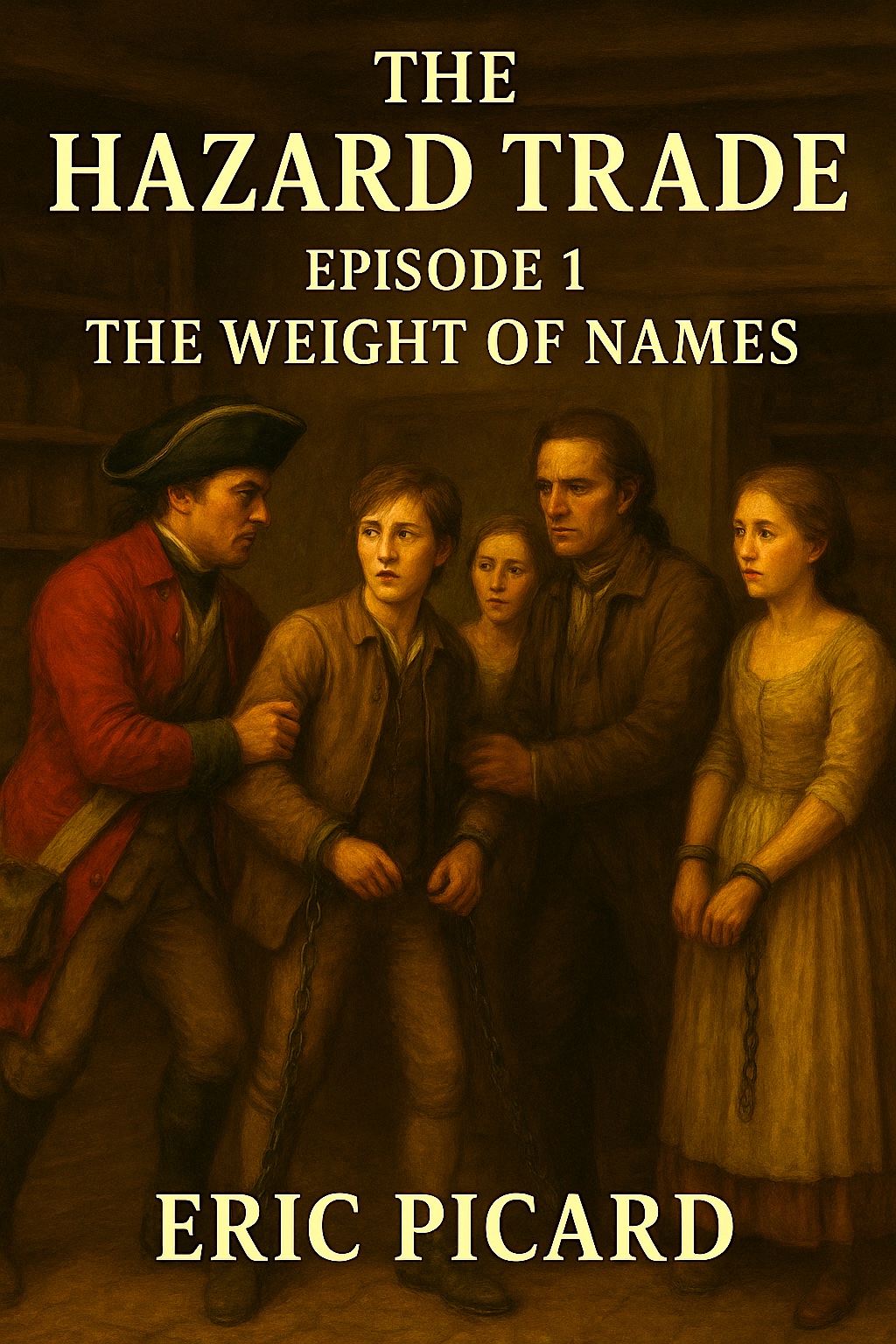



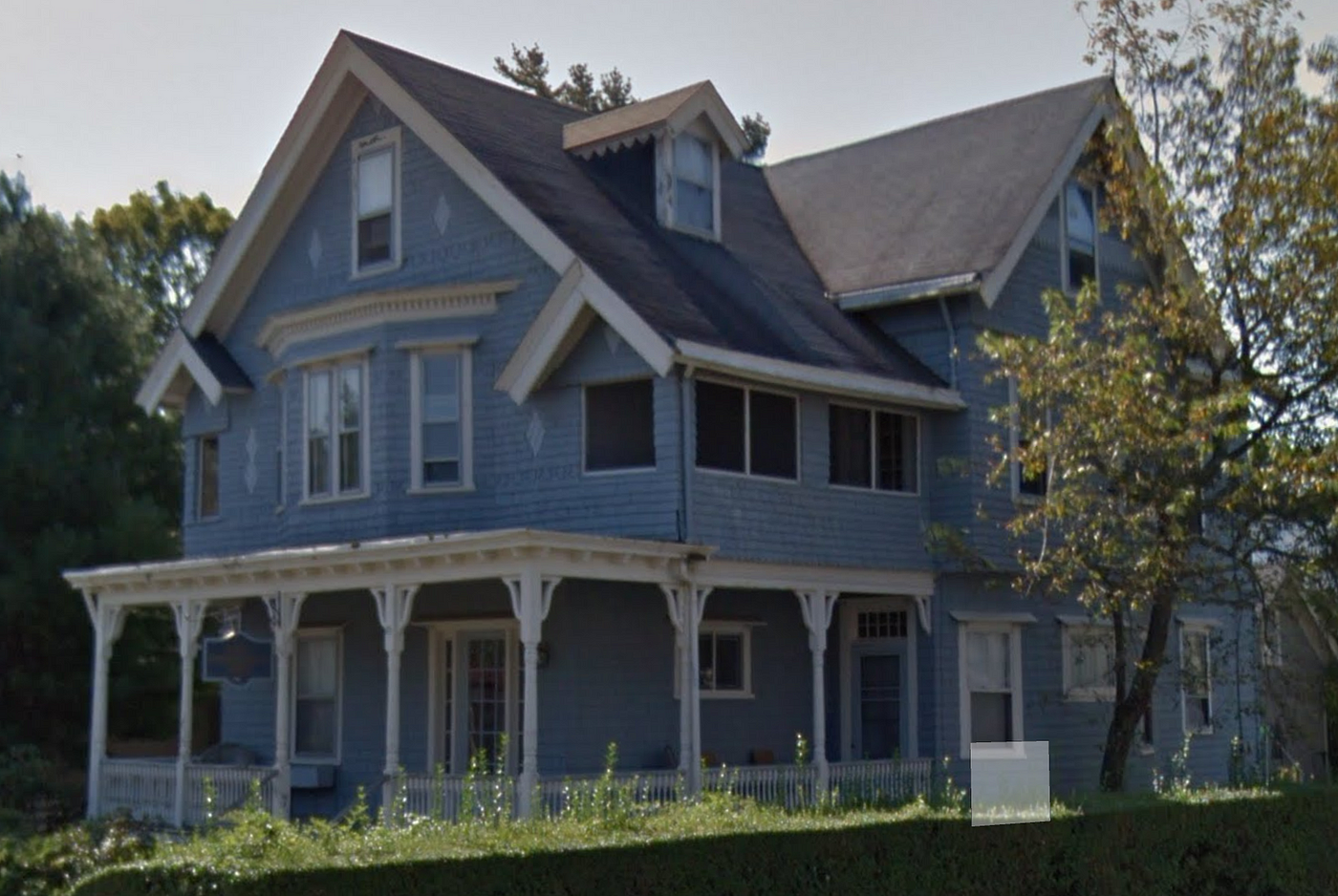
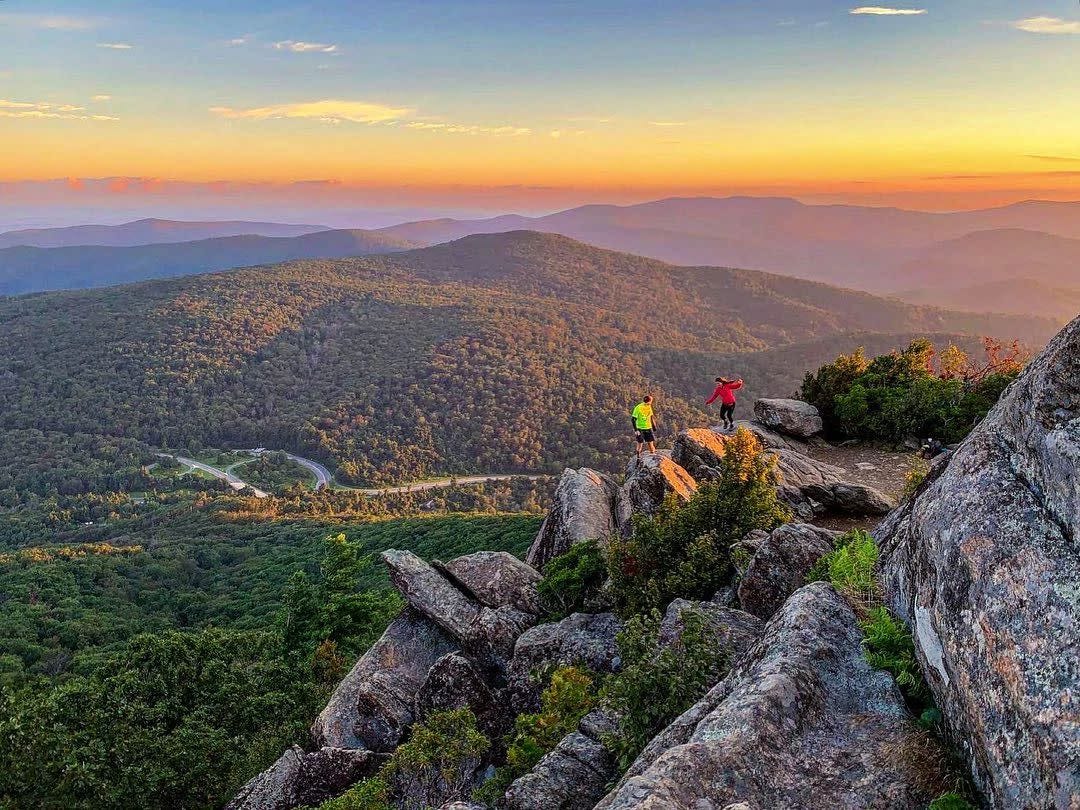






 Eric Picard